
There is transformation when the sun gets blocked by the forest canopy.
During the daytime, there are activities like birds flitting among the tree branches, monkeys searching for food, and light coming through layers of the leaves. At night, however, everything transforms into something entirely different. It becomes dark, the forest is filled with sounds and movement, and the animals that do not come out during the day appear.
When one walks through the Amazon rainforest at night, he or she discovers an aspect of the ecosystem which many have never experienced before. In places such as Tambopata National Reserve, frogs call from wet vegetation, bats move through the canopy, and insects create a constant layer of sound in the background.
You might also like: Complete Guide to Visiting Tambopata National Reserve
What is the Amazon rainforest like at night?
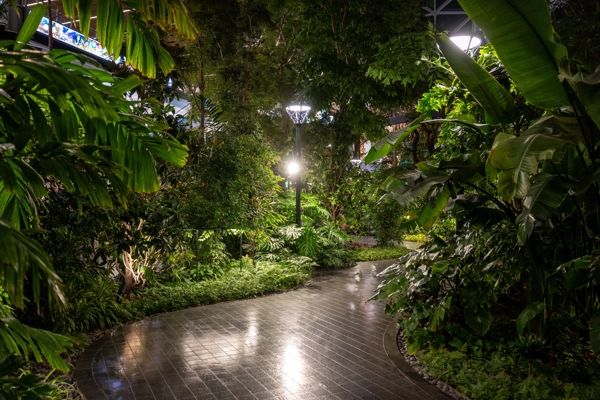
Darkness arrives quickly near the equator. Once the sun sets, the dense canopy blocks much of the remaining light, especially close to the forest floor.
This makes the Amazon rainforest at night considerably darker than an open landscape under the same sky.
Humidity usually remains high, temperatures become slightly cooler and sounds become more noticeable. Around the Tambopata lodges, these changes after sunset can make the surrounding rainforest feel completely different. Without the visual distractions of daylight, even a small movement through leaves can feel surprisingly close.
The result is not an empty forest, but a different ecological shift beginning.
Darkness changes the way animals move
Many rainforest species have adapted specifically to low light.
Some rely on highly sensitive eyesight. Others use smell, hearing, vibration or echolocation to understand their surroundings. These adaptations allow nocturnal animals to find food, communicate and avoid predators even when humans can barely see a few meters ahead.
Why does the Amazon become so active after dark?
For many species, nighttime provides opportunities that daylight does not.
Lower temperatures can make movement easier. Darkness can also provide protection from predators while reducing competition for food.
This is why a night in the Amazon rainforest feels so different from the daytime forest. One group of animals gradually becomes less active while another takes its place.
Nocturnal wildlife follows a different schedule
Nocturnal species rest during much of the day and become active after sunset.
This behavior is not unusual in tropical forests. Sharing different hours of activity allows species to use the same environment without constantly competing for the same resources.
Predators also benefit from darkness. Some have evolved exceptional hearing, sensitive vision or other adaptations that help them locate prey.
You might also like: 15 Places to visit in the Amazon Rainforest
Which animals are active in the Amazon rainforest at night?
Some of the most interesting wildlife activity takes place when daylight disappears. Areas such as Sandoval Lake and Monkey Island are known for the variety of animals found around rainforest, lake and river habitats.
The exact species vary across the enormous Amazon Basin, but several groups are closely associated with nighttime activity.
Bats move through the canopy
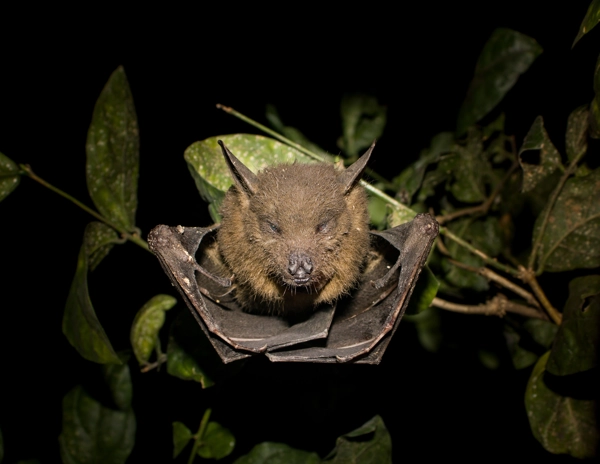
Bats are among the most important nocturnal mammals in tropical forests.
Different species feed on insects, fruit, nectar and other resources. Fruit eating bats can also help disperse seeds through the forest, while nectar feeding species contribute to pollination.
Many navigate using echolocation, producing sounds and interpreting the returning echoes to understand what surrounds them.
Frogs make the forest noticeably louder
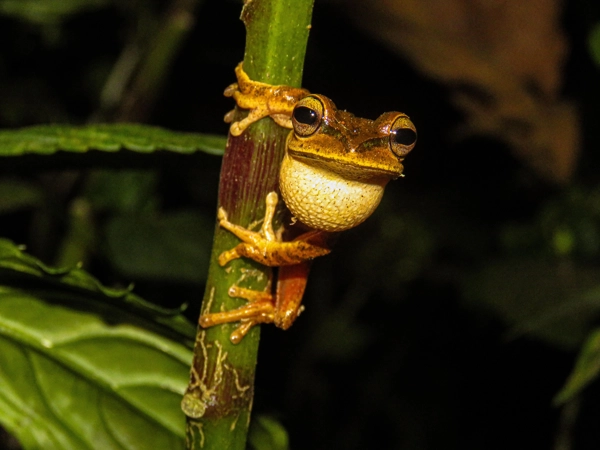
Frogs are responsible for some of the most recognizable sounds of the Amazon rainforest at night.
Their calls often become especially noticeable around humid environments, ponds and flooded areas. Many males call to attract mates, creating layers of sound that can come from several species at once.
Rain and humidity can make this activity even more intense.
Caimans become easier to detect after dark
Caimans inhabit rivers, lakes and wetlands throughout parts of the Amazon Basin.
They are often active at night. Their eyes contain structures that help them see in low light, and reflected light can sometimes make their eyes particularly noticeable in darkness.
Insects take over much of the soundscape
Not every dramatic rainforest sound comes from a large animal.
Crickets, katydids, cicadas and other insects produce a continuous mixture of calls. Some communicate to attract mates, while others use sound as part of territorial behavior.
Together, they form one of the defining characteristics of the rainforest at night. Similar nocturnal activity can also be found across protected areas such as Manu National Park, where extensive forest habitats support an exceptional variety of wildlife.
What does the Amazon rainforest sound like at night?
There is no single Amazon nighttime sound.
Instead, the forest produces layers.
An insect may create a repetitive call nearby. Frogs respond from wet vegetation. Leaves move somewhere above. A bird may call from deeper inside the forest.
Rain adds another layer when it arrives, first hitting the canopy before reaching plants and soil below.
This combination explains why searches for sounds of the Amazon rainforest at night often lead to recordings filled with constant activity rather than silence.
Some sounds are easier to hear than identify
Humans depend heavily on vision, which makes nighttime forest activity difficult to interpret.
You may hear movement without seeing its source. A branch moving in the canopy could come from a small mammal, a bird or simply vegetation shifting in the wind.
That uncertainty is part of what makes the Amazon rainforest at night feel so different.
You might also like: 40 Animals in the peruvian amazon
Want to Experience the Peruvian Amazon Beyond Daylight?
The rainforest changes completely after sunset, but nighttime wildlife is only one part of what makes this ecosystem so diverse. Tambopata brings together rainforest, rivers, lakes and protected habitats where visitors can discover a much broader side of the Peruvian Amazon.
If you are planning a trip, you can explore the different areas, accommodations and itineraries available in Tambopata and Manu.
How do animals navigate in complete darkness?
Amazon wildlife has developed several ways to function without strong daylight.
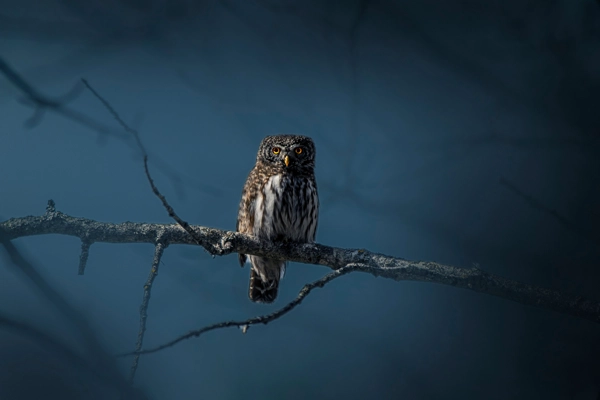
Owls and other nocturnal birds can detect subtle movements and sounds. Bats use echolocation. Many mammals depend heavily on smell.
Some snakes can detect environmental cues that humans cannot perceive nearly as effectively.
These adaptations show that darkness does not reduce activity throughout the ecosystem. It simply favors species equipped to use it.
Is the Amazon rainforest dangerous at night?
The Amazon contains wildlife that deserves respect, but the idea that dangerous animals are constantly waiting in the darkness is exaggerated.
Most wild animals avoid humans when possible.
At night, one of the more practical concerns is limited visibility. Roots, uneven terrain, insects, vegetation and wet ground become harder to notice.
Understanding this distinction matters when discussing how dangerous the Amazon rainforest is at night. The environment itself can demand more attention than dramatic encounters with large predators.
Does it rain every night in the Amazon rainforest?
No.
The Amazon is associated with heavy rainfall, but that does not mean rain falls every night.
Weather patterns depend on location, season and regional climate. The Amazon Basin covers millions of square kilometers, so conditions in one area cannot describe the entire rainforest.
Some periods experience frequent storms and intense humidity. Others can have several relatively dry days.
Rain, however, can strongly influence nighttime wildlife activity, particularly among amphibians and insects.
How does the rainforest change from day to night?
You might also like: Tingo Maria National Park travel guide
The transformation is mostly about activity.
During daylight, many birds, monkeys, butterflies and other animals dominate what people see and hear.
After sunset, bats, frogs, insects and other nocturnal species become more active.
The forest has not stopped. The shift simply reveals another ecological community using the same trees, rivers and vegetation.
That constant exchange between daytime and nighttime species is one reason tropical forests can support such extraordinary biodiversity.
Why nighttime matters to the Amazon ecosystem
Life after dark performs essential ecological functions.
Bats disperse seeds. Insects and other animals pollinate plants. Predators regulate prey populations. Frogs and insects become part of complex food chains.
Many of these relationships happen almost entirely outside daylight hours.
Looking at the Amazon rainforest at night therefore offers more than an unusual perspective. It helps explain how the forest continues functioning around the clock.
Frequently asked questions about the Amazon rainforest at night
What happens in the Amazon rainforest at night?
A different group of animals becomes active. Frogs, bats, insects, caimans and other nocturnal species begin feeding, communicating and moving through the forest while many daytime animals rest.
Is the Amazon rainforest completely dark at night?
It can become extremely dark below the canopy. Moonlight may reach open areas, rivers or clearings, but dense vegetation can block much of that light near the forest floor.
Is the Amazon rainforest louder at night?
Sometimes. Frogs and insects can create intense soundscapes after dark, particularly under humid conditions. The level of activity varies depending on weather, location and season.
What animals can be found in the Amazon rainforest at night?
Bats, frogs, owls, insects, spiders, caimans and several mammals can be active after sunset. The species present depend on the particular Amazonian habitat.
Does it rain every night in the Amazon?
No. Rainfall is frequent in many areas, but it varies considerably throughout the Amazon Basin and across different seasons.
The forest does not sleep when the sun goes down
One of the easiest mistakes to make is imagining nighttime as a quiet pause between two days.
In the Amazon, darkness represents another phase of the ecosystem.
Different animals appear, new sounds become noticeable and behaviors hidden during daylight take place throughout the forest.
That is what makes the Amazon rainforest at night so interesting from an ecological perspective. The same landscape can support two very different worlds depending simply on whether the sun is above or below the canopy.

