
Planning a trip to the Amazon is not just about choosing a destination, it is about understanding an entire region. That is why I set out to research the 15 best places to visit in the Amazon rainforest in Peru, covering everything from dense rainforests and protected reserves to national parks and gateway cities surrounded by nature.
Along the way, you will find not only where to go, but also what to expect and how to make the most of your time. Keep in mind that preparation matters. Bringing insect repellent is essential, and choosing the right time of year can make a big difference in your overall experience.
Peru offers access to one of the most biodiverse regions on Earth, with nearly 60% of its territory covered by Amazon rainforest. This is your opportunity to go beyond the typical routes, reach places that many travelers miss, and truly understand what makes this region so unique.
You might be interested: Festivals in Cusco month by month
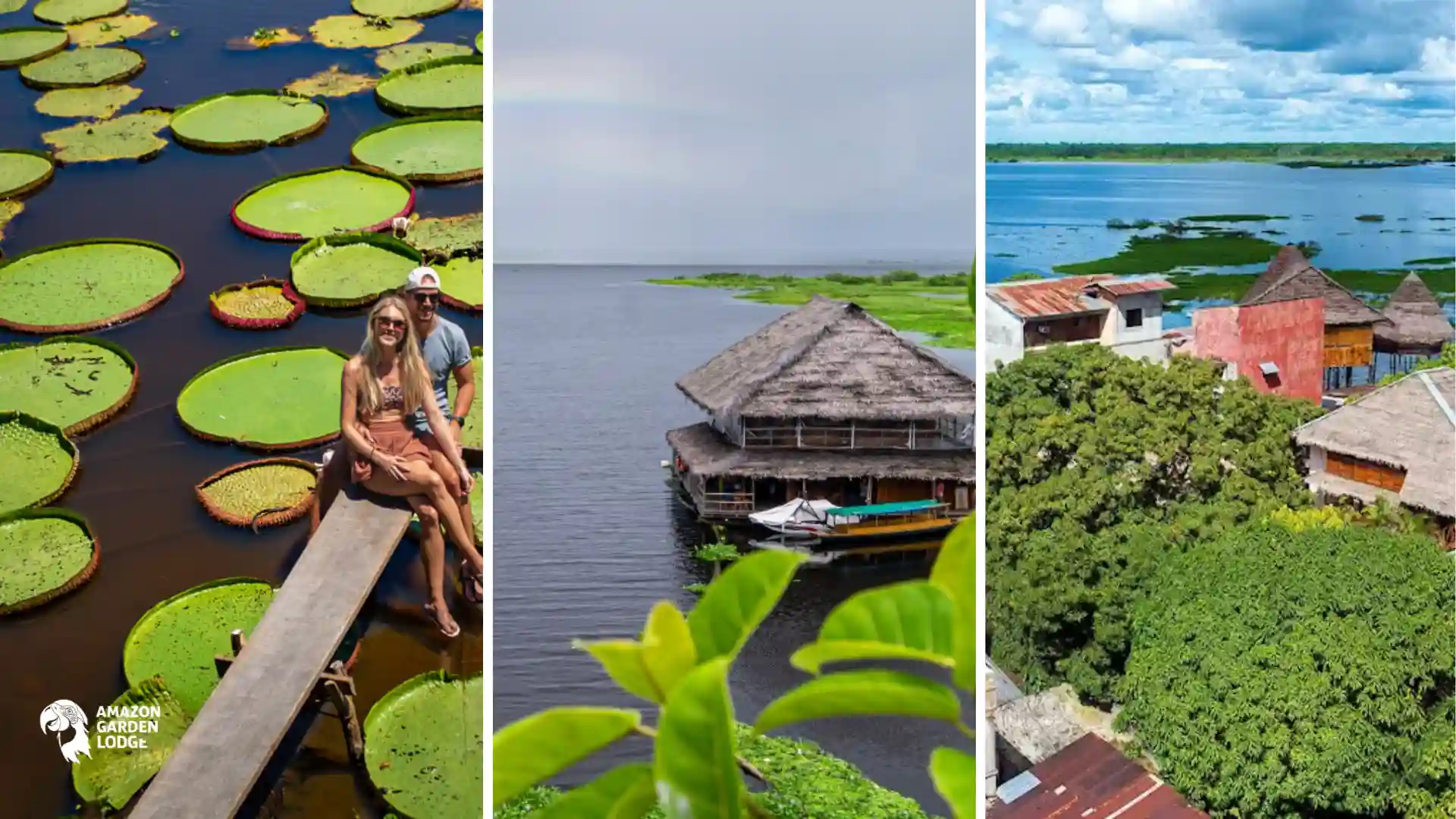
15 Places to visit in the Amazon Rainforest
If you’re looking for the best places to visit in the Amazon Rainforest, here are 15 destinations you should definitely keep in mind for your next trip. Each place offers something different, so your experience will depend on what you’re looking for, whether that’s wildlife, remote landscapes, or a deeper connection with nature.
1. Iquitos: Travel to the largest roadless city in the world
Is located in the Loreto region, in northeastern Peru, deep within the Amazon basin. It sits more than 2,200 miles (3,600 km) from the mouth of the Amazon River and is surrounded entirely by dense rainforest and waterways.
With a population of over 400,000 people, it holds a unique distinction. Is the largest city in the world that cannot be reached by road. There are no highways connecting it to the rest of the country, which immediately sets it apart from any other place in Peru.
That isolation is exactly what makes it one of the most unique places to visit in the Amazon rainforest. Getting there is not just about transportation, it becomes part of the journey itself.
The fastest way to reach is by air. Direct flights from Lima take around 1 hour and 45 minutes, making it surprisingly accessible despite its remote setting.
The alternative is traveling by boat along the Amazon River system, which can take anywhere from 3 to 5 days, depending on the route and type of vessel. While slower, this option gives you a much closer look at life along the river.
What makes different
Unlike other cities in Peru, daily life revolves around the river. Boats replace highways, and goods arrive by water instead of trucks. Even within the city, mototaxis are the main form of transportation, giving it a completely different pace.
From here, Iquitos tours take you deeper into the jungle, offering guided experiences through some of the most pristine and biodiverse areas of the entire Amazon basin. Whether you spend a few days exploring the city or head straight into the rainforest, Iquitos blends history, local culture, and the constant movement of the river in a way that feels unlike anywhere else in the country.
2. Pacaya Samiria: the largest flooded forest in the world
Pacaya Samiria, located in the Loreto region of northern Peru, covers more than 5 million acres (over 2 million hectares), making it the largest protected flooded forest on the planet. It sits between the Marañón and Ucayali rivers, in a region where the Amazon River system begins to take shape.
What makes this one of the most unique Amazon rainforest destinations is how dynamic it is. The entire landscape changes depending on the season, which means your experience can feel completely different depending on when you visit.
There’s no road access to Pacaya Samiria. The only way in is by river from Iquitos. Travel time can range from 6 to 12 hours by boat, depending on the entry point and water levels.
Some expeditions go even deeper, traveling over 120 miles (200 km) into the reserve, where there are no nearby towns, no signal, and very little human presence.
What to do
During the rainy season, from November to May, water levels can rise up to 25 feet (around 8 meters), flooding most of the forest. This allows you to move through the jungle by canoe, weaving between tree trunks and floating vegetation.
In contrast, the dry season, from June to October, exposes forest trails. This is when you can walk through areas that were previously underwater, offering a completely different perspective of the same ecosystem.
Wildlife viewing is one of the main highlights. Pacaya Samiria is one of the best places in Peru to spot pink river dolphins, especially in calmer lagoons and side channels. Swimming is sometimes possible in designated areas, often near dolphin habitats.
Night excursions are another key part of the experience. With a flashlight, guides help locate black caimans, whose eyes reflect in the dark water. Some of these can reach over 13 feet (4 meters) in length.
The reserve is also home to more than 400 bird species, over 100 mammals, and hundreds of fish species, including piranhas and paiche, one of the largest freshwater fish in the world.
What sets Pacaya Samiria apart is the sense of isolation. It’s not just a visit, it feels like being completely removed from everything else.
3. Manu National Park: one of the most biodiverse places on Earth
Manu National Park spans more than 4.2 million acres (1.7 million hectares) across the regions of Cusco and Madre de Dios. It is recognized as a UNESCO World Heritage Site due to its exceptional biodiversity and ecological importance.
One of the defining features of Manu is its elevation range, which goes from around 13,000 feet (4,000 meters) in the Andes down to 500 feet (150 meters) in the lowland rainforest. This creates multiple ecosystems within a single protected area.
Most trips begin in Cusco. From there, you travel by road for about 8 to 10 hours, descending through mountain landscapes into cloud forest.
After that, the journey continues by boat along rivers such as the Alto Madre de Dios, often for several additional hours depending on how deep into the park you go.
Because of its remoteness and protected status, access is controlled and typically done through guided tours.
What to do
Guided hikes take you through primary rainforest, where you learn how to identify plants, insects, and animal tracks.
Early mornings are ideal for birdwatching. Is home to more than 1,000 bird species, which is more than the total number found in the entire United States. This makes it one of the top birdwatching destinations in the world.
River travel is another key part of the experience. Along the riverbanks, you can often see capybaras, caimans, giant river otters, and multiple monkey species moving through the trees.
Clay licks are also an important highlight. These natural formations attract parrots and macaws that gather in large numbers to consume mineral-rich clay.
Another unique aspect is that parts of the park remain restricted to protect indigenous communities living in voluntary isolation. This contributes to the overall preservation of the ecosystem.
4. Kosñipata Valley: where the mountains meet the rainforest
Kosñipata Valley sits about 90 miles from Cusco, along the route toward Manu National Park, and it’s one of the clearest examples of how quickly Peru’s landscapes can change. In just a few hours, you go from cold, high-altitude Andean terrain to warm, dense rainforest.
This dramatic shift is what makes it one of the most interesting Amazon travel destinations, especially for travelers who want to experience multiple ecosystems in a single trip.
The journey starts in Cusco and takes around 4 to 6 hours by road. Along the way, you’ll cross the Acjanaco Pass at over 11,500 feet above sea level, which is the entrance to Manu. From there, the road drops steeply into the valley, and you can actually feel the temperature and humidity change as you descend.
The drive itself is part of the experience. It’s not uncommon to pass through clouds, waterfalls, and thick vegetation as you move into the rainforest.
What to do in Kosñipata
Kosñipata is especially well known among birdwatchers. In some areas, it’s possible to record over 200 species in a single day, including the Andean cock-of-the-rock, which gathers in specific spots early in the morning.
Hiking is one of the best ways to experience the area. Trails cut through cloud forest filled with moss, orchids, and constant mist, giving the entire place a very distinct atmosphere compared to lowland jungle.
For something more active, rafting on the Kosñipata River is a strong option, particularly between November and March when water levels are higher. The river runs through narrow sections of forest, making it both scenic and dynamic.
Downhill biking is another standout experience here. You can start at high altitude and descend thousands of feet in just a few hours, passing through completely different climates and vegetation zones along the way.
What really sets Kosñipata apart is the transition itself. Few places let you see such a rapid shift from the Andes into the Amazon in a single day.
5. Sandoval Lake: a quiet wildlife hotspot
Sandoval Lake is located inside Tambopata National Reserve, about 9 miles from Puerto Maldonado, and is one of the most accessible places to experience a classic Amazon oxbow lake ecosystem.
Formed from an old river channel, the lake is long and narrow, stretching roughly 2 miles, and surrounded by dense forest that limits outside disturbance.
Reaching the lake involves a combination of transport. First, you take a 30-minute boat ride along the Madre de Dios River. After that, there’s a 2-mile walk through the forest on a raised wooden trail, which helps protect the environment and makes the path easier to navigate.
Along the way, it’s already common to spot birds, insects, and sometimes monkeys before even reaching the lake.
What to do
Once you arrive, the main way to explore is by canoe. Early mornings and late afternoons are the best times, when wildlife is more active and the lake is completely still.
This is one of the top places in Peru to see giant river otters, which can grow up to 6 feet long and are often seen moving in groups. They’re active, vocal, and surprisingly curious.
You’ll also find black caimans, especially near the edges of the lake, along with monkeys, turtles, and a wide variety of birds, including the hoatzin, which has a very distinctive, almost prehistoric appearance.
The lake’s dark water reflects the surrounding forest almost perfectly, creating a mirror effect that makes everything feel more remote and untouched.
What makes Sandoval stand out is how calm and contained it feels compared to larger river systems. It’s quieter, more focused, and ideal for observing wildlife at close range.
6. Chuncho Clay Lick: one of the most intense wildlife scenes in the Amazon
Chuncho Clay Lick is located deep inside Tambopata, about 3 hours upriver by boat, and is widely considered the largest macaw clay lick in the world.
This is one of those experiences that feels raw and completely unfiltered, especially if you join a Chuncho Macaw Clay Lick tour, which is the most common way to access this remote area and time your visit with peak wildlife activity.
What to do there
Visits start early, usually before sunrise. Most tours leave in the dark so you can arrive just as the forest begins to wake up. By the time the first light hits the clay wall, flocks of parrots begin to gather, followed by larger groups of macaws.
On a good day, you can see up to 600 birds at once, covering the clay surface in bright reds, blues, and yellows. The contrast against the earthy tones of the cliff makes the whole scene even more striking.
The reason they come here is surprisingly practical. The clay contains minerals that help neutralize toxins found in their diet, especially from unripe seeds and fruits.
From the observation point, you’re close enough to hear everything. The calls, the wing movement, the constant activity. It’s loud, chaotic, and incredibly visual, but still feels completely natural and undisturbed.
Timing plays a big role. Activity usually peaks in the early morning, and weather conditions can affect how many birds show up, which is why going with an experienced guide makes a difference.
Among all Amazon wildlife experiences, this is easily one of the most intense. It’s not just about seeing animals, it’s about being right in the middle of a natural event that happens every single day.
7. Tambopata National Reserve: easy access, serious biodiversity
Tambopata National Reserve stretches across more than 667,000 acres in southern Peru, in the Madre de Dios region. It’s often considered one of the best entry points into the Amazon because it offers a high level of biodiversity without requiring the kind of long, complex travel you’d need for more remote areas.
This balance is what makes stand out among top Amazon rainforest destinations. You get a deep jungle experience, but with logistics that are still manageable.
The journey is straightforward. You fly from Lima to Puerto Maldonado in about 1 hour and 30 minutes. From there, most lodges arrange boat transfers that take between 1 and 4 hours, depending on how deep into the reserve you’re staying.
The farther you go, the more isolated it feels, and that usually means better wildlife sightings.
What to do
Daily activities are centered around guided exploration. Jungle hikes take you through dense forest where guides help you spot details you would otherwise miss, from insects camouflaged on tree bark to animal tracks along the trails.
Canoe rides on oxbow lakes are another highlight. These calm waters are ideal for spotting giant river otters, turtles, and a wide variety of birds, especially early in the morning when activity is at its peak.
Night walks are where things shift completely. Once the sun goes down, the forest feels different. You’ll start noticing frogs, insects, spiders, and caimans that remain hidden during the day. It’s a completely different layer of the ecosystem.
Another key experience is visiting clay licks, where parrots and macaws gather to feed on mineral-rich soil. While some are smaller than the famous Chuncho clay lick, they still offer a close-up look at this behavior.
This place also stands out for how consistent wildlife sightings can be. If you’re planning a Tambopata 4 days 3 nights stay, it’s common to see multiple species in a single day, making it one of the most reliable Amazon travel experiences for first-time visitors.
8. Yarinacocha Lake: where culture and the rainforest come together
Yarinacocha Lake sits just outside the city of Pucallpa, about 4 miles away, and covers more than 7 square miles. Unlike more remote jungle locations, this is a place where everyday life and the Amazon environment are closely connected.
It’s not just about nature here. It’s about understanding how people live within the rainforest.
You can fly directly from Lima to Pucallpa in about 1 hour. From there, it’s a short 15 to 20-minute drive to reach the lake, making it one of the easiest Amazon-access points in Peru.
What to do at Yarinacocha
Boat rides across the lake are the main activity. Depending on where you go, you may spot pink river dolphins, herons, kingfishers, and occasionally caimans along quieter sections of the water.
One of the most important experiences here is visiting Shipibo-Konibo communities. These communities are known for their intricate geometric designs, called kené, which are used in textiles, ceramics, and even body art. Each pattern has meaning, often tied to their worldview and traditional knowledge.
You can also visit the Chullachaqui Botanical Garden, where local guides explain how plants are used for medicine, healing, and daily life in the Amazon. It adds a layer of understanding that goes beyond just seeing the landscape.
Food is another part of the experience. In local restaurants, you can try regional dishes made with ingredients like plantains, freshwater fish, and fruits that are hard to find outside the Amazon.
What really makes Yarinacocha stand out among Amazon region highlights is that it doesn’t feel staged or isolated. It’s a place where culture, nature, and daily life all come together in a very real way.
9. Tarapoto: the easiest way into the Amazon
Tarapoto sits at about 1,168 feet above sea level in the San Martín region, and it’s one of the easiest places to access the Peruvian Amazon without complicated logistics. If you don’t have a lot of time but still want a real jungle experience, this is one of the most practical places to visit in the Amazon rainforest.
And you can fly directly from Lima in about 1 hour and 15 minutes. No long boat rides or multi-day transfers needed, which makes it a solid option for shorter trips.
What to do in Tarapoto
Ahuashiyacu Waterfall is the most popular spot, just 14 kilometers from town. It drops around 130 feet and is easy to reach, so you can visit it in half a day. If you’re looking for something less crowded, Huacamaillo Waterfall requires a longer hike, about 3 hours round trip through primary forest.
Laguna Azul, about 50 kilometers south near the town of Sauce, is another highlight. It’s a calm lake where you can swim, take a boat ride, or just spend a relaxed afternoon.
What makes Tarapoto stand out is how easy everything is. You get jungle, waterfalls, and local culture without the heavy travel time you usually expect in the Amazon.
10. Kuelap: a massive fortress hidden in the cloud forest
Kuelap is one of Peru’s most underrated archaeological sites. It sits at around 9,800 feet above sea level in the Amazonas region, surrounded by thick cloud forest that often rolls in as mist.
Built by the Chachapoya culture around 900 AD, the site predates the Inca Empire and feels completely different from anything you’ll see in Cusco.
The closest city is Chachapoyas. From there, it’s about a 1-hour drive to the cable car station, followed by a 20-minute ride up the mountain. The cable car alone covers nearly 4 kilometers and gives you a clear sense of how remote the site really is.
What to do in Kuelap
Once inside, you’ll walk through massive stone walls that reach up to 65 feet high. The site covers roughly 6 hectares and contains over 400 circular structures, many decorated with intricate patterns.
The experience is quiet. Unlike Machu Picchu, visitor numbers are much lower, so you can walk through the site without crowds.
A great combination is visiting Gocta Waterfall, located about 2 hours away. At 2,530 feet tall, it’s one of the highest waterfalls in the world. The hike takes around 5 to 6 hours round trip and passes through dense cloud forest.
Kuelap stands out because of its setting. It’s not just history, it’s history surrounded by jungle.
11. Nanay River: seasonal beaches in the middle of the rainforest
The Nanay River flows just north of Iquitos and is known for its dark, almost tea-colored water. Unlike the main Amazon River, it’s calmer and more local in character.
During the dry season, between June and October, sandbanks emerge and form temporary white sand beaches. This creates one of the most unexpected places to visit in the Amazon rainforest.
From Iquitos, you can reach the river in about 30 to 60 minutes by boat. Local operators and even informal docks offer regular transport.
What to do in the Nanay River
This is a slower experience compared to other Amazon destinations. You can swim in the river, relax on the sand, and spend the day like locals do.
On weekends, families arrive with food, hammocks, and music. It’s less about sightseeing and more about experiencing daily life in the Amazon.
You can also visit nearby communities, where guides explain how plants are used for medicine and how traditional fishing works.
The key detail here is timing. These beaches only exist for a few months each year. Once the rains return, they disappear completely.
12. Yanachaga Chemillén: a hidden national park in central Peru
Yanachaga Chemillén National Park is located in the Pasco region and protects more than 300,000 acres of forest. It’s part of the central Amazon, but very few international travelers make it here.
What makes it different
This park sits in a transition zone between the Andes and the Amazon. Because of that, it has a mix of ecosystems you don’t usually find in a single place.
The elevation ranges from around 1,500 feet to over 11,000 feet, which creates a wide range of habitats.
The base town is Oxapampa, about 6 to 7 hours by road from Lima. From there, access points to the park are relatively close, often less than an hour by vehicle.
What to do in Yanachaga Chemillén
Hiking is the main activity. Trails take you through cloud forest filled with moss, orchids, and constant mist.
Wildlife is harder to spot than in more popular reserves, but that’s part of the experience. The park is home to spectacled bears, tapirs, and rare bird species.
If you’re looking for quieter places to visit in the Amazon rainforest, this is one of the best options. You won’t deal with crowds, and the environment feels much more untouched.
13. Amazon River cruises: travel deep into the jungle
Cruises on the Amazon River offer a completely different way to experience the rainforest. Instead of staying in one location, you move through the landscape, covering large distances.
Most cruises depart from Iquitos and last between 3 and 7 days. Boats vary from simple vessels with hammocks to small ships with private cabins and guided excursions.
What to do on a cruise
Each day includes outings on smaller boats that take you into narrow channels and lagoons. These areas are often inaccessible by larger vessels.
You’ll also visit remote communities, walk through forest trails, and spend time spotting wildlife. Pink river dolphins, monkeys, and exotic birds are common sightings.
The biggest advantage is access. You reach parts of the Amazon that are simply not possible to visit on a standard trip.
14. Tambopata ecolodges: stay in the middle of the rainforest
Tambopata is located in southern Peru, in the Madre de Dios region, and is one of the most wildlife-rich areas in the country.
Ecolodges here are designed to place you directly inside the rainforest, often several hours away from the nearest town.
How to get there
You first fly into Puerto Maldonado, which takes about 1 hour and 30 minutes from Lima. From there, lodges arrange boat transfers that can take anywhere from 1 to 4 hours.
What to do in an ecolodge
Daily activities are guided and structured. You’ll go on forest walks, canoe rides, and wildlife observation tours.
Night walks are especially interesting. That’s when the jungle becomes more active, and you can spot frogs, insects, and caimans.
One important detail is distance. Lodges that are farther away tend to offer better wildlife sightings because there’s less human activity nearby.
15. Tres Cruces: one of the most unique viewpoints in Peru
Tres Cruces is located at about 12,100 feet above sea level along the road to Manu. From here, you can look out over the Amazon basin from above the cloud line.
From Cusco, it takes around 3 to 4 hours by car. Most trips leave in the middle of the night to arrive before sunrise.
What to do in Tres Cruces
The main reason to visit is the “double sunrise” effect. Because of atmospheric conditions and the steep drop from the Andes into the Amazon, the sun appears to rise twice.
Even without the phenomenon, the view itself is impressive. On clear mornings, you can see the forest stretching for miles.
It’s a very different kind of stop compared to other places to visit in the Amazon rainforest, since you’re observing the jungle from above rather than being inside it.

Best operator for places to visit in the Amazon Rainforest
If you are looking for a reliable and authentic way to discover the best places to visit in the Amazon Rainforest, Amazon Garden Lodge stands out as a great option. Their team combines local expertise with well organized experiences, making it easier to explore highlights like Tambopata, Sandoval Lake, and the famous macaw clay licks.
What makes them special is their focus on small groups, personalized attention, and a genuine connection with nature, allowing you to experience the Amazon at the right pace with knowledgeable local guides.

