

The last time I visited the jungle, I tried some of the best dishes you can find in amazonian food. Peruvian amazonian gastronomy in particular offers dishes like juane, tacacho con cecina and patarashca, each one shaped by generations of jungle tradition. This cuisine is built around what the rainforest provides, rich in protein from river fish like paiche, packed with nutrients from fruit like camu camu and aguaje, and full of curious ingredients rarely found outside the Amazon. Behind every dish is a story about how families in Iquitos, Tarapoto and Pucallpa have cooked with the river and the forest for centuries.
What makes amazonian cuisine unique
Amazonian cuisine stands apart from the rest of Peru’s culinary map because it draws almost entirely from the rainforest itself. This cuisine has evolved for centuries, mixing ancestral indigenous techniques with influences from Chinese and Japanese immigrants, and each dish reflects the extraordinary biodiversity of the region, using river fish like paiche and doncella, wild meats like majaz, and unique vegetables like chonta and Amazonian cilantro.
Rice, wheat and highland potatoes give way to yuca, plantain and river fish, while bijao leaves replace foil and plastic wrap as the region’s natural cooking tool. Amazonian food also carries a strong social dimension: dishes like juane are tied to festivals, and drinks like masato are shared during gatherings rather than sold as everyday beverages.
You might be interested: Traditional costumes of Peru

Key ingredients behind amazonian food
River fish like paiche and doncella
Paiche, or arapaima, is the most iconic ingredient in Peruvian amazonian food. It can grow past 7 feet and weigh up to 400 pounds, and in Peru it lives in the Napo, Putumayo, Marañón, Pastaza and Ucayali rivers, protected within the Pacaya Samiria National Reserve in Loreto. Once overfished, it is now farmed sustainably and served grilled, in ceviche or wrapped in juane. Doncella, another prized river fish, is typically cooked in a tomato, onion and chili sauce.
Jungle fruit, camu camu, aguaje and cocona
Camu camu holds about 2,780 mg of vitamin C per 100 grams, versus 53.2 mg in the same amount of orange, making it one of the most vitamin C dense fruits known. Aguaje, harvested from a palm that grows in flooded lowlands called aguajales, has more vitamin A than carrots or spinach. Cocona, the Amazonian tomato, smells like tomato but tastes lemony, with edible seeds. All three appear in juices, ice creams and jams across the region.
Plantain, yuca and sachapapa
Green plantain and yuca form the starchy base of Amazonian cooking, alongside cassava-heavy staples like fariña. Plantain is mashed for tacacho or fried as a side, while yuca is boiled, fried or fermented into masato. Sachapapa, a jungle tuber similar to yam, is boiled or fried alongside fish and meat, adding a mild, earthy note that balances tomato based sauces.
Wild herbs like sacha culantro
Sacha culantro, sharper and more intense than regular cilantro, is the herb behind much of Amazonian cooking’s aroma, key to inchicapi and to the broth used in juane. Cooks in Tarapoto favor it along with sacha oregano over commercial seasoning. Achiote adds color to sauces, while ginger (kion) flavors fish stews like motelo.
You might be interested: Q’eswachaka Bridge
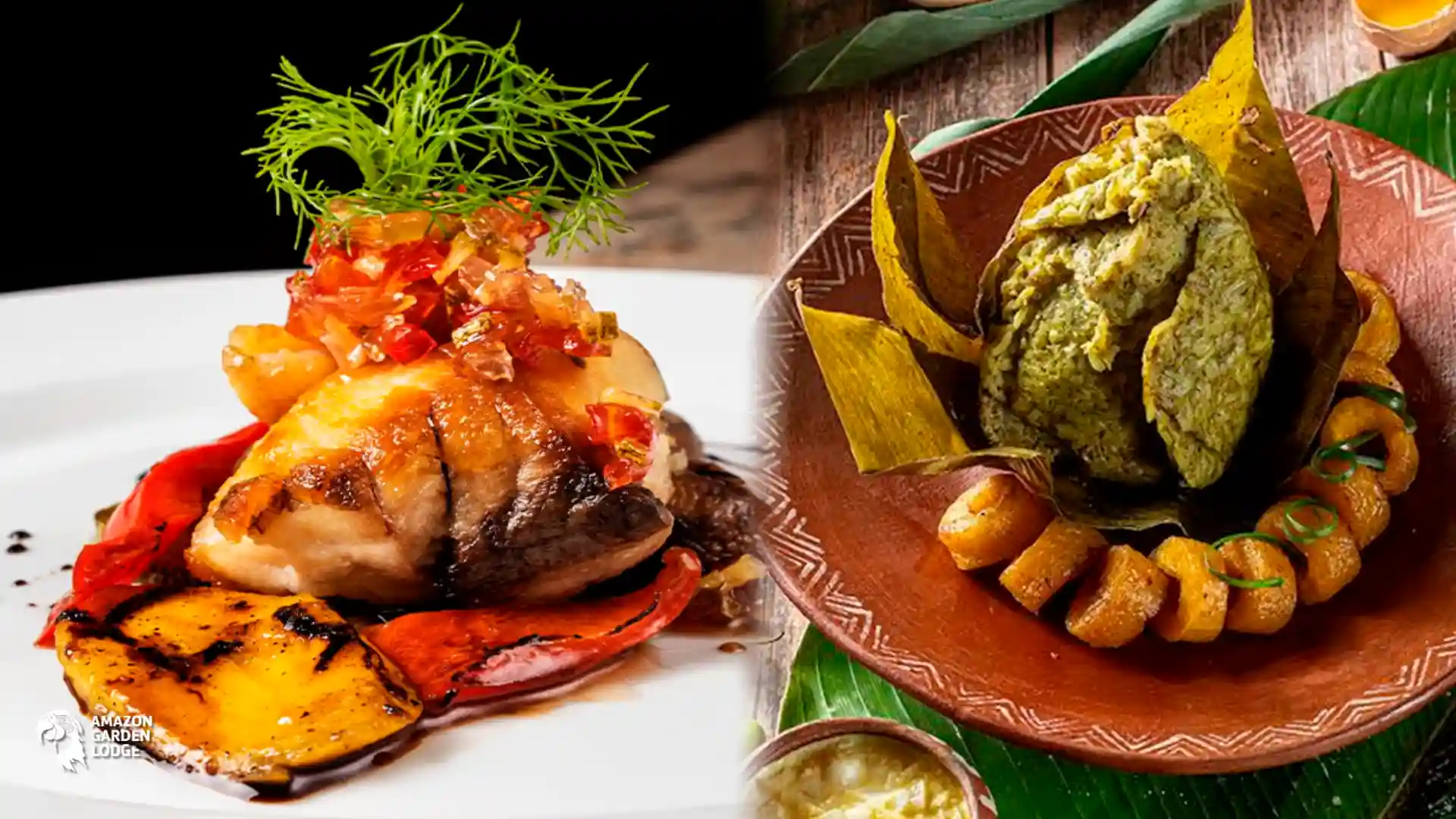
Traditional Peruvian amazonian gastronomy
Peruvian amazonian gastronomy is built on what the rainforest provides: river fish like paiche, staples like yuca and plantain, and fruit found nowhere else, from camu camu to aguaje. Dishes rely on bijao leaves instead of foil and herbs like sacha culantro instead of store bought seasoning.
Juane, the jungle’s signature dish
Juane is the most recognized dish of Peruvian amazonian gastronomy. It is made with seasoned rice, chicken, olives and a hard boiled egg, all wrapped in bijao leaves and steamed. According to Peru’s National Library, the dish originated in Moyobamba, where the first version was rumu juane, made with yuca rather than rice. It is traditionally eaten during the Fiesta de San Juan on June 24, a public holiday celebrated with particular energy in Iquitos, Tarapoto and Pucallpa. Regional variations exist across the jungle, from juane de chonta made with heart of palm to versions filled with fish instead of chicken.
Tacacho con cecina
Tacacho con cecina is the breakfast of choice across the Peruvian jungle. Ripe or green plantains are fried until golden and then mashed with ingredients like pork rinds, giving the dish its smoky depth. It is often served with cecina, a cured pork, or grilled meats, along with a fresh salsa of tomato, onion and cilantro. The preparation of authentic cecina takes five to seven days, since the meat is heavily salted and hung to absorb smoke from aromatic woods like capirona, an ancestral method that preserves it without refrigeration.
Patarashca, fish wrapped in bijao leaves
Patarashca showcases the Amazon’s oldest cooking technique. River fish such as gamitana or dorado are wrapped in bijao leaves with tomato, onion and chili pepper, then grilled over embers, a method that lets the fish cook in its own juices while preserving its flavor and aroma.
Inchicapi, a peanut and chicken soup
Inchicapi is the comfort food of Amazonian cuisine. The soup is made by cooking chicken in a broth of ground peanuts, cilantro, yuca and aromatic herbs, which simmer together until the flavors meld into a thick, creamy result. A common version also adds toasted and ground corn flour, along with regional cabbage and small grain corn. It is especially popular in riverside communities along the upper Huallaga in the San Martín region during festival days.
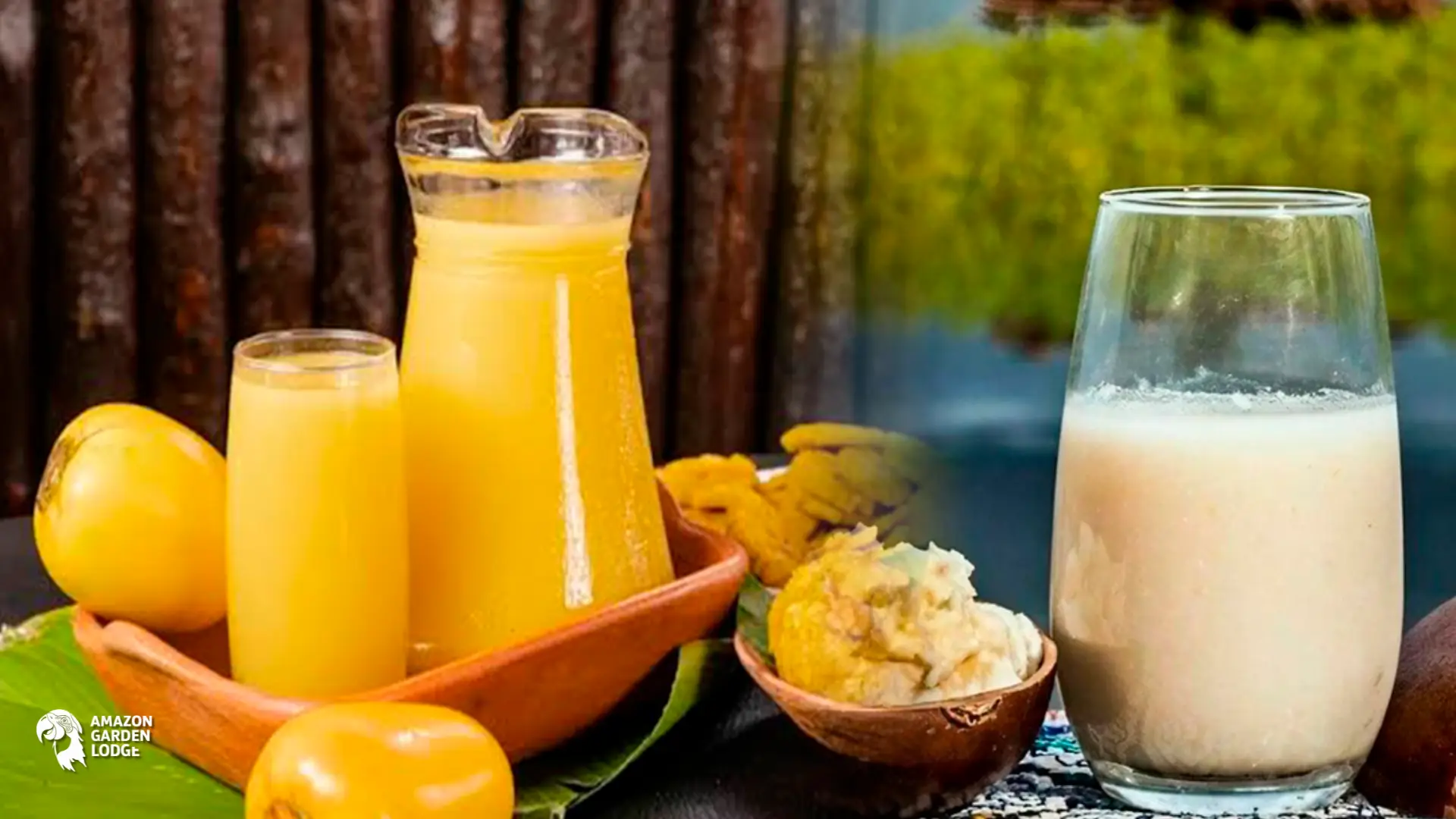
Drinks that complete amazonian food culture
Masato, a fermented yuca drink
Masato is often called the jungle’s beer. It is made by boiling yuca, mashing it and fermenting the mixture for two to seven days, and it remains the foundational social and nutritional drink for many Amazonian indigenous nations in Peru, Ecuador, Brazil and Colombia. The traditional preparation involves chewing the cooked yuca so that enzymes in saliva help break down the starch into fermentable sugars, though many communities today use sugar or commercial yeast instead. Masato is shared during gatherings and celebrations rather than sold as a regular commercial beverage, and its flavor ranges from mildly sweet to sharply sour depending on how long it ferments.
Aguaje and camu camu juices
Fresh fruit juices are part of daily life across Iquitos and Tarapoto. Stands around the Plaza de Armas in Iquitos sell natural fruit juices and ice creams made from aguaje, maracuyá and cocona. Aguajina, a blended aguaje drink sweetened with sugar, is one of the most popular refreshments in the region, while camu camu juice offers a tart, citrus like alternative packed with vitamin C. Both are widely available at markets and juice stands throughout the jungle.
Chuchuhuasi, a jungle infused spirit
Chuchuhuasi is a bark used to make one of the Amazon’s best known infused spirits. Uvachado, made from fermented wild grapes and sweetened with honey, is often mixed with chuchuhuasi, a plant known for its analgesic and anti-inflammatory properties, creating a drink traditionally used to relieve muscle pain and improve circulation. Chuchuhuasi bark is also steeped on its own as a bitter tea, sold in markets as a remedy for colds and general fatigue, and it appears in cane alcohol infusions served in bars around Iquitos.

Curious facts about amazonian food
Amazonian food holds a few surprises for travelers used to more conventional menus. In Belén Market in Iquitos, vendors sell dishes like ishpa, made from simmered sabalo fish intestines and fat, and sikisapa, fried leafcutter ants whose abdomens are considered the tastiest part. Suri, the larva of the palm weevil beetle, is eaten fried or grilled on a stick and is one of the region’s most talked about delicacies, with a texture that’s crunchy outside and creamy inside.
Some Amazonian drinks are known for more than flavor. Rompecalzón, made from chuchuhuasi bark macerated in cane liquor and sweetened with Amazonian bee honey, and siete raíces, a blend of chuchuhuasi, mururé, clavo huasca and other jungle roots also macerated in liquor, are both considered traditional afrodisiacs in the region. Uvachado, made from fermented wild grapes mixed with chuchuhuasi and honey, is used to relieve muscle pain and improve circulation.
Paiche has an unusual history of its own. Its oldest fossil dates back to the Miocene epoch, between 5.3 and 23 million years ago, earning it the nickname living fossil. Unlike most fish its size, it has a lung like organ that forces it to surface for air, and fishermen can often identify a paiche from a distance by the loud gulp it makes when it does.

Frequently asked questions
1. What is the most famous dish in amazonian gastronomy?
Juane is widely considered the most iconic dish of the Peruvian Amazon. It combines rice, chicken, boiled egg and olives wrapped in bijao leaves, and it is closely tied to the Fiesta de San Juan celebrated every June 24 in Iquitos, Tarapoto and Pucallpa.
2. Is amazonian food spicy?
Amazonian food is generally mild compared to other Peruvian regional cuisines, relying more on herbs like sacha culantro and ingredients like tomato and onion for flavor. Some dishes do use ají charapita, a small but intensely aromatic Amazonian chili, for those who want extra heat.
3. What fruit is unique to the Peruvian Amazon?
Camu camu, aguaje and cocona are among the fruit most associated with the region. Camu camu in particular stands out for its extremely high vitamin C content, far above citrus fruit like orange or lemon.
4. Can vegetarians find options in amazonian cuisine?
Yes, though options require some planning. Plantain, yuca, heart of palm and tropical fruit form the base of many dishes, and some restaurants and lodges offer plant based versions of juane made without chicken.
5. What drink is typical of the Amazon rainforest?
Masato, a fermented yuca drink, is the most traditional beverage of the Peruvian Amazon. Fresh juices made from aguaje and camu camu, along with infused spirits like chuchuhuasi, are also common across Iquitos and Tarapoto.

