
Peru is not only known for its landscapes and ancient sites; it is also a country where the traditional costumes of Peru reflect centuries of history, regional identity, festivals, dances, family traditions, and artisanal textile techniques that still endure in many communities.
From the elegant cotton dresses worn in coastal dances to the colorful skirts and ponchos of the Andes, and from the light garments to the body art of the Amazon, Peruvian clothing varies from region to region. Each hat, skirt, shawl, pattern, and color can reveal a person’s origins, the celebration they participate in, or how their community understands nature, spirituality, and daily life. This guide will help you understand Peru’s most important traditional garments, their meaning, and where you can see them during your trip.
Origin and history of Peruvian clothing
The origin of Peruvian clothing goes back thousands of years, long before the Inca Empire. In ancient Peru, textiles were not only used to cover the body; they were also a form of identity, social status, ceremony, and communication. Coastal cultures used cotton because it adapted well to warm desert valleys, while highland communities worked with camelid fibers such as alpaca, llama, and vicuña to protect themselves from the cold Andean climate.
One of the best examples comes from the Paracas culture, which developed on the southern coast of Peru. Archaeological textiles from Paracas, dated approximately between 450 and 175 BCE, were made with cotton and camelid hair, showing that ancient weavers already combined materials from different ecological regions. These pieces were carefully embroidered with human, animal, and supernatural figures, proving that clothing and textiles had a strong symbolic and ritual value.
Later, during the Inca period, textiles became even more important. Fine woven cloth, known as cumbi or qompi, was considered a luxury textile made with high-quality fibers and used by elites, religious authorities, and the state. In the Inca world, clothing could show a person’s origin, rank, role, and relationship with the empire. Warm wool garments were more common in the Andes, while lighter cotton clothing was used in coastal areas, adapting each outfit to the geography and climate of the region.
With the arrival of the Spanish in the 16th century, Peruvian clothing began to change. European garments such as wide skirts, jackets, hats, and formal shirts influenced local dress, especially in Andean communities. However, Indigenous people did not simply abandon their traditions. Instead, they adapted these new elements and combined them with their own weaving techniques, colors, symbols, and community styles. That is why many traditional costumes of Peru today are a blend of pre-Hispanic heritage, colonial influence, and local creativity.
You might be interested: Festivals in Cusco month by month
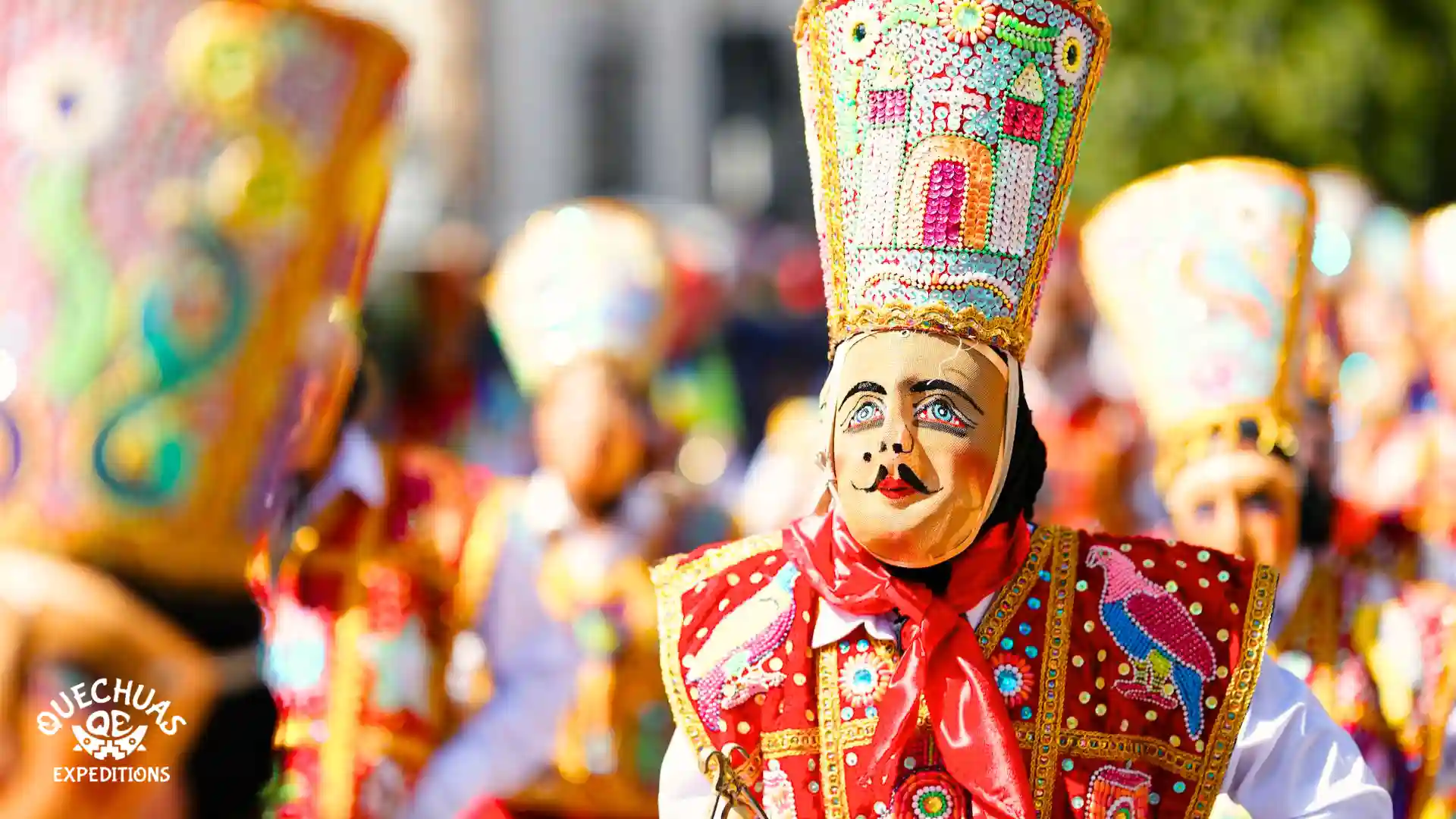
Traditional costumes of Peru
Traditional costumes of Peru are one of the country’s most visible cultural expressions. They’re not just about colorful clothes for parties or tourist photos; each garment is connected to history, climate, community, and customs passed down for hundreds of years.
In Peru, traditional clothing varies greatly from region to region. On the coast, lighter fabrics, elegant dresses, and garments associated with dances like the marinera predominate. In the highlands, clothing tends to be warmer and more elaborate, with skirts, ponchos, llicllas (shawls), chullos (Andean hats), and hats that identify different Andean communities. In the jungle, traditional clothing is more closely linked to the tropical climate, natural materials, body paint, seeds, plant fibers, and designs unique to Amazonian peoples.
Traditional costumes of the coast
Traditional Peruvian coastal clothing tends to be lighter and more elegant, due to the warm, dry climate of much of the coastline. Unlike the highlands, where woolen garments are worn to protect against the cold, cotton, lightweight fabrics, flowing dresses, straw hats, and handkerchiefs used in dances predominate on the coast.
Marinera Dress
The marinera dress is one of the most representative of the northern coast of Peru, especially in cities like Trujillo, Chiclayo, and Piura. In this dance, women typically wear a full dress or skirt that allows for elegant turns, fluid movements, and the visual interplay of the handkerchief. The blouse may feature embroidery, lace, or decorative details, depending on the regional style.
This attire accompanies the music and forms part of the language of the dance. Every movement of the skirt, every step, and every gesture with the handkerchief expresses gallantry, flirtation, and coastal pride.
Marinera handkerchief
The handkerchief is one of the most important pieces of the Marinera costume. Both men and women use it during the dance to mark the rhythm, accompany the turns, and represent the dialogue between the two dancers. Although it seems like a simple accessory, it’s actually an essential part of the physical and emotional expression of this Peruvian dance.
Afro-Peruvian costumes
On the coast, costumes linked to Afro-Peruvian culture are also prominent. In dances like the Festejo, the Landó, or the Alcatraz, the clothing is usually looser and more comfortable to allow for quick movements of the hips, arms, and feet. Women may wear flowing skirts or light dresses, while men typically wear comfortable shirts and trousers for the dance.
These garments are part of a cultural heritage that remains alive in areas such as Lima, Chincha, Cañete, El Carmen, and other Afro-Peruvian communities along the coast.
You might be interested: 15 Traditional food in Peru

Traditional costumes of the sierra
Andean clothing is probably the most recognized among the traditional costumes of Peru. In regions like Cusco, Puno, Ayacucho, Arequipa, Apurímac, Huancavelica, and the Sacred Valley, this clothing combines warmth, identity, and symbolism. Due to the cold at high altitudes, many garments are made with sheep, alpaca, or llama wool and are worn in layers to protect against the wind and sudden temperature changes.
Pollera (Skirt)
The pollera is one of the most representative garments of Andean women. It is a wide skirt that can vary in color, embroidery, length, and volume depending on the community or region. In some areas, women wear several polleras at the same time, both for warmth and to maintain a local tradition.
During patron saint festivals, carnivals, dances, and religious celebrations, the polleras often feature vibrant colors, floral embroidery, decorative ribbons, and details that reflect the pride of each community.
Lliclla
The lliclla is a woven blanket placed over the shoulders and fastened at the front with a pin. It is a very practical and symbolic garment in the Andes, as it can be used to carry food, market goods, small tools, or even babies.
Its designs often include geometric shapes, vibrant colors, and patterns that can represent animals, mountains, roads, crops, or elements of Andean life.
Poncho
The poncho is a traditional garment worn mainly by men in many rural areas of the highlands. It is generally made of wool and serves to protect against the cold, light rain, and wind at high altitudes. In some communities, the colors and designs of the poncho can indicate the wearer’s place of origin or identity.
It is also used in festivities, ceremonies, agricultural activities, and traditional dances, making it one of the most recognized Andean garments both within and outside of Peru.
Chullo
The chullo is a knitted hat with earflaps, ideal for protection against the Andean cold. It is usually made of alpaca, sheep, or llama wool and may feature geometric designs, animal figures, vibrant colors, or pom-poms.
Besides its practical function, the chullo can also reflect a community’s identity. In some places, its colors and patterns have meanings related to age, origin, or family tradition.
Montera
The montera is a traditional Andean hat that varies greatly depending on the region. In some villages, it may be flat and decorated with ribbons; in others, taller, round, or covered with embroidery. Its shape, color, and adornments can indicate the wearer’s place of origin, marital status, or community traditions.
In areas of Cusco, Puno, and the Sacred Valley, the montera is an important part of women’s attire during festivals, dances, and community activities.
Chumpi
The chumpi is a woven sash or belt worn around the waist. In addition to holding clothing in place, it can have decorative and symbolic value. Its woven designs often display geometric patterns and colors related to the community. In some Andean traditions, the chumpi is also associated with body protection, strength, and family connection.
Ojotas
Ojotas are traditional sandals worn in some rural areas of the Andes. They were formerly made of leather, although today many are made from recycled rubber, especially tires. They are durable, simple, and practical for walking on rural terrain. Although many people now wear modern footwear, ojotas remain part of the traditional image of some rural communities.
You might be interested: 40 Animals in the peruvian amazon
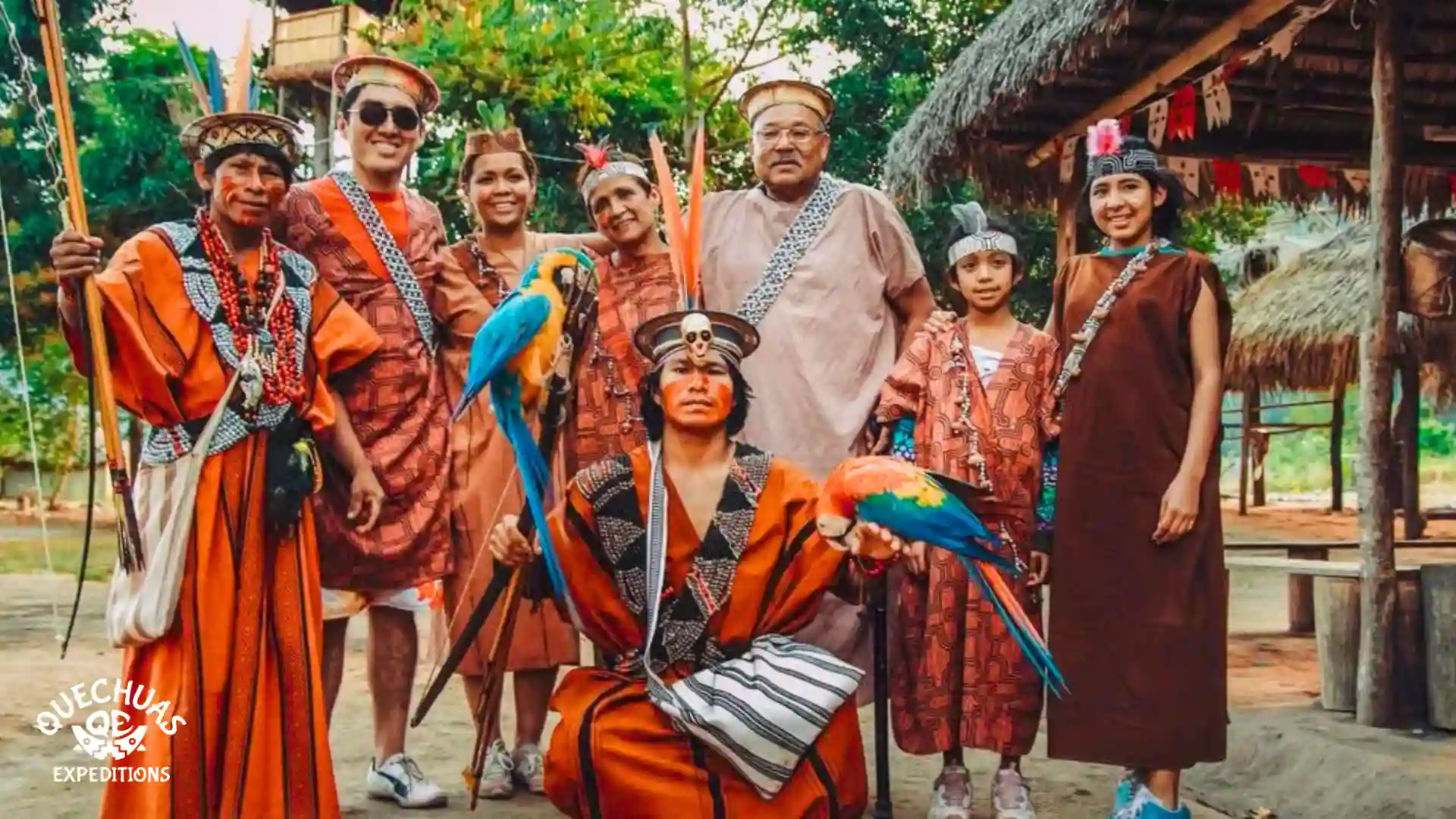
Traditional costumes of the jungle
Traditional clothing from the Peruvian rainforest differs significantly from that of the coast and highlands, primarily due to the Amazon’s warm, humid, and tropical climate. In this region, garments are typically lighter and incorporate natural materials such as cotton, plant fibers, seeds, plant dyes, feathers, necklaces, and body paint.
Cushma
The cushma is a simple, loose-fitting tunic traditionally worn by some Amazonian peoples, such as the Asháninka and other rainforest groups. Its lightweight design provides greater comfort in the Amazon’s warm and humid climate.
In some cases, the cushma may feature painted or woven designs that express identity, community belonging, and a connection to the natural environment. It should not be viewed merely as a basic garment, but rather as part of a way of life deeply connected to the forest.
Seed Necklaces
Seed necklaces are common accessories in traditional Amazonian clothing. They are made with seeds, plant fibers, nuts, shells, small bones, or other natural materials. Each community may use different combinations according to its customs and available resources.
These necklaces are used in dances, ceremonies, community festivals, and cultural performances. Besides being decorative, they reflect the close relationship between Amazonian peoples and the biodiversity of their territory.
Feather Crowns and Ornaments
In some Amazonian communities, feather crowns and ornaments are used in ceremonial, festive, or ritual contexts. Feathers can have symbolic value related to birds, strength, protection, beauty, or a spiritual connection with nature.
Not all Amazonian communities use the same ornaments, so it is important to understand each garment within its own cultural context.
Body Painting
Body painting is an important part of several Amazonian traditions. It can be done with natural dyes extracted from plants, fruits, or seeds. In some communities, the designs are used during ceremonies, celebrations, dances, or special moments in community life.
More than just decoration, body painting can represent identity, protection, beauty, spirituality, or belonging to a group.
Fabrics with Kené Designs
One of the most recognized cultural contributions of the Peruvian Amazon is the Kené art of the Shipibo-Konibo people. These geometric designs are painted or embroidered on fabrics, ceramics, and other objects, and are associated with memory, nature, traditional songs, and the spiritual worldview of the Amazon.
In clothing, Kené designs help express a forceful visual identity, adding a distinctly Amazonian voice to the traditional costumes of Peru. Their lines, shapes, and patterns are not mere decorations; they are part of an artistic tradition passed down through generations.
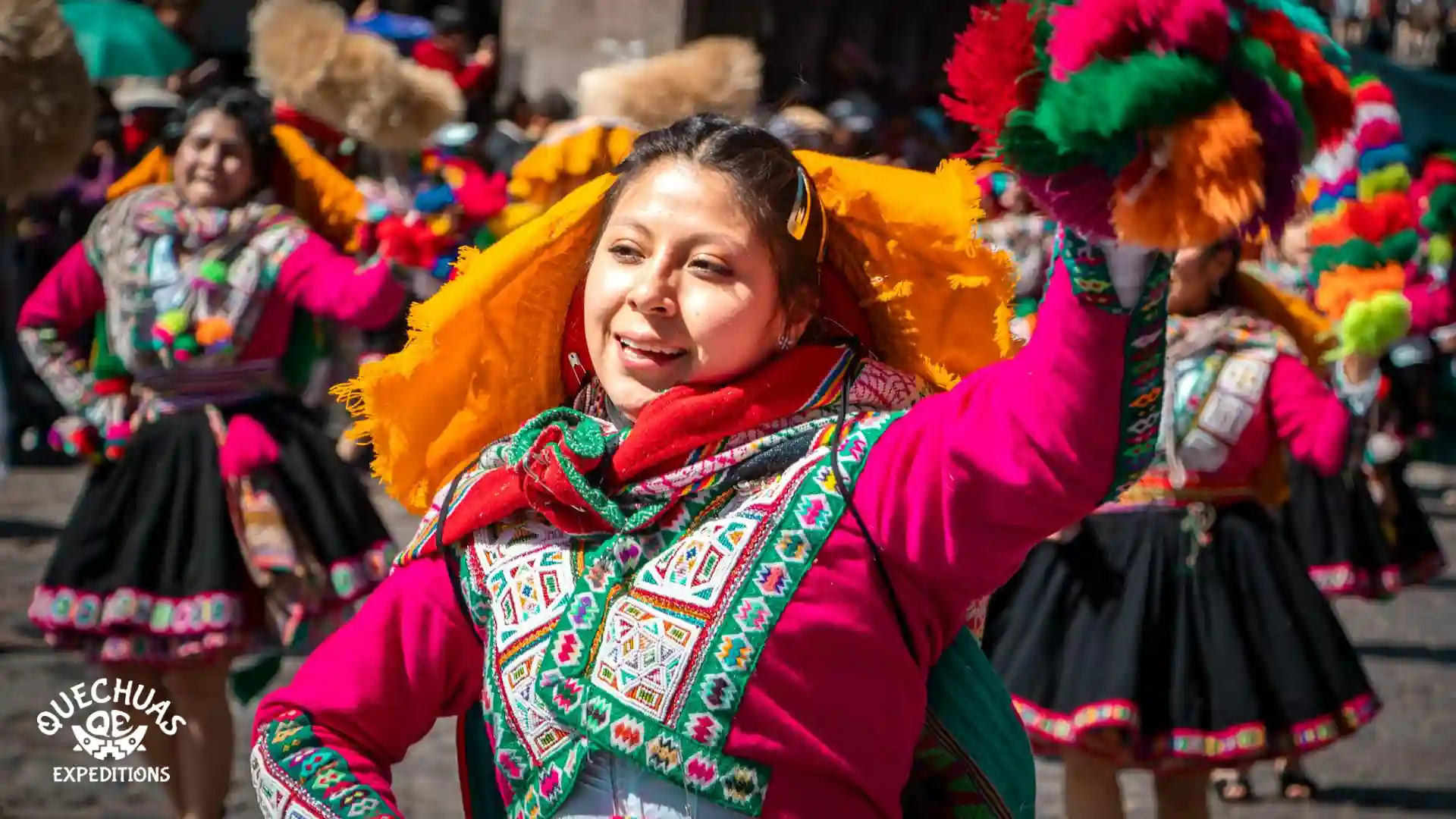
Traditional Peruvian clothing for women
Traditional Peruvian women’s clothing varies according to region, climate, and occasion. On the coast, it is often associated with dance and elegance; in the Andes, with warmth, textiles, and community identity; and in the Amazon, with lightweight materials, symbolic designs, and a close connection to nature.
Embroidered Blouses
Embroidered blouses are very common in Andean women’s clothing, especially during patron saint festivals, carnivals, weddings, and traditional dances. They often feature floral details, ribbons, lace, or colorful embroidery that complements the wide skirts and other typical garments. In many communities, these designs reflect family taste, local tradition, and regional pride.
Decorated Jackets
In various highland areas, women wear short jackets decorated with buttons, embroidery, sparkly appliqués, or colorful ribbons. These garments are especially worn during celebrations and dances, where movement, color, and sparkle help to highlight the presence of each group or community.
Marinera Skirts
On the coast, one of the most recognizable women’s garments is the wide skirt worn in the marinera dance. Its design allows for elegant turns, open movements, and a highly expressive visual interplay during the dance. More than just a decorative garment, the skirt is an integral part of the marinera’s body language, along with the handkerchief and the dancer’s posture.
Carrying Blankets
In many Andean communities, women use woven blankets not only for warmth but also to carry market goods, food, flowers, small tools, or babies. These blankets demonstrate how traditional clothing can be simultaneously practical, beautiful, and deeply connected to daily life.
Amazonian Accessories
In the Peruvian rainforest, women may complement their attire with seed necklaces, natural fiber bracelets, headdresses, body paint, and fabrics decorated with designs unique to their community. These accessories often appear in dances, ceremonies, community gatherings, and celebrations where Amazonian identity is expressed through the body, color, and materials from the forest.

Traditional Peruvian clothing for men
Traditional Peruvian men’s clothing also reflects the country’s cultural diversity. On the coast, it is closely linked to dances like the marinera and Afro-Peruvian expressions; in the highlands, to rural work, warmth, and community identity; and in the jungle, to light garments, natural accessories, and body paint.
Marinera Shirt
In the northern marinera, men typically wear a cool and elegant white shirt, ideal for the warm coastal climate. This garment complements the gallant nature of the dance and is paired with light-colored trousers, a handkerchief, and a hat. Its simplicity allows movement, posture, and rhythm to take center stage.
Traditional Light-Colored Trousers
Light-colored trousers are part of the men’s attire in various marinera performances and coastal celebrations. Their use lends visual clarity and elegance to the dance, and they complement the white shirt and straw hat. Together, this outfit conveys a sober, festive image that is highly representative of the northern Peruvian coast.
Festive Vests
In some Andean dances and celebrations, men wear decorated vests over long-sleeved shirts. These vests may feature embroidery, colorful appliqués, or glitter, especially in dance troupes at patron saint festivals. Their design varies depending on the region and the dance being performed.
Ceremonial Sashes
Woven sashes are worn by men in various Andean communities to cinch clothing and complement traditional attire. In festive or ceremonial contexts, these sashes may feature colors and designs that represent the community, family, or elements of Andean nature.
Dance Accessories
In many Peruvian dances, men use accessories such as handkerchiefs, masks, instruments, bells, ribbons, or symbolic items depending on the festival. These objects are not mere decorations; they help to represent characters, stories, rituals, or scenes from local life.
Meaning of colors and patterns in Peruvian traditional clothing
Colors and patterns in Peruvian traditional clothing are not chosen only for beauty. In many communities, they are connected to identity, nature, family history, and local traditions. Bright reds, yellows, greens, blues, and purples often appear in Andean textiles, while geometric figures may represent mountains, rivers, animals, crops, roads, or elements of daily life.
In the Andes, woven designs can work almost like a visual language. Some patterns identify a community, while others reflect agricultural cycles, local beliefs, or the relationship between people and the land. On Taquile Island, for example, UNESCO recognizes textile art as one of the clearest examples of how the traditional costumes of Peru carry social and cultural meaning through design alone.
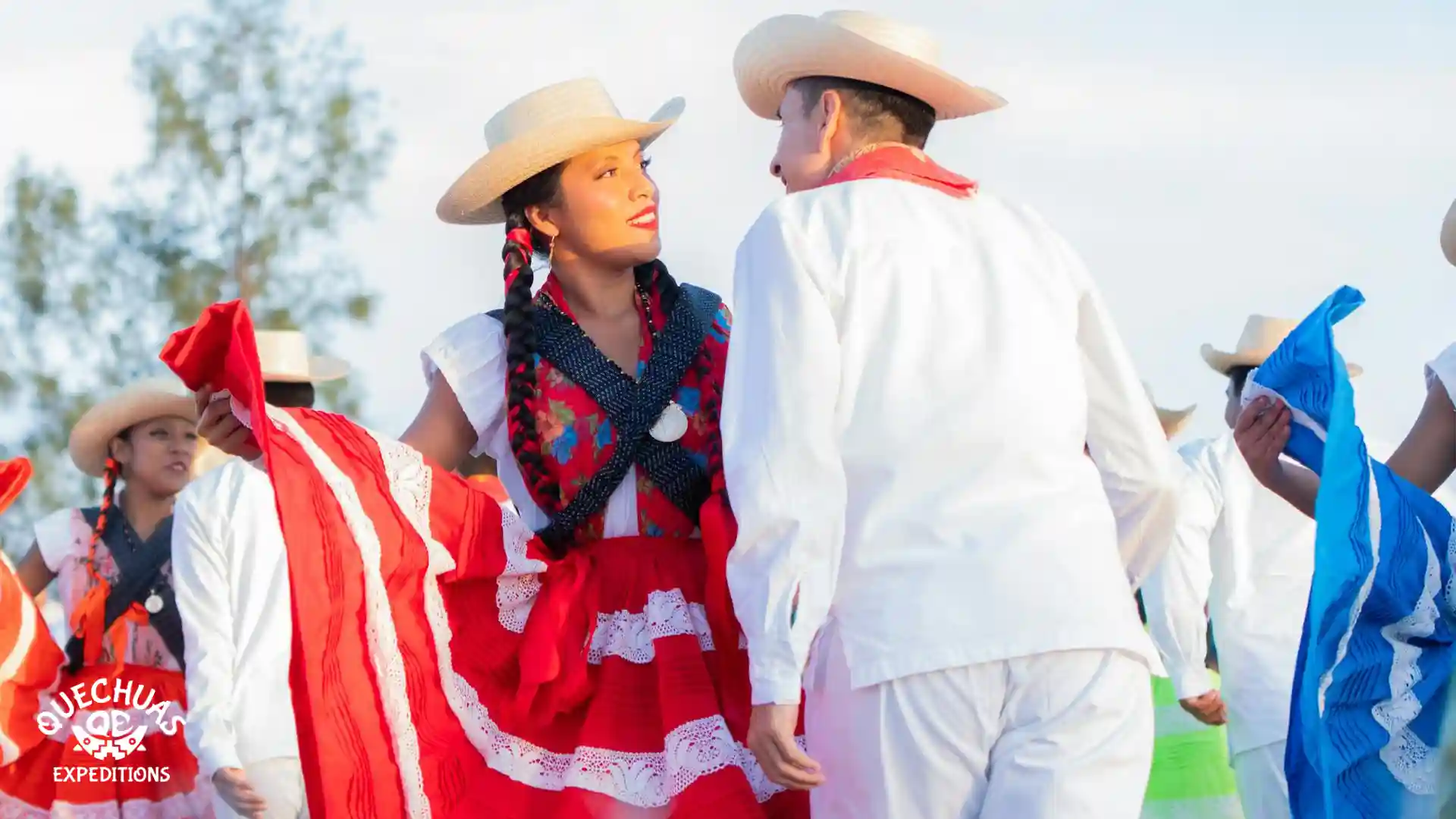
Traditional Peruvian clothing in festivals and dances
One of the best ways to understand traditional Peruvian clothing is through festivals and dances. During these celebrations, clothing becomes more than daily wear; it becomes part of music, devotion, storytelling, and community pride.
In Puno, the Festivity of the Virgen de la Candelaria is one of the most important examples. Celebrated every February, this event combines Catholic devotion with elements of the Andean worldview, and includes processions, music, dances, masks, and elaborate costumes. UNESCO recognizes this celebration as Intangible Cultural Heritage, highlighting how dance, music, and craft knowledge are passed on to younger generations.
Other festivals, such as Qoyllurit’i in Cusco, Carnival celebrations in the Andes, Marinera performances on the coast, and Amazonian festivities like San Juan, also show how clothing changes depending on the occasion. In these events, costumes help represent characters, local history, religious devotion, humor, courtship, agricultural cycles, and regional identity.
Where to see traditional costumes of Peru during your trip
Travelers can see traditional costumes of Peru in many places, but the best experience depends on the region and season of travel. In Cusco and the Sacred Valley, traditional clothing is visible in local markets, rural communities, weaving centers, and festivals. In Puno and Lake Titicaca, visitors can see textile traditions connected to Taquile, community life, and major festivities such as Virgen de la Candelaria.
On the coast, cities like Trujillo, Chiclayo, Lima, Chincha, and Cañete are good places to see clothing linked to Marinera and Afro-Peruvian dances. In the Amazon, traditional clothing and accessories can be seen during community visits, cultural presentations, and celebrations in areas such as Iquitos, Pucallpa, Tarapoto, and Puerto Maldonado.
What is the Peruvian national costume?
Peru does not have just one official national costume, because each region has its own traditional clothing shaped by climate, history, dances, festivals, and local identity. However, the most recognized image of the Peruvian national costume usually comes from the Andes, with colorful polleras, ponchos, chullos, llicllas, embroidered hats, and handmade textiles made from alpaca, sheep wool, or other natural fibers.

