
Trekking poles are what separate a brutal descent from a hike you actually enjoy, and that’s something anyone who’s used them on Peru’s trails will tell you. Planning the Inca Trail, tackling Colca Canyon, or hitting the high-altitude paths of the Peruvian Andes? You’ve probably asked yourself: are trekking poles worth it in Peru? Steep climbs, rocky terrain, and altitude swings wear down even seasoned hikers, so the right gear can mean the difference in comfort and safety. Trekking poles are one of those things people skip, until they’re halfway up a mountain wishing they’d packed a pair.
In this guide, we’ll break down the real benefits Peruvian hikers get from trekking poles, the different types out there, and how trekking poles stack up against traditional hiking sticks, so you know exactly what you need before hitting the trail.
Are trekking poles worth it in Peru for most hikers?
For most hikers, yes, and the reason has a lot to do with the terrain you find in Peru. The country is one of South America’s great trekking destinations because the Andes pack a lot into a relatively small area: high mountain passes, long stone staircases, loose gravel, steep descents and trails that can change completely after a few hours of rain. On the more demanding routes, trekking poles are not something guides carry just for looks. They are one of the basic pieces of gear many hikers rely on once the trail starts dropping, the ground gets uneven or fatigue begins to show.
What usually convinces people is not the climb, but the descent. After several hours at altitude, your legs are already working harder than normal, and every downhill step puts more pressure on your knees. A good pair of poles gives you two extra points of contact with the ground, helps you control your pace and makes it easier to react if a rock moves or a wet stone feels slippery. You may not use them every minute, and on an easy section they might stay strapped to your backpack, but on a full trekking day in the Peruvian Andes they can quickly go from “optional gear” to something you are very glad you brought.
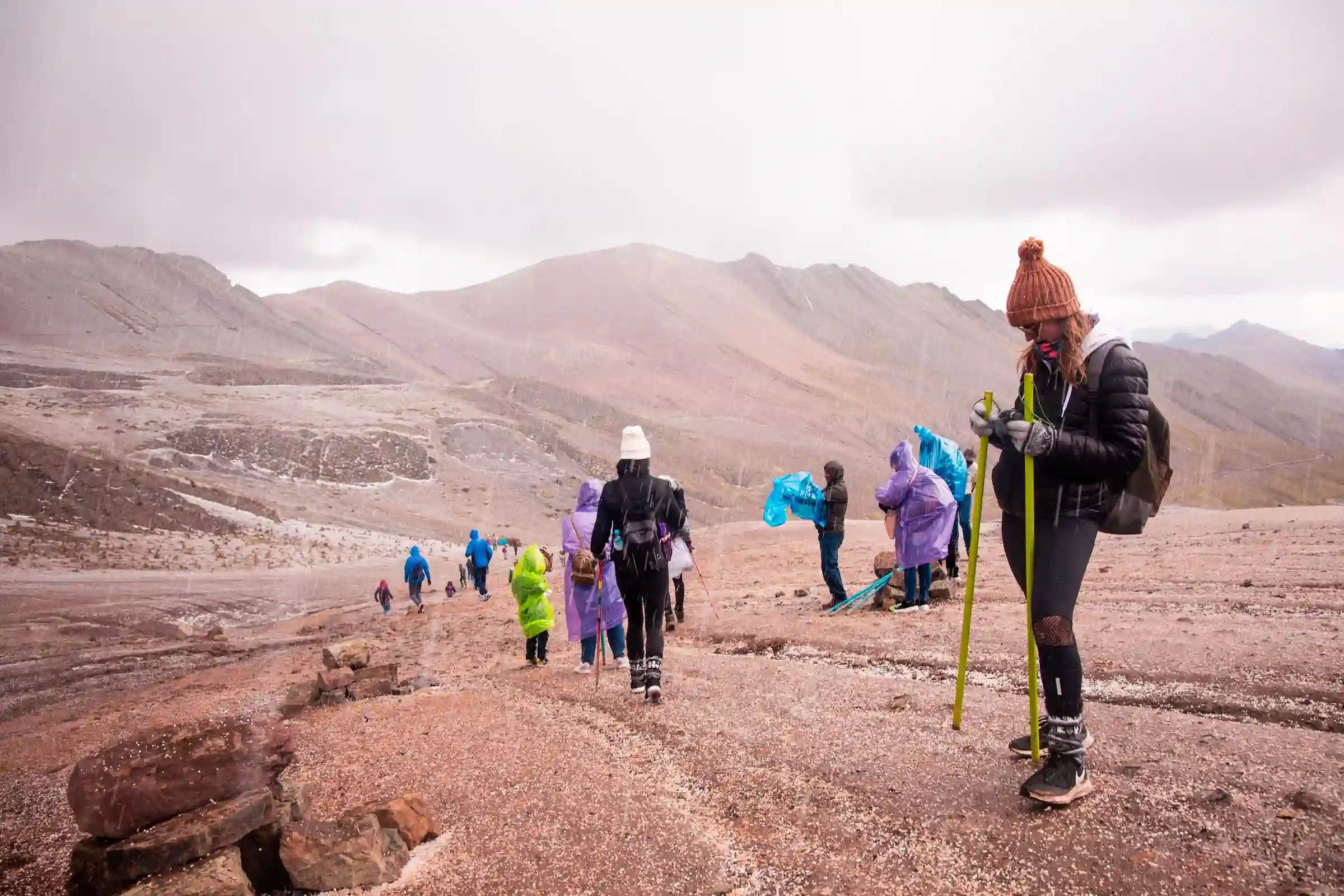
Benefits of trekking poles that peruvian hikers actually rely on
Peru’s terrain is known for drastic elevation changes, uneven stone steps, and weather that shifts without warning, and that’s exactly why trekking poles end up useful for hikers at every level. Whether you’re out for a multi-day trek or a shorter hike, poles can cut down on effort, improve balance, and make rough terrain easier to handle. Below are three of the biggest benefits hikers notice when they use trekking poles recommended by Peruvian guides on nearly every route.
Trekking poles on Peru’s trails go easy on your knees and joints
One of the biggest advantages of trekking poles is less strain on your knees, hips, and lower back, especially on long descents. Peru’s trails often include steep sections with loose gravel or stone steps, and every step sends extra impact force through your joints. By shifting some of that load to your arms and shoulders through the poles, you cut down significantly on lower-body wear, which matters a lot on multi-day treks like the Inca Trail or Salkantay.
Research from the National Institutes of Health found that trekking poles can meaningfully lower compressive force on the knees during descents, and that adds up fast over the thousands of steps a multi-day trek involves. If you already deal with sensitive knees or old injuries, this benefit alone can be the difference between finishing a hike comfortably and struggling through that final descent.
Better balance and stability
Plenty of trails in Peru cross uneven ground, river crossings, narrow ridges, and stretches of loose rock or mud, especially during the rainy season. Trekking poles work as extra points of contact with the ground, giving you more stability when the terrain gets tricky. This matters even more at high altitude, where fatigue and thinner air can throw off your coordination and reaction time, raising the odds of a stumble without that extra support.
Peru’s Ministry of Foreign Trade and Tourism (PROMPERÚ) notes that many of the country’s main trekking routes climb above 4,000 meters, where altitude-related fatigue becomes a real factor. On routes like the Inca Trail, where hikers cross narrow stone paths with steep drops on either side, that extra stability isn’t just a nice-to-have, it’s a genuine safety consideration worth taking seriously.
More efficiency and stamina on the trail
Trekking poles don’t just add stability, they also help you move more efficiently by putting your upper body to work as you walk. That extra push from your arms can take some of the load off your legs, so you cover more ground before you tire out. On long Andean treks, where a day’s hike can mean six-plus hours at altitude, that boost in efficiency changes how you feel by the end of each day. A lot of hikers also find that poles help them settle into a steadier, more rhythmic pace, which comes in handy on long climbs, since pacing yourself right can head off early burnout and altitude fatigue before they set in.
How much does it cost to rent trekking poles in Peru?
You do not need to buy trekking poles just for one trip to Peru. Cusco has plenty of rental options, and many trekking companies can arrange poles before departure.
Current rental examples in Cusco put a pair at roughly US$8 to US$25 for a multi-day trek, depending on the quality of the poles, the rental company and how many days you need them. Some operators currently charge around US$15 for three days, US$20 for four days and US$25 for five days, while local equipment shops may offer cheaper options.
| Option | Typical cost | Best for |
|---|---|---|
| Rent in Cusco | Approx. US$8–25 per pair | Travelers doing one trek during their Peru trip |
| Rent from your tour operator | Varies by operator | Travelers who want the easiest and most convenient option |
| Bring your own poles | No rental fee | Regular hikers who already own a comfortable, reliable pair |
| Buy in Cusco | Varies by brand and quality | Travelers planning several hikes or longer trekking routes |
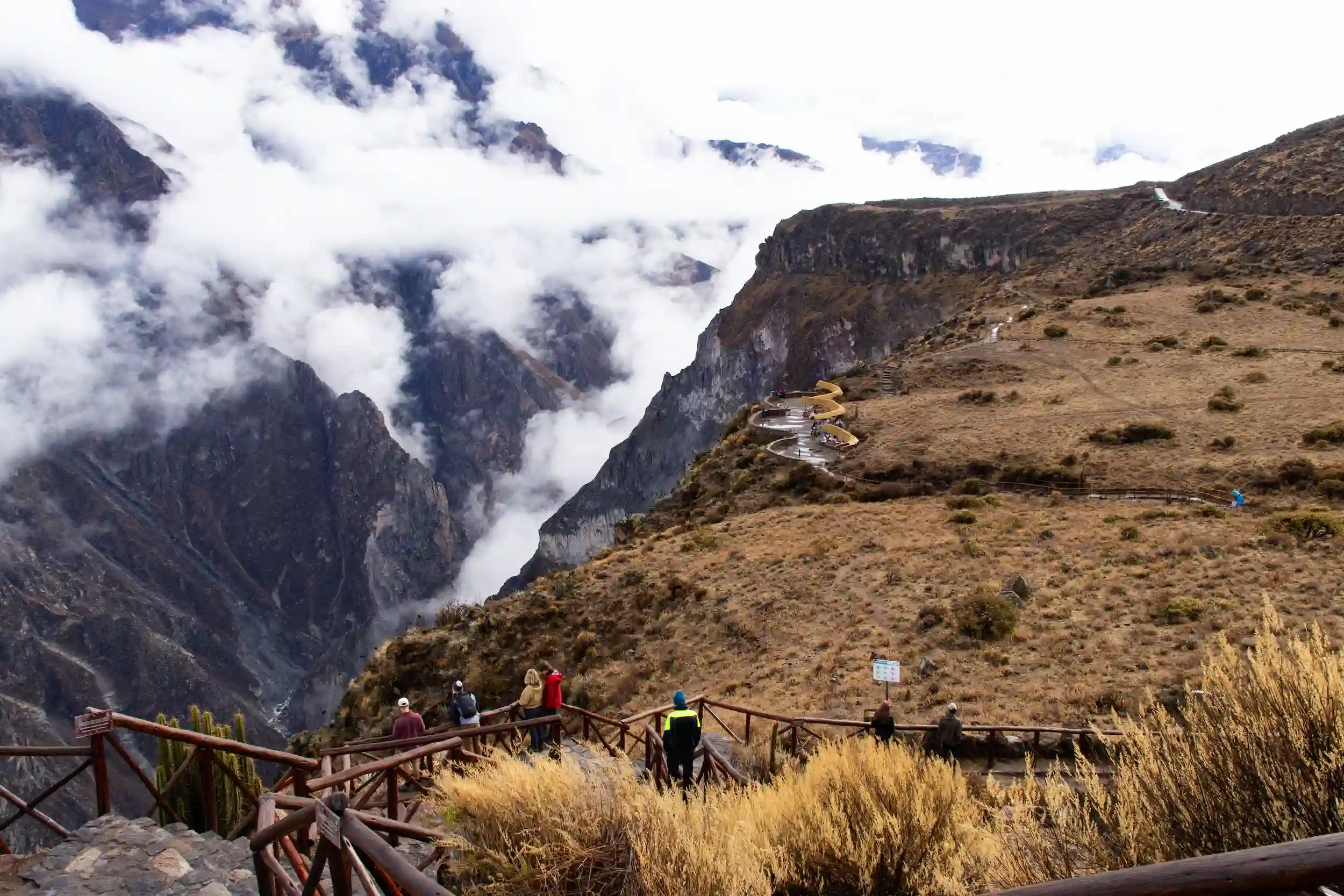
Types of trekking poles hikers use in Peru
Not all the trekking poles travelers bring to Peru are built the same, and picking the right type can shape your comfort, how easily you pack, and your overall trekking experience in Peru. From adjustable designs to ultralight folding models, there’s a wide range of options suited to different hiking styles and traveler preferences. Here are the three most common types of trekking poles you’ll come across before setting out on your Peru adventure.
Fixed-length trekking poles
Fixed-length poles tend to be the cheapest and most durable option, since there are no moving parts or locking mechanisms that can fail out on the trail. The trade-off is that you can’t adjust the length, which makes them less versatile, especially on Peru’s trails, which often switch between steep climbs and descents that benefit from different pole lengths. Fixed poles work well for hikers who keep a steady pace throughout the day and don’t need to fine-tune length as conditions change.
Adjustable trekking poles
Adjustable trekking poles are the most popular pick among hikers in Peru, thanks to how versatile they are. These typically use twist-lock or lever-lock mechanisms, letting you shorten them for climbs and lengthen them for descents. That flexibility really pays off on trails like the Inca Trail, where elevation shifts constantly, and being able to adjust pole length on the fly can make a noticeable difference in comfort and efficiency.
Folding (collapsible) trekking poles
Folding trekking poles, often built with an internal cord system similar to tent pole design, are made for compact storage and easy packing. They’re a solid choice for travelers who need to fit their poles into a small backpack or checked luggage without eating up too much space. That said, while they’re usually lighter and easier to carry than adjustable poles, they can sometimes be a bit less sturdy, so it’s worth checking the weight capacity if you’re planning to tackle more demanding terrain in Peru.
Where trekking poles help most in Peru
You probably will not keep your poles in your hands for the entire hike. On easy stretches, they may stay strapped to your backpack. But once the trail gets steep, wet or uneven, they start to earn their place in your gear.
In Peru, that often happens on long descents, old stone paths, loose ground or during the final part of the day, when your legs are already tired and your balance is not quite as sharp as it was in the morning.
On steep descents
Downhill sections are where many hikers notice the biggest difference.
Climbing may leave you out of breath, but descending puts repeated pressure on your knees with every step. After a few hours, that can become uncomfortable, especially when the trail is steep.
Poles let you slow things down. You can plant them slightly ahead of you, control each step and take some of the load through your arms instead of leaving your legs to handle everything. By the end of a long day, that extra support can feel surprisingly valuable.
On wet or muddy trails
A trail that feels simple when dry can become completely different after rain.
Mud makes your footing less predictable, wet stones can be slippery and shallow puddles do not always show what is underneath. In those conditions, poles give you a chance to test the ground before committing your full weight.
They will not stop every slip, but they can give you enough support to correct your balance before a small misstep turns into a fall.
On stone steps and uneven paths
Some mountain trails in Peru are anything but smooth. You may spend long stretches stepping over irregular stones, rough stairs and surfaces where one foot lands much higher than the other.
That uneven rhythm gets tiring after a while.
With trekking poles, you can spread the effort across more of your body and move at a steadier pace. Adjustable poles are especially useful here because you can shorten them on climbs and lengthen them slightly when the trail starts dropping again.
On loose gravel and rocky ground
Loose gravel can be frustrating because it often looks stable until you step on it.
A rock can roll under your boot or the ground can shift just as you put your weight down. That is where having a pole already planted beside you helps. You have something solid to react against instead of relying only on the foot that just slipped.
You do not need to lean heavily on the poles. In many cases, they are simply there to help you recover faster when the ground does something unexpected.
When your legs start getting tired
Fatigue changes the way you walk. Your steps get shorter, you lift your feet a little less and your reactions are not as quick as they were at the start of the day.
Trekking poles can help you settle into a more comfortable rhythm and give you extra stability when your legs begin to feel heavy. They do not protect you from altitude sickness, though. If you feel dizzy, unusually weak or unwell, the right response is to slow down, rest and pay attention to what your body is telling you, not simply rely on the poles.
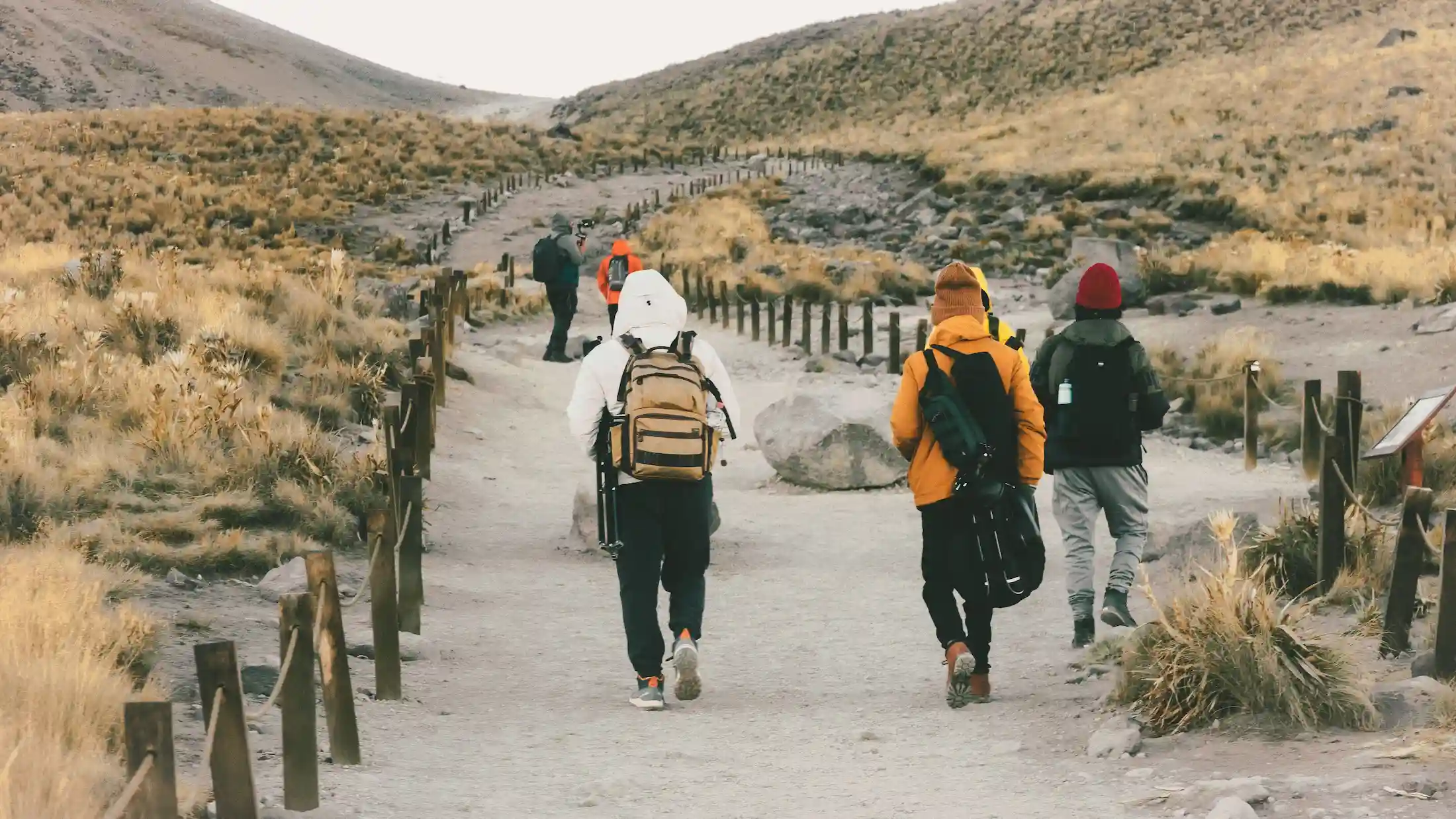
Trekking poles in Peru vs. hiking sticks
People mix these up all the time, but trekking poles and hiking sticks actually do slightly different jobs and give you different advantages out on the trail. Once you get the differences between the two, it’s a lot easier to pick the right one for whatever kind of trekking you’ve got planned in Peru. Here’s the breakdown of what actually matters before you make a call.
How many points of contact you get
The obvious difference: trekking poles come in a pair, so you’ve got two points of contact with the ground, while a hiking stick is just one, used with a single hand. That matters more than you’d think on rough or technical terrain. Trekking poles give you balanced support on both sides of your body, while a hiking stick mostly helps on one side and frees up your other hand for stuff like snapping photos or holding a map.
Weight distribution and support
Since trekking poles spread the weight and impact across both arms, they tend to give you steadier support on long descents and technical stretches, which you’ll run into a lot on Peru’s Andean trails. A hiking stick, on the other hand, is more of a traditional setup, and plenty of hikers actually prefer it because it’s simple, no adjustable mechanisms to mess with, but it still helps with balance and takes some pressure off your knees.
Which one actually makes sense for you
Trekking poles are usually the better call for multi-day hikes with serious elevation changes, think the Inca Trail, Salkantay, or Colca Canyon, where having balanced support on both sides makes a real difference over long distances. A hiking stick might make more sense for shorter, less technical walks, or if you just want one hand completely free. So if your Peru itinerary has some tough mountain hiking on it, a pair of trekking poles is almost always going to be the more practical pick.
Bottom line: given how rough the terrain gets, the altitude, and how unpredictable the weather can be on Peru’s most popular hiking routes, trekking poles are worth seriously considering for most travelers. They take pressure off your knees and joints, help you stay balanced on uneven or slippery ground, and keep your energy up through long days of walking. A hiking stick can be a lighter, simpler option for shorter or easier walks, but trekking poles just give you more well-rounded support for the range of conditions you’ll hit on multi-day routes like the Inca Trail or Salkantay.
At the end of the day, the right choice comes down to your fitness level, the specific route you’re planning, and your own hiking style. But if you’re gearing up for a serious trip through the Peruvian Andes, packing a solid pair of adjustable or folding trekking poles is one of the smarter calls you can make before you hit the trail. Your knees, your balance, and your energy on those final descents will thank you.

