
The Amazon rainforest is popularly known as the “lungs of the planet,” and for good reason. Thanks to its immense biodiversity and its power to regulate the global climate, the Amazon is the beating heart of the Earth, cleansing the ecosystem.
In this article, we’ll take you on a journey through 15 Interesting facts about Amazon rainforest Peru because we know there are still many little-known facts. Prepare to be amazed by the secrets of the world’s most impressive rainforest!
You might be interested: Festivals in Cusco month by month

What is the Amazon Rainforest in Peru?
The Amazon Rainforest in Peru is a vast and biodiverse region that plays a critical role in both local and global ecological health. As a trusted Peru tour operator, we recognize that it is one of the most important ecosystems in the world, home to an extraordinary array of species and vital natural resources.
Size and location
The Peruvian Amazon is one of the largest and most ecologically significant parts of the Amazon Basin, covering approximately 60% of Peru’s total land area, or about 800,000 square kilometers. This area is primarily located in the eastern part of the country, stretching across several regions such as Loreto, Ucayali, Madre de Dios, San Martín, and parts of Cuzco and Amazonas.
Lowland Forests
The lowland forests are typically found at altitudes below 1,000 meters. These forests are dense, humid, and rich in plant and animal life. Lowland areas in Peru’s Amazon are home to rainforests, river floodplains, and swamps, creating a habitat for a wide range of species. The Yavari River, Ucayali River, and the Marañón River are among the many rivers flowing through these forests.
Highland forests
The highland forests, located at higher altitudes in the eastern slopes of the Andes, have slightly different ecological characteristics. These areas are often cooler and have less humidity, creating different ecosystems compared to the lowland forests. The highlands are home to cloud forests and are critical to the water cycle of the region. The Vilcabamba and Sierra del Divisor mountain ranges are important areas of highland forests in the Peruvian Amazon.
Rivers
The Peruvian Amazon is crisscrossed by an extensive network of rivers, including the famous Amazon River, which flows across several countries and is the largest river by volume in the world. In Peru, the Marañón River and the Ucayali River converge to form the Amazon River, playing a vital role in the transportation, ecology, and economy of the region. Rivers provide essential water sources, transportation routes, and habitats for numerous aquatic species like pink dolphins and manatees.
Amazonian ecosystems
The Amazon in Peru is home to a range of ecosystems, from dense tropical rainforests to wetlands and flooded forests. These ecosystems are inhabited by a mind-boggling variety of species, over 1,500 species of birds, 500 species of mammals, and more than 10% of the world’s known species. In addition, the forests host countless species of plants, many of which have not yet been fully studied or documented. Some areas, such as the Madre de Dios region, are famous for being among the most biodiverse on Earth.
You might be interested: 15 Traditional food in Peru

15 Interesting facts about Amazon rainforest
In this section about 15 interesting facts about the Amazon Rainforest in Peru, you’ll discover why this rainforest is one of the largest and most important ecosystems on the planet. To ensure you make the most of your visit, here are essential facts about this vast, biodiverse territory that is home to indigenous cultures, a profound Amazonian spirituality, and a natural world that continues to amaze.
1. It is home to nearly 10% of all known species in the world
The Amazon rainforest is one of the most biodiverse areas on the planet. It is estimated that within its dense trees, rivers, and soils, approximately 10% of all known plant and animal species can be found. This figure reflects the enormous concentration of life found in a single ecosystem, highlighting the critical importance of the Amazon for global biodiversity.
2. Greatest diversity on the planet
Per hectare, the Amazon rainforest surpasses any other tropical forest in terms of biodiversity. Compared to other tropical regions, the Amazon harbors an impressive number of species per unit area, demonstrating the complexity and richness of its ecosystem. It is estimated that a single hectare of the Amazon can support more than 400 tree species, which is five times more than in the tropical forests of Africa or Asia. This density of species extends to other groups of organisms such as insects, birds, and mammals, with the region home to more than 2,200 species of fish and around 1,800 species of birds.
3. Diverse Fauna
One of the most revered plants in the Amazonian worldview is coca (Erythroxylum coca), used for centuries by indigenous peoples in spiritual and medicinal rituals. Among many Peruvian Amazon tribes, coca holds deep cultural and spiritual significance, playing an essential role in ceremonies, healing practices, and daily life, especially in regions like the Chuncho Macaws Clay Lick. Although coca is widely known for its association with cocaine production, in its natural form it is traditionally used to treat various ailments, combat fatigue, ease altitude discomfort, and increase energy. For numerous Amazonian communities, especially Peruvian Amazon tribes, coca remains a sacred plant that embodies ancestral knowledge and a profound connection to nature.
You might be interested: 40 Animals in the peruvian amazon

4. The longest river in South America
The Amazon River, the longest in the world, stretches for over 7,000 km, crossing several South American countries. Its basin covers an area of approximately 7 million km², larger than any other river system on the planet. The network of rivers and tributaries in the Amazon forms a kind of “lifeblood” for the forest, facilitating the transport of nutrients and supporting the species that depend on it.
5. Global climate
The Amazon rainforest regulates the world’s climate through evapotranspiration, a process in which plants release water vapor into the air, influencing rainfall in South America and balancing the global water cycle. If the Amazon were severely affected, the reduction in humidity could alter rainfall patterns in the region, impacting agriculture and global weather patterns, with devastating consequences for the climate.
6. A gigantic reserve of trees
Approximately 390 billion trees grow in the Amazon rainforest, representing more than 16,000 tree species. These trees not only contribute to the visual beauty of the landscape but also play a crucial role in capturing around 10% of global carbon, helping to mitigate the effects of climate change. Furthermore, the dense tree canopy retains moisture in the environment, promoting rainfall and regulating the local climate, which protects local biodiversity and creates a complex and interdependent ecosystem.
You might be interested: 7 National Parks in the Amazon

5. Ecosystems with specialized niches
The Amazon rainforest is composed of a variety of specialized microhabitats, such as the tree canopy, the understory, and bodies of water. These niches, which vary in humidity, temperature, and light exposure, allow a vast array of species to adapt to different conditions. For example, the tree canopy is home to species such as the howler monkey and the Cattleya orchid, while the understory is home to species adapted to darkness, such as bioluminescent insects. Furthermore, bodies of water harbor species such as the pink river dolphin and the roosterfish, which are adapted to river currents.
6. Undescribed species
Despite extensive research, it is estimated that more than 10,000 undescribed species still exist in the Amazon rainforest, particularly among insects, fish, and plants. Some studies indicate that around 2,000 new species are discovered in the region each year, underscoring its vast unexplored potential. For example, in 2019, a team of scientists discovered a new species of glow-in-the-dark frog, Hypsiboas picturatus, in the Peruvian Amazon. Furthermore, in 2020, more than 1,000 new insect species were identified in the Brazilian Amazon. This level of hidden biodiversity demonstrates the importance of continuing to explore and conserve this ecosystem, as each discovery could have significant implications for both science and medicine.
You might be interested: Ecotourism in Amazon Rainforest of Peru

7. A global natural pharmacy
The Amazon is known as a “natural pharmacy” due to the medicinal properties of many of its plants. It is estimated that more than 2,000 plant species have healing properties, such as Camu Camu, which has up to 60 times more vitamin C than an orange. Additionally, Pau d’Arco is used to treat infections, and quinine, extracted from Cinchona, is essential for treating malaria. Currently, scientists are investigating these plants for their potential in modern medicine, and it is estimated that around 25% of the medicines used worldwide come from Amazonian plants, many of which remain undiscovered.
8. Home to the indigenous Shipibo-Conibo people
The Peruvian Amazon is home to the Shipibo-Conibo people, one of the largest indigenous groups in the country. Known for their intricate geometric art and traditional knowledge of plants, they are renowned for their use of ayahuasca in ceremonial healing and spiritual practices. Their deep understanding of the forest’s biodiversity plays a critical role in the conservation of the region.
You might be interested: Summer in Peru: 5 top destinations to visit
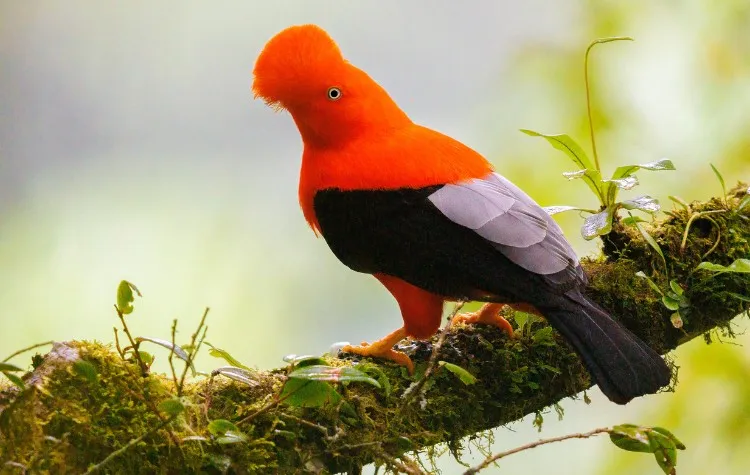
9. The Andean Cock-of-the-Rock
The Andean Cock-of-the-Rock (Rupicola peruvianus) is the national bird of Peru. It is known for its striking bright red plumage and spectacular courtship dance. It is found primarily in the mountainous region of the eastern Andes and is an icon of the biodiversity of the Peruvian Amazon. This species is especially famous for its mating rituals, where males gather to compete for the attention of females.
10. The Plant of “Life”
One of the most revered plants in the Amazonian worldview is coca (Erythroxylum coca), used for centuries by indigenous peoples in spiritual and medicinal rituals. Among many peruvian amazon tribes, coca holds deep cultural and spiritual significance, playing an essential role in ceremonies, healing practices, and daily life. Although coca is widely known for its association with cocaine production, in its natural form it is traditionally used to treat various ailments, combat fatigue, ease altitude discomfort, and increase energy. For numerous Amazonian communities, especially Peruvian Amazon tribes, coca remains a sacred plant that embodies ancestral knowledge and a profound connection to nature.

11. The “Lost City” of the Incas in the Jungle
Recently, the ruins of ancient civilizations have been discovered in the Peruvian Amazon, suggesting the existence of societies far more advanced than previously thought in the region. One of the most important finds was the city of the Chachapoya culture in the Kuelap area. The Chachapoya, known as the “warriors of the cloud forest,” built complex stone structures in the jungle, including walls and ceremonial platforms, demonstrating these cultures’ ability to adapt and thrive in the dense Amazon rainforest.
12. The “Floating Villages” of the Amazon
In some parts of the Amazon basin, especially in Peru and Brazil, there are communities known as “floating villages.” These communities are built on floating wooden platforms that allow them to adapt to changes in water level during the rainy season. The floating houses and markets move with the currents, demonstrating how Amazonian peoples have adapted to the river’s flood cycles.
You might be interested: Amazon rainforest packing list
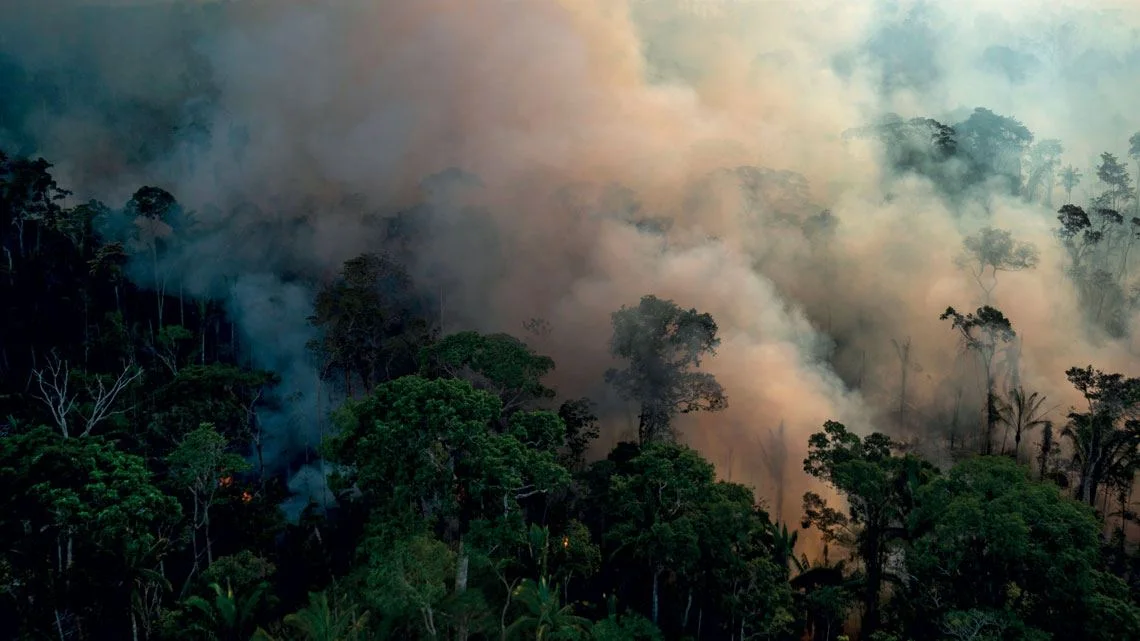
13. The Mysterious “Methane Bubbles”
In some areas of the Amazon, particularly in swamps and stagnant bodies of water, an accumulation of methane bubbles has been found rising from the bottom of rivers and lagoons. This methane is produced by the decomposition of organic matter underwater, and its release into the environment has a significant impact on climate change, since methane is a greenhouse gas much more potent than CO₂.
14. Cloud forests
A special feature of the Peruvian Amazon mountains is the cloud forest, also known as the cloud forest. Located in the highest reaches of the rainforest, these forests are shrouded in a constant mist that helps maintain the humidity necessary for the growth of unique species. These forests are home to rare species of flora and fauna, such as the Andean cock-of-the-rock, which is Peru’s national bird.

Why these interesting facts about Amazon rainforest matter for travelers
Understanding these interesting facts about the Amazon rainforest matters because this region is one of the most biodiverse places on Earth, home to around a tenth of all known species. For travelers, this means every visit becomes a rare opportunity to witness wildlife, ecosystems y formas de vida que no existen en ningún otro lugar del planeta.
The Amazon also produces a significant portion of the world’s oxygen and regulates global climate patterns, making its conservation crucial for the future. Traveling with knowledge and respect not only enriches the experience but also allows you to support local communities, sustainable projects, and preservation efforts that keep this ecosystem alive for future generations.
A final look at the most interesting facts about Amazon rainforest
Now that you know these fascinating facts about the Peruvian Amazon, you understand that it’s one of the last refuges of biodiversity on the planet. That’s why every species, river, and community has immeasurable value within this unique ecosystem, where life evolves at a pace unmatched anywhere else in the world.
Exploring it with respect and responsibility is a way to contribute to its conservation. If you’re ready to experience this territory brimming with history, nature, and vibrant culture, we invite you to travel with us and discover the Amazon in an authentic and safe way.

