
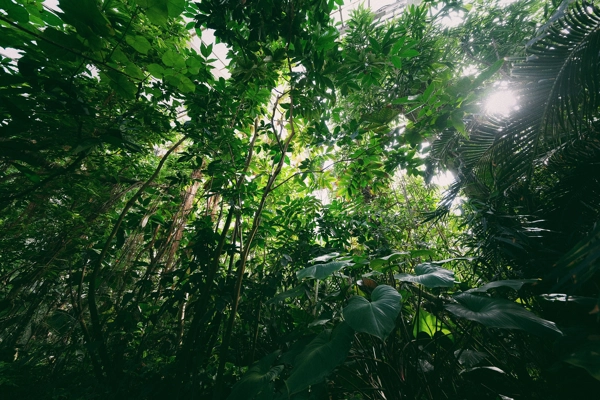
The question of jungle vs rainforest sounds simple, but the two words are often used as if they mean the same thing. They do overlap, yet they describe different kinds of vegetation and different parts of tropical environments.
When people compare jungle vs rainforest, the biggest distinction usually comes down to structure. A rainforest has several layers of vegetation, including a dense canopy that blocks much of the sunlight. A jungle tends to have thicker growth closer to the ground, often because more light reaches the lower vegetation.
That difference affects how each place looks, feels and supports wildlife. Understanding jungle vs rainforest also makes it easier to read travel guides, nature articles and documentaries without assuming that every tropical forest is the same.
You might also like: Amazon Rainforest Food Chain: How Energy Moves Through the Jungle
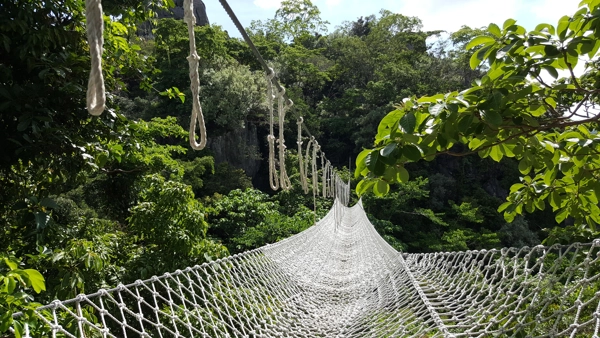
Jungle vs Rainforest: The Main Difference
In a jungle vs rainforest comparison, a rainforest is generally defined by high rainfall, dense tree cover and a layered forest structure. The canopy can be so thick that relatively little sunlight reaches the forest floor.
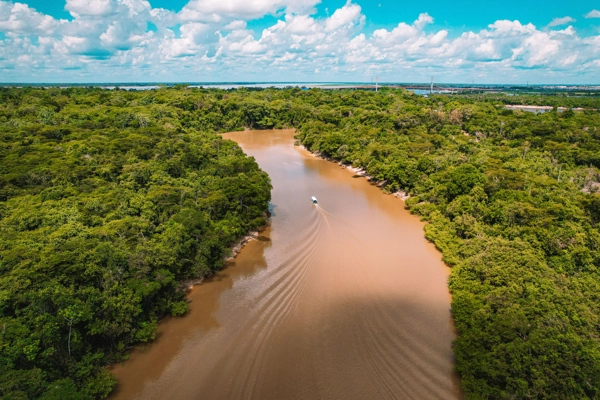
A jungle, by contrast, usually refers to land with very dense vegetation at ground level. Vines, shrubs, grasses and young trees can make movement difficult. This type of growth often appears along forest edges, riverbanks or places where the canopy has opened.
The jungle vs rainforest distinction is therefore not about one being tropical and the other being something completely different. A jungle can exist within or beside a rainforest, especially where sunlight encourages dense lower growth.
Why the two terms are often confused
The confusion around jungle vs rainforest comes partly from everyday language. Movies, books and travel writing often use jungle as a general word for any lush tropical forest.
In ecology, rainforest is usually more precise because it describes a forest shaped by heavy rainfall and a complex vertical structure. Jungle is a looser term that focuses more on dense, tangled vegetation.
You might also like: Amazon Rainforest Layers: How Life Is Organized from the Ground to the Treetops
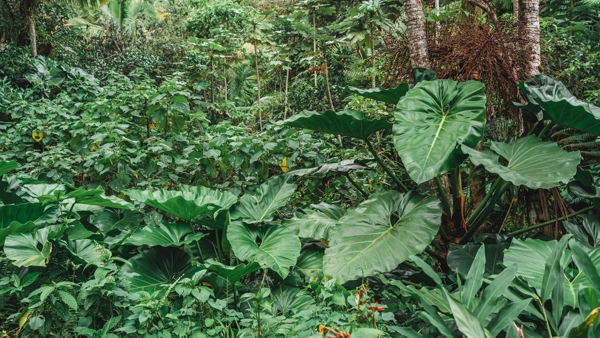
How Vegetation Changes the Jungle vs Rainforest Experience
One of the easiest ways to understand jungle vs rainforest is to look at what is growing near your feet.
Inside a mature rainforest, tall trees compete strongly for sunlight. Their crowns form a canopy high above the ground, while lower plants survive in shade. The forest floor can actually be more open than many people expect.
In a jungle, sunlight may reach the ground more easily. That extra light allows shrubs, vines, grasses and young trees to grow quickly, creating the thick vegetation people usually imagine when they hear the word jungle.
This is why a jungle vs rainforest comparison can feel surprising. The rainforest may have taller trees and greater vertical complexity, while the jungle may feel denser at human height.
Light is one of the biggest clues
Light helps explain much of the jungle vs rainforest difference. Where a continuous canopy blocks sunlight, lower vegetation is limited. Where the canopy is broken, plant growth near the ground can become much more aggressive.
Storms, fallen trees, rivers and human disturbance can all create openings. Over time, those openings may develop into areas that look far more like jungle than the shaded forest around them.
You might also like: Are trekking poles worth it in Peru? Costs, tips & benefits
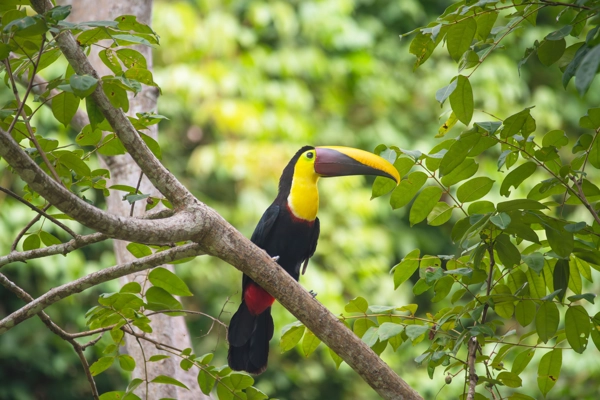
Climate, Wildlife and Biodiversity
The jungle vs rainforest question is not only about plants. Climate and wildlife also help shape the way these environments function.
Rainforests occur in regions with high rainfall and enough warmth to support dense vegetation for much of the year. Tropical rainforests are especially famous for their biodiversity because they provide habitats from the forest floor all the way to the canopy.
A jungle may share the same humid climate, but the term itself does not describe rainfall as precisely. It tells you more about the density of lower vegetation.
Wildlife also moves across these boundaries. In a jungle vs rainforest setting, monkeys, birds, reptiles, insects and mammals may use both dense ground vegetation and taller forest depending on food, shelter and season.
Is the Amazon a jungle or a rainforest?
This is one of the most common jungle vs rainforest questions. The Amazon is primarily a tropical rainforest because of its rainfall, tree cover and layered structure.
People still call parts of the Amazon jungle, and that is not always wrong in casual conversation. Areas with thick undergrowth, forest edges or openings can have jungle like vegetation. Scientifically, however, rainforest is the broader and more accurate description of the Amazon biome.
You might also like: Best guide to Nightlife in Cusco 2026
Where Jungles and Rainforests Are Found
Another useful way to compare jungle vs rainforest is by geography. Tropical rainforests are found near the equator in South America, Central America, Africa, Southeast Asia and parts of Oceania.
The Amazon is the largest tropical rainforest region, while the Congo Basin and the forests of Southeast Asia are other major examples.
Jungles can appear within many of these same regions. Because the word describes dense lower vegetation rather than a specific climate category, jungle areas may form wherever light and moisture support rapid plant growth.
This overlap explains why jungle vs rainforest is not a simple choice between two separate maps. The same landscape may include deep rainforest, open riverbanks, dense jungle growth and forest clearings within a relatively short distance.
Frequently Asked Questions About Jungle vs Rainforest
Is a jungle the same as a rainforest?
No. In a jungle vs rainforest comparison, rainforest describes a forest ecosystem associated with high rainfall and layered vegetation. Jungle usually refers to especially dense growth near ground level.
Which is denser, a jungle or a rainforest?
It depends on what kind of density you mean. A rainforest can have enormous tree density and canopy cover, while a jungle may be harder to walk through because vegetation is thicker close to the ground. This is a key jungle vs rainforest distinction.
Does a rainforest always have thick undergrowth?
No. Mature rainforest can have surprisingly sparse ground vegetation because the canopy blocks sunlight. This is one reason the jungle vs rainforest difference is easy to misunderstand.
Can a jungle exist inside a rainforest?
Yes. A jungle vs rainforest landscape can overlap. Dense jungle growth may develop along rainforest edges, rivers, clearings or places where trees have fallen and sunlight reaches the ground.
A Better Way to Read Tropical Landscapes
Instead of treating jungle vs rainforest as two completely separate environments, it is more useful to look at structure. Ask how much light reaches the ground, how dense the canopy is and where the thickest vegetation grows.
That approach makes the jungle vs rainforest distinction much easier to recognize in photographs, field guides and real landscapes. A rainforest is defined by the larger forest system, while jungle usually describes the tangled growth that develops where conditions favor dense vegetation near the ground. Once you understand the jungle vs rainforest difference, tropical forests become much easier to describe accurately.

