
The Qoyllur Rit’i Festival in Peru is one of the most powerful religious and cultural celebrations in the Andes. Every year, thousands of pilgrims make their way to the Sanctuary of the Lord of Qoyllur Rit’i, in the Sinakara area near the snow-capped Ausangate mountain, to take part in a pilgrimage that brings together Catholic faith, Andean spirituality, music, dances, promises, and high-mountain rituals.
This is not your typical tourist festival. It is a real, intense, and deeply spiritual experience. The celebration takes place at more than 4,700 meters above sea level, in a cold, remote, and sacred setting for Andean communities. Its cultural value is so important that, in 2011, UNESCO added the pilgrimage to its Representative List of the Intangible Cultural Heritage of Humanity.
You might be interested: Festivals in Cusco month by month
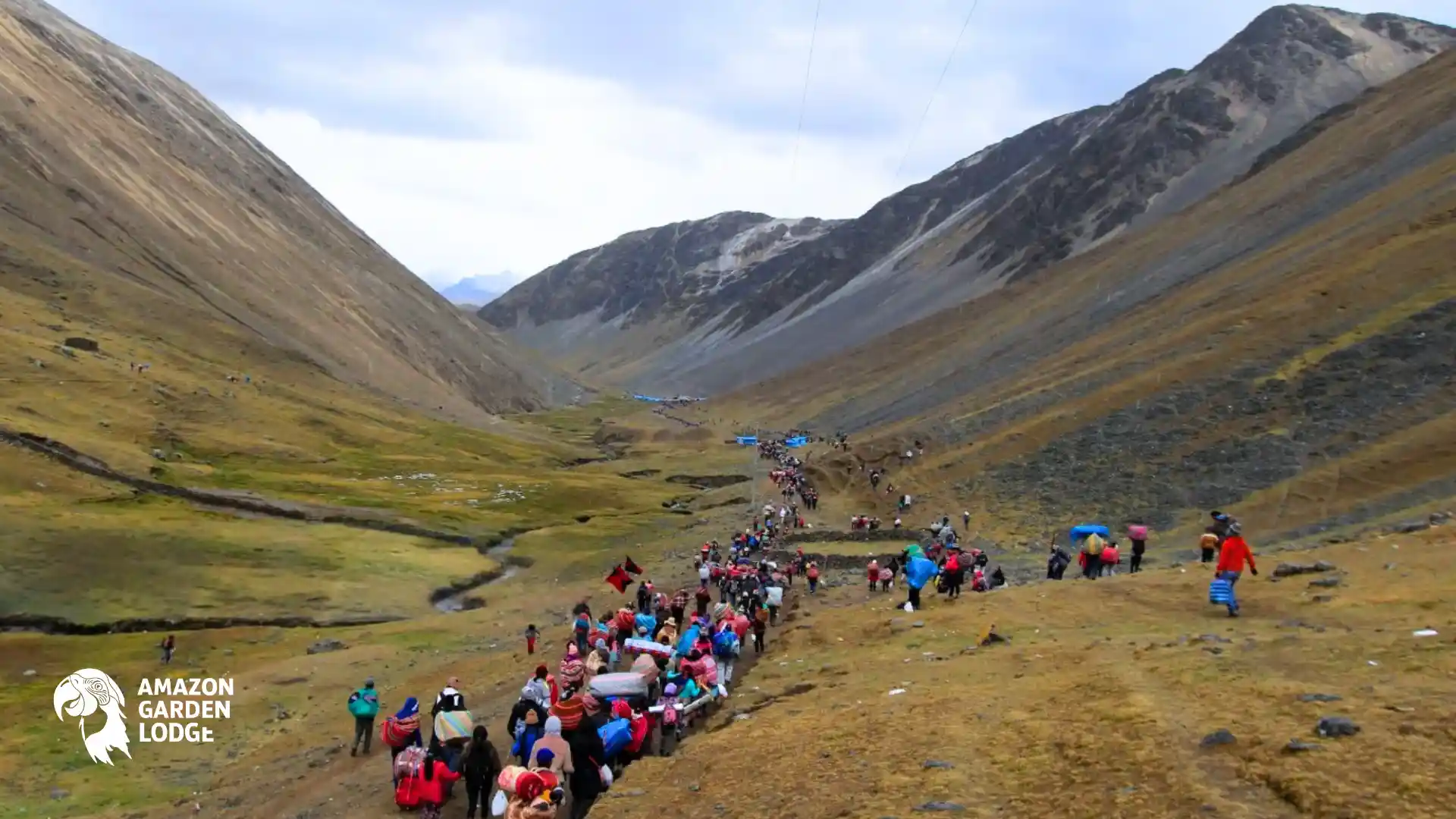
What is the Qoyllur Rit’i Festival in Peru?
Qoyllur Rit’i generally means “Snow Star.” The name comes from Quechua and is associated with the relationship between the stars, snow, the apus (sacred mountains), and devotion to the Lord of Qoyllur Riti.
The celebration brings together communities, dancers, musicians, pilgrims, and visitors at the sanctuary located in the province of Quispicanchi, Cusco region. According to available information, the festival can attract around 100,000 pilgrims each year, making it one of the largest and most unique pilgrimages in the southern Andes. For travelers who first want to understand the historical and cultural background of the region, a Cusco City tour half day can be a good introduction before exploring deeper Andean traditions like Qoyllur Rit’i.
Origin and history of the Lord of Qoyllur Rit’i
The most well-known story dates back to the 18th century and revolves around Mariano Mayta, a young shepherd who tended livestock on the slopes of Mount Sinakara. According to tradition, Mariano met a boy named Manuel, described as luminous and special, who became his friend.
Over time, this boy came to be interpreted as a manifestation of Christ. The devotion to the Lord of Qoyllur Riti, represented by an image of Christ carved into a rock, developed in the place associated with this story.
When is Qoyllur Rit’i celebrated?
Qoyllur Rit’i does not have a fixed date on the regular calendar. It usually takes place between late May and June, following the Christian religious calendar.
The pilgrimage traditionally begins 58 days after Easter, when communities from the Cusco region make their way to the sanctuary in Sinakara. This timing gives the festival a different date each year, so it is important to check the schedule before planning your trip.
For 2026, the celebration is expected to take place from May 30 to June 4, with the main day around June 2. Before traveling, it is best to confirm the exact dates with local tour operators, cultural authorities, or agencies that regularly organize trips to Qoyllur Riti festival.
You might be interested: 15 Traditional food in Peru

Where does Qoyllur Rit’i take place?
The Qoyllur Rit’i Festival takes place at the Sanctuary of the Lord of Qoyllur Rit’i, in the Sinakara area, near Ocongate in the Cusco region. The pilgrimage site sits close to Ausangate, one of the most sacred snow-capped mountains in southern Peru.
The sanctuary is located at around 4,700 meters above sea level, so this is not a casual day trip. Visitors need to be in decent physical condition, spend time acclimatizing beforehand, and come prepared for cold weather. Some parts of the pilgrimage and nearby rituals can take place even higher up, especially around the glacier area. From Cusco, the journey usually starts with a road trip to Mahuayani or Ocongate, followed by a long walk toward the sanctuary. The route is demanding: high altitude, cold temperatures, thin air, and mountain trails are all part of the experience.
The Ukukus: guardians of the festival
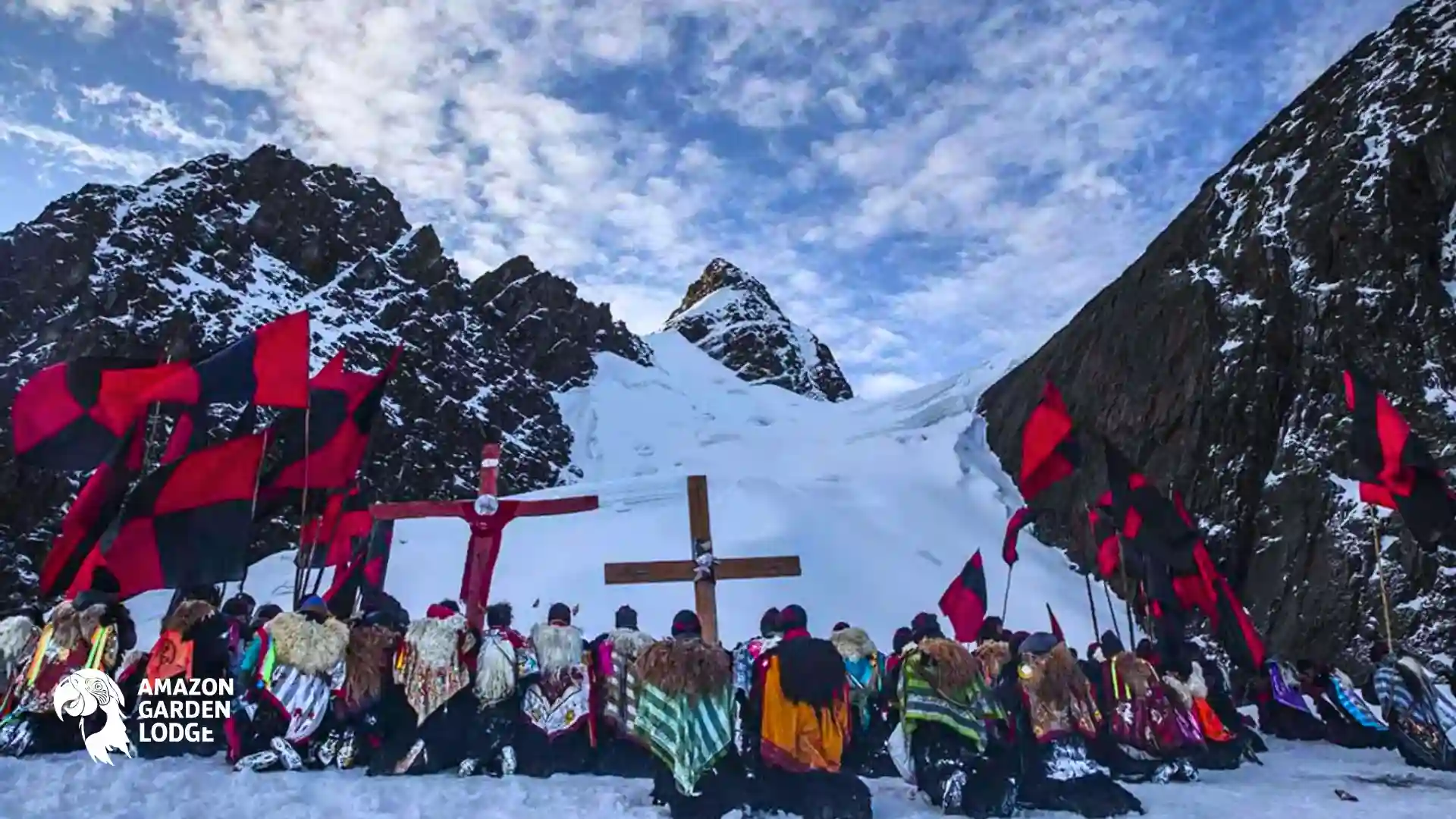
The Ukukus, also known as pabluchas or pablitos, are among the most iconic figures of Qoyllur Rit’i. Their wool or fur-like outfits resemble the Andean bear, an animal associated with strength, endurance, and the connection between humans and nature. During the pilgrimage, they are not just dancers; they also act as guardians, mediators, and symbolic authorities within the sanctuary.
Their presence helps maintain order during a celebration that brings together thousands of pilgrims, dance groups, and Andean communities. The Ukukus accompany processions, guide participants, and represent a bridge between the devotees and the Lord of Qoyllur Rit’i. In this festival, the dances are not performed as a tourist show, but as acts of faith, promise, and community identity.
One of the most important parts of their tradition has been the early-morning climb to the upper areas of the Sinakara glacier, a demanding journey carried out in freezing temperatures and at high altitude. In the past, some Ukukus would come down carrying blocks of sacred ice, which were later taken back to their communities as symbols of purification, fertility, protection, and well-being for livestock and crops.
Dances, Comparsas and pilgrim nations
The Qoyllur Rit’i Festival is also a festival of movement. Throughout the celebration, dozens of dance groups and comparsas take part, each representing a different community, identity, and tradition from the Andean world. Among the most recognized figures and dances are the Ukukus, Qhapac Qolla, Qhapac Negro, Chunchachas, and many other groups that bring color, rhythm, and spiritual power to the sanctuary.
These dances are not a show prepared for tourists. They are acts of faith, devotion and community belonging. Each comparsa has its own costumes, music, internal rules, hierarchies and meaning. For that reason, visitors are encouraged to observe with respect and avoid interrupting any ceremonial processions.
Food, markets and life during the pilgrimage
During the main days of the festival, the area surrounding the sanctuary transforms into a kind of temporary high-altitude village. Tents, food stalls, hot drinks, offerings, candles, religious keepsakes and ritual items fill every corner of the grounds.
The most common foods include simple Andean dishes, hot soups, herbal infusions, chicha, bread, potatoes, meats and hearty preparations designed to withstand the cold. Food serves both a practical and social purpose, sustaining pilgrims who walk for hours and endure freezing nights at altitude.
Also well known is the alacitas miniature market, where devotees purchase small representations of houses, cars, money, diplomas, animals and businesses. These miniatures symbolize wishes, requests and aspirations that pilgrims bring before the Lord of Qoyllur Rit’i.
How to get to Qoyllur Rit’i from Cusco
The most common route to the Qoyllur Rit’i Festival starts in the city of Cusco and heads toward Mahuayani, the main access point for pilgrims. From Cusco, the journey covers approximately 150 kilometers along the Interoceanic Highway toward the Ocongate district, taking around 5 to 6 hours by land transport.
The road itself offers remarkable Andean scenery. Along the way, travelers pass through small towns like Urcos, Ccatcca and Ocongate, all worth a stop for photos before reaching Mahuayani.
From Mahuayani, there are two main routes to reach the sanctuary.
The Mawayani Route is the most popular. Most groups depart very early from Cusco, between 4 and 5 in the morning, by bus or private transport, reaching Mawayani after roughly 3 hours. From there, the hike to the sanctuary covers 8 to 9 kilometers uphill and takes between 2.5 and 3 hours on foot. Along the way, 14 rest crosses mark the pilgrimage path, offering natural stopping points for prayer and rest.
The Ocongate Route is longer but considered deeply spiritual by devoted pilgrims. This option involves traveling to Ocongate first and then continuing to the village of Tayankani to begin the 24-hour ceremonial procession, a demanding but profoundly moving experience.
A general itinerary for visitors would be: Cusco → Mahuayani → hike to the Sanctuary of Qoyllur Rit’i → participation in the pilgrimage → return to Mahuayani → journey back to Cusco.
Estimated costs
Bus or van transport between Cusco and Mahuayani costs approximately $8 to $13 USD per person. An organized 3-day, 2-night tour ranges between $150 and $250 USD, typically including transport, a bilingual guide, tents, basic meals and assistance throughout the trip. Additional daily expenses for candles, offerings and local food generally range between $3 and $8 USD per day.
Tips before you go
The sanctuary sits at around 4,700 meters above sea level, so acclimatizing in Cusco for at least two to three days beforehand is essential. Nighttime temperatures at the campsite can drop to -3°C or below, so packing thermal layers, a cold-weather sleeping bag, a headlamp and sturdy mountain boots is strongly recommended.
While it is possible to make the journey independently, foreign travelers or those without experience hiking at high altitude are strongly advised to hire a local guide or join an organized tour for safety and a richer cultural experience.
You might be interested: 40 Animals in the peruvian amazon

Tips for attending the Qoyllur Rit’i Festival in Peru
Acclimatize in Cusco for at least two to three days before heading up to the sanctuary. Altitude is one of the biggest challenges of this pilgrimage and should never be underestimated. Rushing the ascent without proper preparation can turn an extraordinary experience into a difficult one.
Dress in thermal layers and always carry a waterproof jacket, warm hat, gloves, thick socks and trekking boots. During the day the sun can be surprisingly strong, but once the sun sets, temperatures drop sharply and can fall to 0°C or below. Being caught underprepared at that altitude at night is not a situation you want to be in.
Apply sunscreen generously, wear UV-protection sunglasses and keep lip balm on hand. Above 4,000 meters, solar radiation is intense even on cold or cloudy days, and sunburn at altitude happens faster than most people expect.
Travel light but travel smart. Always carry water, energy snacks, a headlamp, toilet paper, hand sanitizer, cash and a portable battery pack. A well-fitted backpack that sits comfortably on your back will make the hike significantly more manageable.
Respect the dancers and pilgrims at all times. Do not block processions, avoid intrusive photography and always ask for permission before taking close-up photos of people. This is a living act of faith, not a performance staged for visitors.
What to pack
A well-prepared bag makes all the difference at this altitude. Consider bringing thermal base layers, a fleece or down mid-layer and a windproof waterproof outer shell. Wear broken-in trekking boots, never brand new ones. Pack a warm hat, gloves and a neck gaiter or thermal scarf. For daytime sun, a cap and UV sunglasses are essential alongside sunscreen and lip balm.
Carry enough water for the hike, plus energy snacks, nuts or protein bars to keep you going. A headlamp and spare batteries are non-negotiable for nighttime. Bring toilet paper, hand sanitizer and small waste bags to pack out your trash. Have cash on hand in small bills for food stalls, offerings and local purchases. Finally, pack any personal medication you may need and, if your doctor approves, consider a preventive treatment for altitude sickness before the trip.
Altitude, weather and physical difficulty
The main challenge of Qoyllur Rit’i festival is not the distance covered on foot but the altitude itself. The sanctuary sits at approximately 4,700 meters above sea level, where oxygen levels are significantly lower and the body needs time to adjust. Symptoms of altitude sickness can include headaches, nausea, fatigue, dizziness, loss of appetite and difficulty sleeping. Most cases are mild and manageable with rest and hydration, but if symptoms worsen rather than improve, descending to a lower altitude is always the safest decision.

Frequently asked questions about the Qoyllur Rit’i Festival in Peru
Before planning your visit, it is normal to have questions about the route, altitude, dates, difficulty, and cultural rules of the celebration. This section answers the most common questions travelers ask before experiencing the Qoyllur Rit’i Festival in Peru.
1. Do I need a permit to attend?
In general, no special tourist permit is required, unlike other regulated trekking routes in Peru. However, local organizers may establish access controls, restrictions or specific recommendations depending on the year. The safest approach is to travel with up-to-date information from a local agency or reliable source before making the trip.
2. Can I go independently?
Technically yes, but it is not the most recommended option if you are unfamiliar with the area or have no experience hiking at high altitude. The route can be physically demanding, the crowds are significant, weather conditions change quickly and basic logistics on the ground require some prior knowledge. Traveling with a local guide or joining an organized group will make the experience safer and far more meaningful.
3. Is it suitable for children?
The Qoyllur Rit’i pilgrimage is not the most comfortable experience for young children due to the extreme altitude, cold temperatures and long hours of hiking. Families considering attending should plan very carefully, assess the physical condition of every member of the group and consult a doctor beforehand regarding altitude exposure for minors.
4. What is the best way to photograph the festival?
With respect and distance. Never interrupt processions or ceremonial rituals to take a photo. Avoid using flash during sacred moments and always ask permission before taking close-up portraits of pilgrims or dancers. The most powerful images from Qoyllur Rit’i are the ones taken without intruding. A good photograph here means knowing when not to raise the camera.
5. How long does the celebration last?
The pilgrimage extends over several days, with the most significant moments concentrated around the central day of the festival. In 2026, local operators place the main celebration between May 30th and June 4th, though exact dates may shift slightly depending on the religious calendar each year.

