
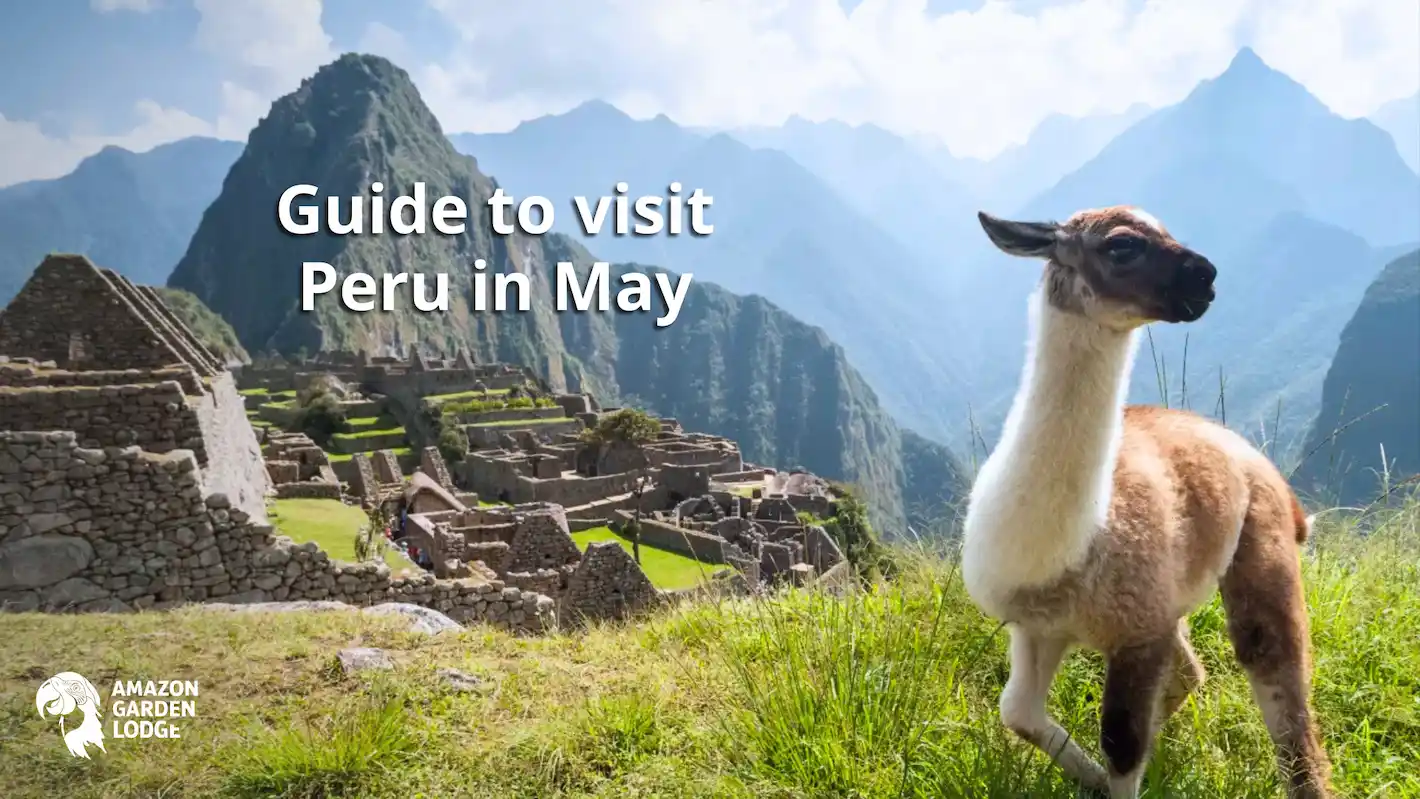
We know that Peru in May, in addition to being the time when Mother’s Day is celebrated, is a great opportunity to visit the country and enjoy its local festivities. In this article, we will explain the start of the dry season in the Andes and everything you need to know to travel through Peru in May, especially when it comes to weather and the main celebrations of the month.
You might be interested: Festivals in Cusco month by month

Benefits of visiting Peru in May
May officially marks the beginning of Peru’s dry season, which runs through October. The mountainsides around Cusco and the Sacred Valley are a vivid, saturated green, wildflowers are still blooming across the highlands, and rivers run strong and clear. On average, you’re looking at only around 6 rainy days in the mountains the entire month, and most of those tend to be brief afternoon showers. By July and August much of that greenery has dried out, so in May you get dry, sunny skies and scenery that’s still at its most dramatic.
Machu Picchu and the Inca Trail: Book Now, Thank Yourself Later
May is one of the two best months to visit Machu Picchu, along with October. The heavy rains have cleared, the surrounding mountains are still lush, and the summer crowds from June through August haven’t arrived yet, giving you more breathing room on the citadel’s circuits and shorter waits at every viewpoint.
The 4-day classic Inca Trail, which is the only route that enters Machu Picchu through the Sun Gate, is fully operational with permits still available without the months-in-advance scramble required for peak season. Permits are capped at 500 people per day including guides and porters, so booking 2 to 3 months ahead is strongly recommended.
Alternative treks including the Salkantay (5 days), the Lares (3 to 4 days), and the Inca Jungle route combining hiking with biking, zip-lining, and rafting through the cloud forest are all in excellent shape. April and May are also consistently cited by professional travel photographers as the ideal months for capturing Machu Picchu, with low fog and abundant natural light making the early morning golden hour, which starts at 5:30 AM, one of the best in the entire year.
Fewer crowds, lower prices, but not for long
May sits squarely in Peru’s shoulder season, right before the peak tourist rush that builds through August. Accommodations from budget hostels in Cusco to boutique hotels in the Sacred Valley are priced noticeably lower than in July, flight fares from major US hubs are more competitive, and tours and transfers are easier to book on shorter notice. At key attractions from Rainbow Mountain (Vinicunca) to Lake Titicaca, you’ll share the space with far fewer people, making it a great time to plan a rainbow montain 4 day trek or other multi-day adventure in the Andes. One caveat: prices start climbing toward the end of May, so locking in accommodations and key experiences 2 to 3 months in advance will save you both money and stress.
Condor season opens at Colca Canyon
May marks the beginning of the prime window for seeing Andean condors at Colca Canyon, one of the most extraordinary wildlife experiences on the planet. The Andean condor (Vultur gryphus) is the world’s largest flying bird by wingspan, stretching up to 10 feet 10 inches (3.3 meters) tip to tip and weighing up to 33 pounds (15 kg), and was revered by the Incas as a messenger between the earth and the heavens.
The canyon itself stretches over 70 kilometers and reaches depths of up to 6,600 feet, making it more than twice as deep as the Grand Canyon. The best viewing spot is Cruz del Condor, where the canyon floor drops 3,960 feet (1,200m) below and rising thermals between 8 AM and 10 AM allow condors to soar at eye level and even below the viewpoint. Beyond condors, the area is home to vicuñas, viscachas, white-tailed deer, giant hummingbirds, and traditional Andean villages where residents still wear hand-embroidered dress.
Wildlife awakens across the country
May coincides with the breeding season on the Ballestas Islands, sometimes nicknamed the “poor man’s Galápagos,” where Peruvian boobies, Guanay cormorants, Inca terns, red-legged cormorants, and Humboldt penguins carpet the rock formations alongside basking sea lions and dolphins spotted on the boat ride out from Paracas. In the Amazon, high water levels allow boat access into flooded forests where caimans, giant river otters, pink river dolphins (boto), and dozens of monkey and macaw species concentrate near elevated land. Peru is home to approximately 2,000 bird species, representing around 20% of all bird species on Earth, and May brings peak activity across both highland and jungle ecosystems.
You might be interested: 15 Traditional food in Peru

Weather in Peru in May
May is Lima’s transitional month between its warm summer (December through April) and its coastal winter. Daytime highs sit around 72°F (22°C) and lows drop to 61°F (16°C), noticeably cooler than the summer peak of 84°F (29°C). Rainfall is essentially nonexistent, as the city averages less than 1mm the entire month.
What dominates instead is the garúa, the coastal fog driven by the cold Humboldt Current. This dense mist keeps skies gray, pushes humidity above 80%, and drops sunshine hours to just 7.4 per day, down from nearly 12 in March. It never produces real rain, just a fine dampness that catches visitors off guard.
The coastal districts of Miraflores, Barranco, and San Isidro feel it most intensely, while neighborhoods further east toward the Andes foothills stay somewhat warmer and clearer. North of Lima, Trujillo and Máncora stay sunny and warm at around 74°F (24°C) throughout the month.
Cusco at 11,150 feet (3,400m) sees daytime highs of 66°F (19°C) under clear afternoon skies, but nights plunge to around 37°F (3°C), creating a daily temperature swing that can exceed 30°F (17°C). Monthly rainfall drops to just 30mm (1.2 inches), compared to over 150mm in January and February, with only about 6 rainy days in the entire month, mostly brief afternoon showers.
Machu Picchu sits lower at 7,970 feet (2,430m) in a microclimate known as the ceja de selva (eyebrow of the jungle), a transitional zone between the Andes and the Amazon basin. Daytime highs reach 63°F (17°C) with lows around 49°F (9°C), and rainfall falls to just 1.7 inches spread over roughly 2 days. The Sacred Valley, running between Pisac and Ollantaytambo at 9,000 to 9,500 feet (2,750 to 2,900m), sits slightly lower than Cusco and stays a few degrees warmer, making it the ideal acclimatization base.
The Amazon remains hot and humid throughout May, with temperatures consistently between 77°F and 86°F (25°C to 30°C). Iquitos still sees around 11.6 inches of rain over 16 days, making it the wettest zone in the country by far. However, the high river levels left behind by the wet season allow boats to navigate deep into flooded forests and access remote channels completely unreachable during the dry season, concentrating wildlife and making sightings of caimans, river otters, pink dolphins, and exotic birds far more frequent than at other times of year.
You might be interested: 40 Animals in the peruvian amazon

Cusco Peru weather in May
Cusco sits at 11,150 feet (3,400m) above sea level in the heart of the Peruvian Andes, and its climate reflects that altitude in every way. May is the first full month of the dry season, and it marks one of the most dramatic shifts on the Cusco weather calendar.
Temperatures: Day and night
The temperature gap between day and night in Cusco in May is one of the most extreme of any major tourist destination on the planet. Daytime highs average around 64°F to 66°F (18°C to 19°C) under clear afternoon skies, which feels comfortable and even warm in direct sunlight. However, as soon as the sun drops, temperatures fall sharply. Nights regularly dip to 36°F to 40°F (2°C to 4°C), and on the coldest nights of the month temperatures can fall as low as 28°F (-2°C), below freezing.
The swing between noon and midnight can easily exceed 35°F (19°C) within the same day. Mornings before sunrise are the coldest window, so early risers heading out for dawn tours or sunrise hikes need to layer up aggressively.Sunrise in Cusco in May occurs at around 5:56 AM and sunset at around 5:29 PM, giving you approximately 11.5 hours of daylight.
Rainfall at the dry season
May is when the rains essentially stop in Cusco. Monthly precipitation drops to just 9mm to 30mm (0.35 to 1.2 inches) across only 3 to 6 rainy days, which is a dramatic contrast to the 145mm (5.71 inches) falling over 18 days in January and the 134mm (5.28 inches) in February. Even the rainy days in May tend to be brief afternoon showers of 20 to 30 minutes rather than sustained downpours. By the end of the month, rainfall virtually disappears, with the final days of May recording almost zero precipitation. The transition is noticeable and rapid: early May can still see the occasional lingering shower from April, but by mid-month skies are consistently clear.
Altitude and acclimatization
Cusco’s elevation of 11,150 feet (3,400m) makes altitude sickness a real concern for virtually every visitor, regardless of fitness level. Altitude sickness, known locally as soroche, typically causes headaches, nausea, fatigue, and shortness of breath during the first 24 to 48 hours after arrival. The standard recommendation is to spend at least one full day in Cusco doing light activity before attempting any strenuous trek or high-altitude excursion. Drinking coca tea, which is widely available throughout the city, is a traditional Andean remedy that many visitors find helpful for easing symptoms.
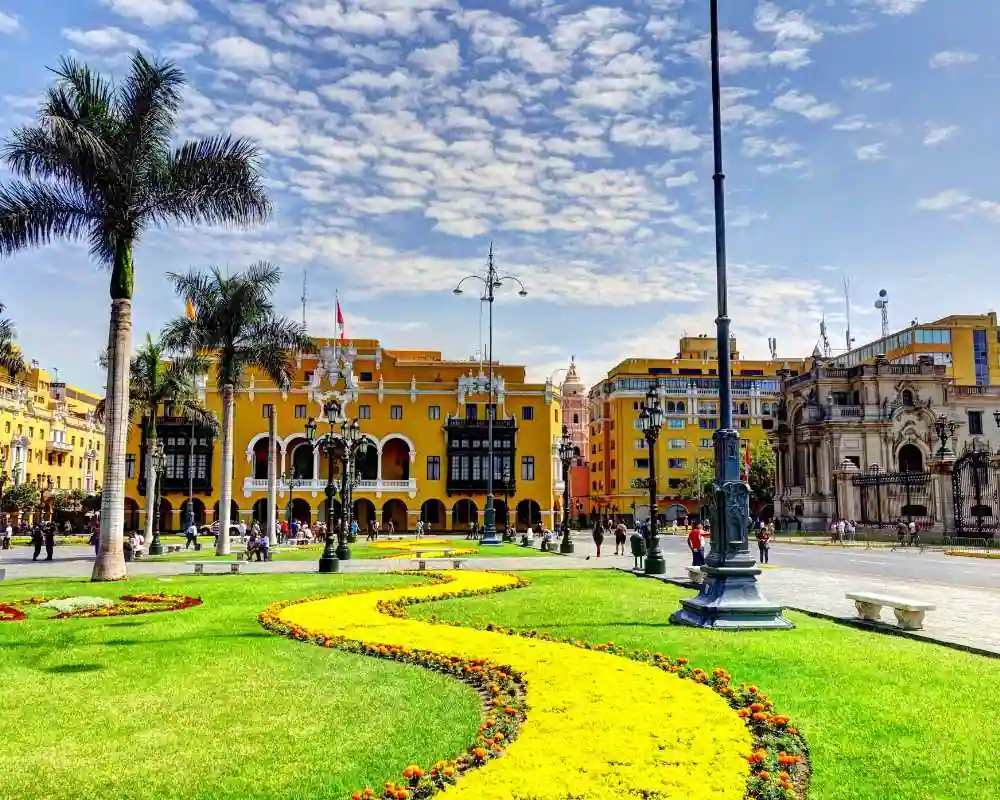
Lima Peru in May
Lima is one of the most underestimated cities in South America, and May is one of the most underestimated months to visit it. The city serves as the main international gateway to Peru, with Jorge Chávez International Airport receiving direct flights from major US hubs including Miami, New York, Los Angeles, and Houston. Most travelers land here, spend a night, and race to Cusco the next morning.
That is a mistake. Lima rewards those who give it 2 to 3 full days, and May offers a particular combination of lighter crowds, lower prices, and a city that is fully alive without being overwhelmed by summer tourists.
Temperatures sit between 61°F and 72°F (16°C to 22°C) and rainfall is essentially nonexistent, as Lima averages less than 1mm the entire month. Sunshine hours drop to around 7.4 per day, down from nearly 12 in March, so plan outdoor activities around midday.

Things to do in Peru in May
May is a transition month that offers a more authentic side of Peru, with fewer crowds and a stronger local atmosphere. It is a great time to connect with traditions, cultural events, and places that feel less crowded and more genuine.
Join the Festival of the Cross
Throughout May, especially in the Andes, communities celebrate the Festival of the Cross. In places like Cusco and Ayacucho, decorated crosses are carried up nearby hills with music, dancing, and rituals that blend Catholic and Andean beliefs. It is one of the most meaningful traditions you can witness during this time.
See how major festivals come to life
May is the lead up to important celebrations like Corpus Christi in Cusco. During this period, towns begin preparing with rehearsals, local gatherings, and cultural activities. It is a chance to see traditions in a more natural setting before the peak crowds arrive in June.
Enjoy vibrant post rainy season landscapes
The rainy season has just ended, so the scenery remains green and full of life. This is one of the best times for photography and for visiting places that feel quieter and more relaxed.
Spot wildlife in the Amazon at its peak
In regions like Tambopata, wildlife activity remains high after the rainy season. You have better chances of seeing birds, monkeys, and other species as ecosystems are still rich and active.
Travel with fewer crowds
Since May is not peak season yet, many destinations feel more open and less rushed. This allows for a more personal trip, better interactions with locals, and a calmer pace overall.

