
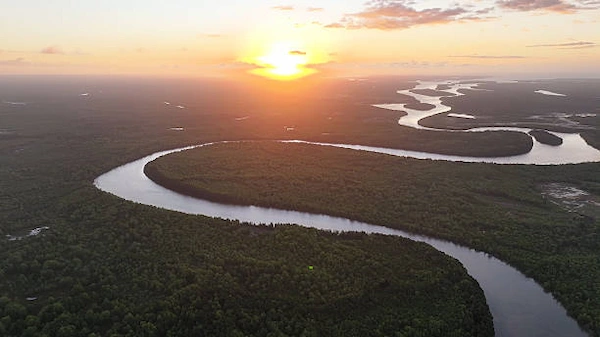
Visiting the Tambopata National Reserve begins with understanding the route into southern Peru. While heading toward the Amazon rainforest might seem intimidating on an airline map, most trips land directly in Puerto Maldonado. From this humid river outpost, traveling into the Tambopata National Reserve takes only a couple of hours in a wooden boat, sparing you the logistical headache of bush planes or the days of rough transit common around other jungle gateways.
People show up here chasing very specific wildlife. They want to sit in a flat-bottom canoe watching giant otters hunt on Lake Sandoval, see hundreds of macaws chew salt off the clay cliffs early in the morning, and walk under ancient hardwoods. Still, daily life along the river catches most first-timers off guard. Cotton t-shirts simply refuse to dry in this air, boat runs stop whenever river currents get dangerous, and trail hikes follow animal feeding patterns instead of a printed tour itinerary. Making the most of the Tambopata National Reserve just takes practical basics: trail boots that survive knee-deep mud, drinking plenty of safe water, and letting the jungle dictate the schedule.
Why Tambopata is a premier destination in Peru
The Tambopata National Reserve spans more than 274,000 hectares of protected subtropical rainforest in the southeastern region of Peru. Unlike fragmented forest patches affected by extensive cattle ranching or commercial mining, this protected territory serves as an essential biological buffer zone that borders Bahuaja-Sonene National Park and neighboring conservation areas across northern Bolivia. That vast geographical connection guarantees that top predators, large herds of peccaries, and seasonal bird populations migrate without encountering highways or agricultural clearings.
Logistical convenience makes the Tambopata National Reserve one of the most practical destinations for international nature travelers. Commercial flights from Lima and Cusco reach the regional airport in Puerto Maldonado in roughly one hour, eliminating days of exhausting overland bus travel across rugged Andean roads. Within thirty minutes of landing, travelers arrive at river ports, step aboard traditional wooden boats, and travel straight into primary forest channels. This smooth transit makes accessing the wilderness of the Tambopata National Reserve straightforward and safe for families, photographers, and independent explorers.
You might also like: 15 Places to visit in the Amazon Rainforest
Unique wildlife to encounter in Tambopata
The extraordinary biodiversity documented across the Tambopata National Reserve frequently ranks among the richest biological inventories on the planet. More than 600 distinct bird species, 1,200 documented butterfly varieties, and upwards of 100 mammal species populate these varied forest strata. Taking guided trail walks and paddling quietly along side streams allows travelers to spot curious red howler monkeys calling from high branches, active brown capuchins searching for insects, and small family groups of dusky titi monkeys moving through the vine tangles.
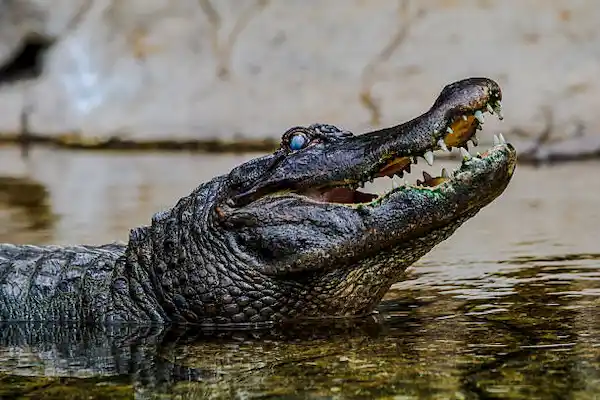
Apex predators maintain healthy and balanced populations throughout the Tambopata National Reserve due to the abundance of natural aquatic and terrestrial prey. Large black caimans measuring up to four meters rest on exposed gravel banks during low-water evenings, while night excursions regularly spotlight white caimans, side-necked river turtles, and roosting nightjars along the muddy edges. Elusive mammals including jaguars, pumas, ocelots, and lowland tapirs regularly leave clear tracks along wet riverbanks, confirming that a functional Neotropical food web remains intact across this protected territory.
Top attractions and activities in the reserve
Exploring the Tambopata National Reserve entails journeying through varied microclimates and habitats, from temporary flooded forests to ancient terra firme zones that remain dry year-round. Excursions operate early in the morning and during the late afternoon hours, taking advantage of peak wildlife activity while bypassing the intense humidity of midday.
Exploring Lake Sandoval and its oxbow lake ecosystem
Lake Sandoval remains one of the most renowned oxbow lake ecosystems found anywhere within the Tambopata National Reserve. Formed centuries ago when an ancient meander of the Madre de Dios River separated from the main current, this protected body of water created a tranquil freshwater sanctuary bordered by dense aguaje palm stands. Reaching the water requires an initial motorized boat trip downriver followed by a three-kilometer hike along an elevated wooden walkway built across wet swamp terrain.
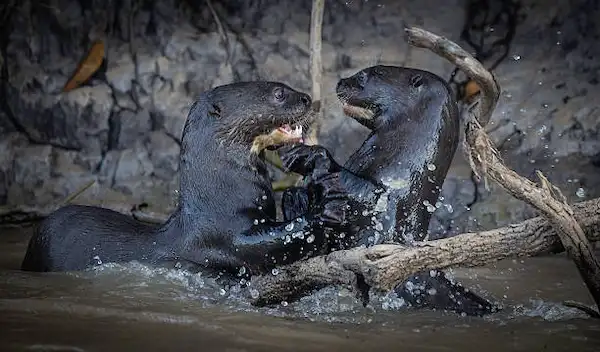
At the water terminal, silent paddle catamarans replace loud outboard engines to prevent disturbing sensitive wildlife. Gliding quietly across the glassy surface allows visitors to view a resident family of giant river otters catching fish, prehistoric hoatzins nesting in flooded brush, and black caimans resting along the muddy shallows. The morning fog rising from Lake Sandoval provides pristine lighting conditions for wildlife photography, establishing this lake as a mandatory excursion within the Tambopata National Reserve.
You might also like: 40 Animals in the peruvian amazon
Visiting the world famous clay licks
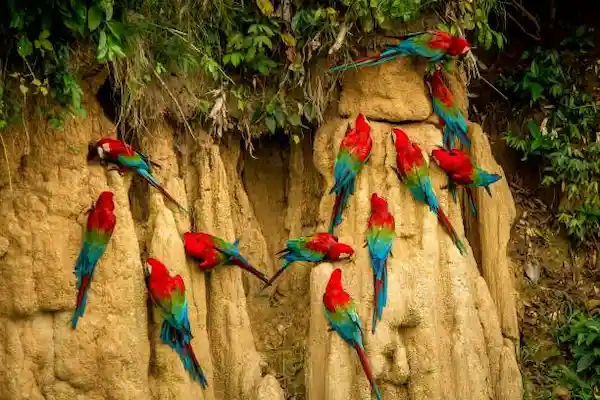
The mineral-packed bluffs exposed along the river channels of the Tambopata National Reserve produce natural geological formations known locally as collpas. Heavy tropical precipitation regularly washes sodium and essential minerals from the higher soils, concentrating mineral salts directly into exposed layers of red river clay.
At first light, hundreds of vibrant green-winged macaws, scarlet macaws, blue-and-gold macaws, and varied parrot species gather in high canopy trees before descending in noisy clouds of color to lick the clay banks. The ingested minerals neutralize organic dietary toxins found in unripe jungle seeds while supplementing daily dietary sodium. Observing this magnificent ritual from covered floating catamarans or concealed hides along the Tambopata National Reserve represents a definitive highlight of South American birdwatching.
Canopy walkways and rainforest trail hikes
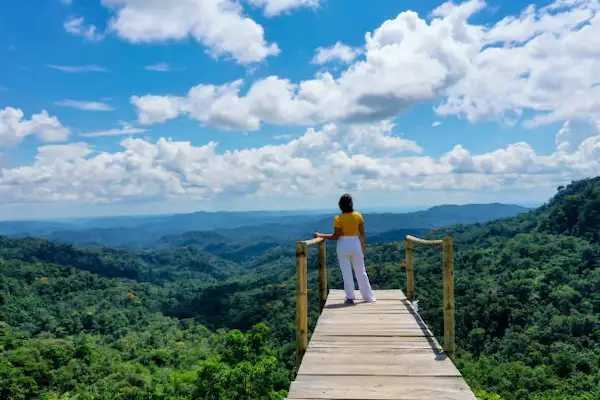
Viewing the jungle solely from ground paths provides an incomplete perspective, considering that nearly eighty percent of rainforest animals live high up in the sunlight canopy. Several conservation centers and eco-lodges operating near the Tambopata National Reserve maintain suspended canopy suspension bridges and wooden observation platforms built around emergent kapok and ironwood trees, lifting travelers thirty meters into the sub-canopy layer.
From these elevated lookouts, toucans, tanagers, trogons, and three-toed sloths appear at eye level. Returning to ground paths, certified naturalists lead interpretive botanical walks explaining medicinal plants harvested by indigenous communities, massive buttress root systems that anchor towering hardwoods in thin tropical dirt, and active leaf-cutter ant trails that continually process vegetation across the forest understory.
You might also like: Tingo Maria National Park travel guide
How to get to Tambopata National Reserve
Every expedition to the Tambopata National Reserve begins with standard travel into the regional town of Puerto Maldonado. The vast majority of visitors schedule short domestic flights departing from Jorge Chávez International Airport in Lima or Alejandro Velasco Astete Airport in Cusco. Flights from Cusco take roughly forty-five minutes, while direct connections from Lima take approximately ninety minutes, offering panoramic aerial perspectives as the snowy Andes give way to the sprawling green carpet of the Amazon basin.
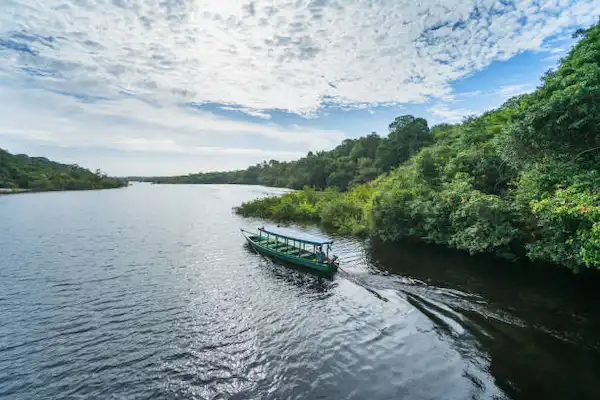
Upon landing at Padre Aldamiz International Airport, travelers are met by licensed field guides and logistics representatives who coordinate baggage handling and land transfers. A brief drive transports passengers to authorized boat landings or the central Capitán E. Maldonado port situated along the riverbank. From these points, traditional motorized wooden canoes carry passengers along the waterways directly toward the Tambopata National Reserve and registered eco-lodges, with transit durations ranging between forty-five minutes and three hours depending on lodge location.
Best time to visit Tambopata: Dry season vs. rainy season
Because southeastern Peru features an equatorial rainforest climate, warm air and heavy humidity remain continuous throughout the entire year. Nevertheless, the Tambopata National Reserve observes two defined seasons that directly dictate river logistics, trail navigability, and animal sighting probabilities.
The dry season spans from May through October, characterized by reduced rainfall, lower river levels, and clear sunny periods. Dropping waters expose wide gravel beaches and sandbars, optimizing opportunities to observe basking caimans, migratory shorebirds, and mammal footprints along the river edges. Walking trails stay comparatively firm underfoot, and clay lick visits reach peak numbers during these drier weeks. Visitors should note that occasional southern cold fronts, known locally as friajes, can push temperatures down to 10°C (50°F) for two or three consecutive days, making a warm fleece jacket indispensable when touring the Tambopata National Reserve.
The rainy season runs from November through April, delivering intense tropical rainstorms and rising water levels. While trekking through muddy paths requires tall rubber boots, swollen river systems permit motorized canoes to venture deep into flooded forest backwaters that remain inaccessible during drier months. Plentiful forest fruits and blossoming flowers encourage heavy monkey and amphibian activity, although persistent morning storms can cause macaws to delay visits to open clay licks inside the Tambopata National Reserve.
Essential packing list for a jungle expedition
Packing appropriate gear prevents physical discomfort and shields delicate electronics from tropical moisture when exploring the Tambopata National Reserve. Standard cotton garments dry very slowly under continuous rainforest humidity, making synthetic, moisture-wicking fabrics the most sensible choice for daily hikes. Earthy shades such as olive green, tan, khaki, and light gray help travelers blend into the forest while deterring biting insects drawn to dark blue or black fabrics.
- Lightweight long-sleeved trail shirts and quick-drying trekking trousers to protect skin from thorns, brush, and mosquito bites.
- Reliable insect repellent containing DEET (30% or higher) or Picaridin, alongside broad-spectrum water-resistant sunscreen.
- Moisture-wicking hiking socks and broken-in light trail shoes (knee-high rubber boots are provided directly by wilderness lodges for wet mud paths).
- A dependable LED headlamp or high-lumen flashlight with spare rechargeable battery packs for night walks within the Tambopata National Reserve.
- Heavy-duty dry bags and sealed waterproof phone cases to protect cameras, lenses, memory cards, and travel documents.
- Quality binoculars (8×42 or 10×42 configuration) essential for finding canopy mammals and identifying distant Neotropical birds.
- A wide-brimmed sun hat, a breathable lightweight rain poncho, and a sturdy refillable canteen to eliminate single-use plastic bottles.
Health, safety, and entry requirements
Entering protected natural territories governed by Peru’s National Service of Protected Natural Areas (SERNANP) entails complying with strict ecological regulations. Independent exploration beyond demarcated trails within the Tambopata National Reserve is strictly prohibited; every visitor must travel in the company of an accredited naturalist guide registered with regional tourism entities. Official admission permits and conservation fees are handled directly by your licensed agency or lodge operator prior to embarking at the river port.
Regarding health recommendations, obtaining a yellow fever vaccination is strongly advised for visitors traveling into the lowland forests of Madre de Dios, administered at least ten days prior to arrival. While malaria risks along standard tourism corridors within the Tambopata National Reserve remain low, consulting a travel health physician regarding preventative measures or personal prophylaxis remains a wise precaution. Drinking exclusively bottled or treated water served in lodge dining rooms, remaining clear of unpredictable river currents, and checking tree bark before leaning down avoids common travel complications.
Practical travel tips for visiting the Peruvian Amazon
Careful advance planning guarantees that your expedition through the Tambopata National Reserve remains comfortable and organized from start to finish. Although Puerto Maldonado maintains commercial ATMs and convenience stores, financial services and electronic card terminals cease once you step onto river boats. Carrying modest amounts of cash in Peruvian Soles (PEN) is necessary for tipping boat crews, buying handmade crafts directly from indigenous Ese Eja artisans, or purchasing snacks at river control stations.
Electrical power operates on limited daily schedules across off-grid lodges situated around the Tambopata National Reserve. Accommodations commonly utilize solar systems or fuel generators during designated hours, typically during breakfast and dinner, turning generators off late at night to ensure quiet and minimize environmental disturbance. Carrying a high-capacity portable power bank guarantees your cameras and mobile phones stay charged for early dawn excursions. Finally, booking a stay of at least three to four full days allows you to absorb the natural rhythms of the jungle without rushing through travel legs.
Planning an unforgettable journey into the Amazon
Waking up at 4:30 AM on this river is rough. Cold mist gets through your jacket, and thick clay sticks to your boots within ten minutes. Afternoon rainstorms roll in fast and can stop a boat trip on the spot. You might never spot a cat along the sandbars. Even so, watching the river turn gold from a drifting canoe makes every bit of physical hassle worth it.
Booking your trip into the Tambopata National Reserve through certified local lodges also keeps ranger posts running and pays fair daily wages to native boat crews. Pack light synthetics, stick close behind your guide on the paths, and don’t rush. The forest moves on its own time, and that’s the whole point of coming out here.

