
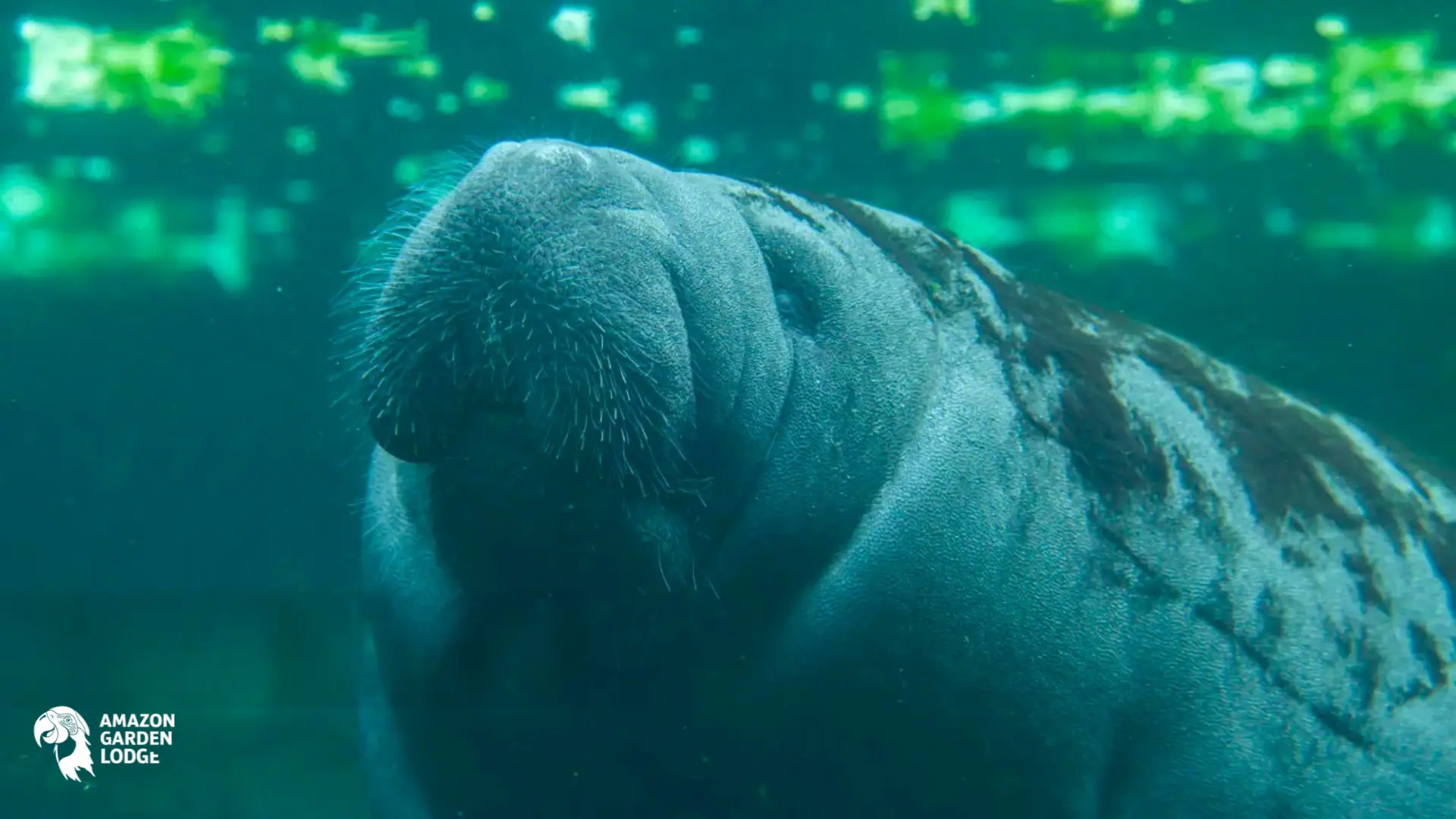
I invite you to meet one of the most peaceful mammals in our rainforest. The Peruvian Amazonian manatee is one of the largest animals in our rivers and lives primarily in the Ucayali and Marañón river basins and the Pacaya Samiria National Reserve. However, it faces a problem that threatens its existence. We want to raise awareness about this friendly species, which you might even see during one of our Amazon tours.
You might be interested: Traditional costumes of Peru
Amazonian manatee habitat
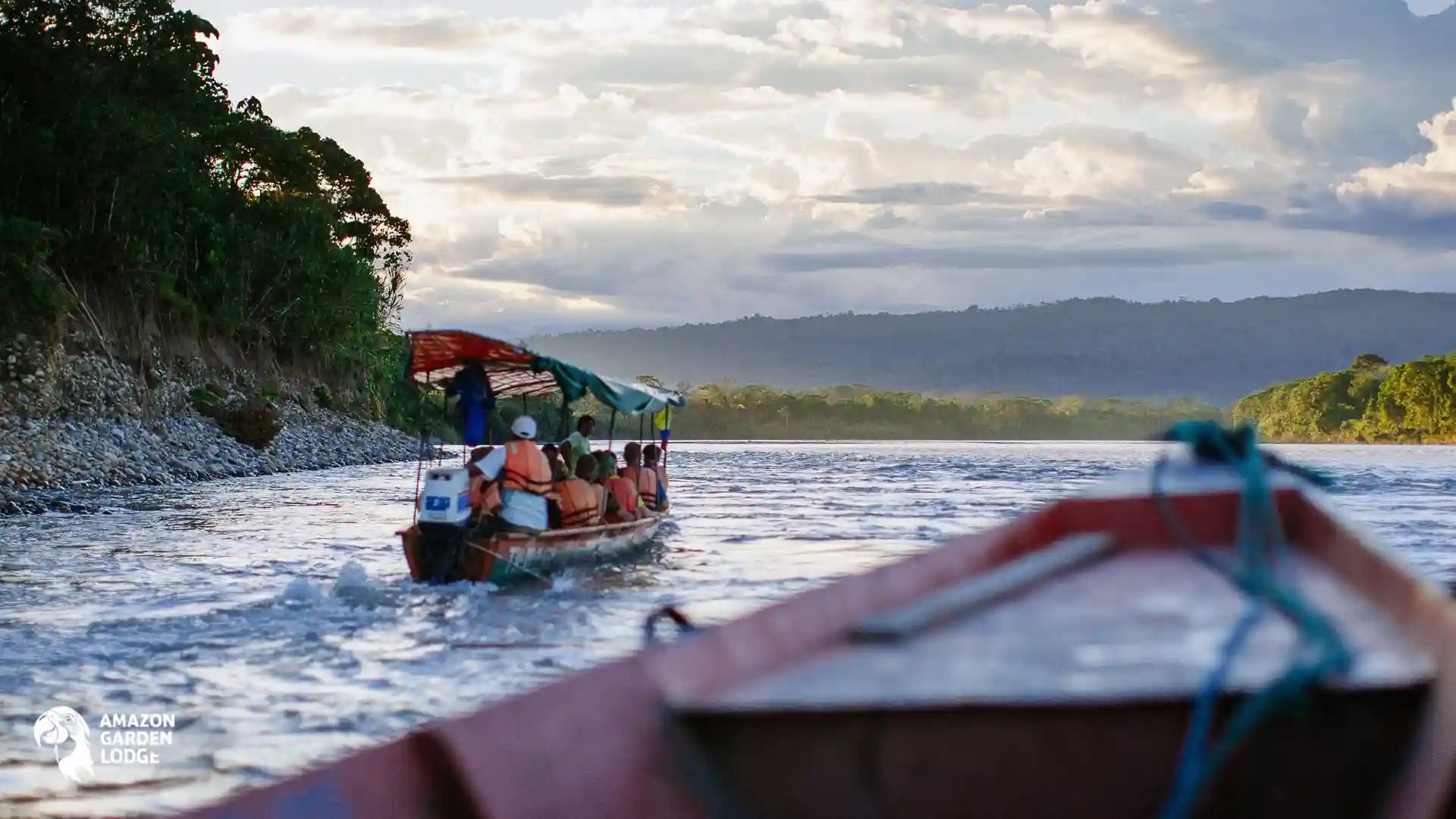
The Amazonian manatee habitat is one of the first things our guests ask about once they spot the animal’s name on the itinerary. Unlike its marine relatives, this manatee spends its entire life inside the Amazon basin, moving between calm rivers, oxbow lakes and flooded forest channels where it can feed without much disturbance.
Where the Amazonian manatee lives in Peru
In Peru, this species has been recorded across a wide stretch of the Loreto region, and its range follows the slow-moving rivers and lakes that make up the Amazon basin rather than any single fixed location.
Confirmed sightings place the Amazonian manatee in the Ucayali, Marañón, Napo, Tigre, Pacaya, Samiria and Huallaga river basins, with additional reports from the Nanay, Yavarí, Yaguas and Putumayo rivers. Many of these waterways run through protected areas, including the Pacaya Samiria national reserve, where deep lakes and slow currents give the manatee the calm conditions it needs to rest and feed away from boat traffic.
Why it only lives in freshwater
Something that tends to surprise our guests is that the Amazonian manatee never enters salt water. While other manatee species move between rivers and the ocean, this one is built entirely for freshwater life, feeding on floating plants that only grow in the still, nutrient-rich rivers and lakes of the Amazon.
How the dry season changes its habitat
Between May and October, water levels drop and the manatee’s usable habitat shrinks considerably. It retreats to deeper rivers and permanent lakes, where it waits out the low-water months until the rains return and the flooded forest opens back up.
You might be interested: Q’eswachaka Bridge
Amazonian manatee facts
Every time this animal comes up during a river trip, the same questions follow, because the Amazonian manatee carries a handful of traits that set it apart from every other manatee species on the planet.
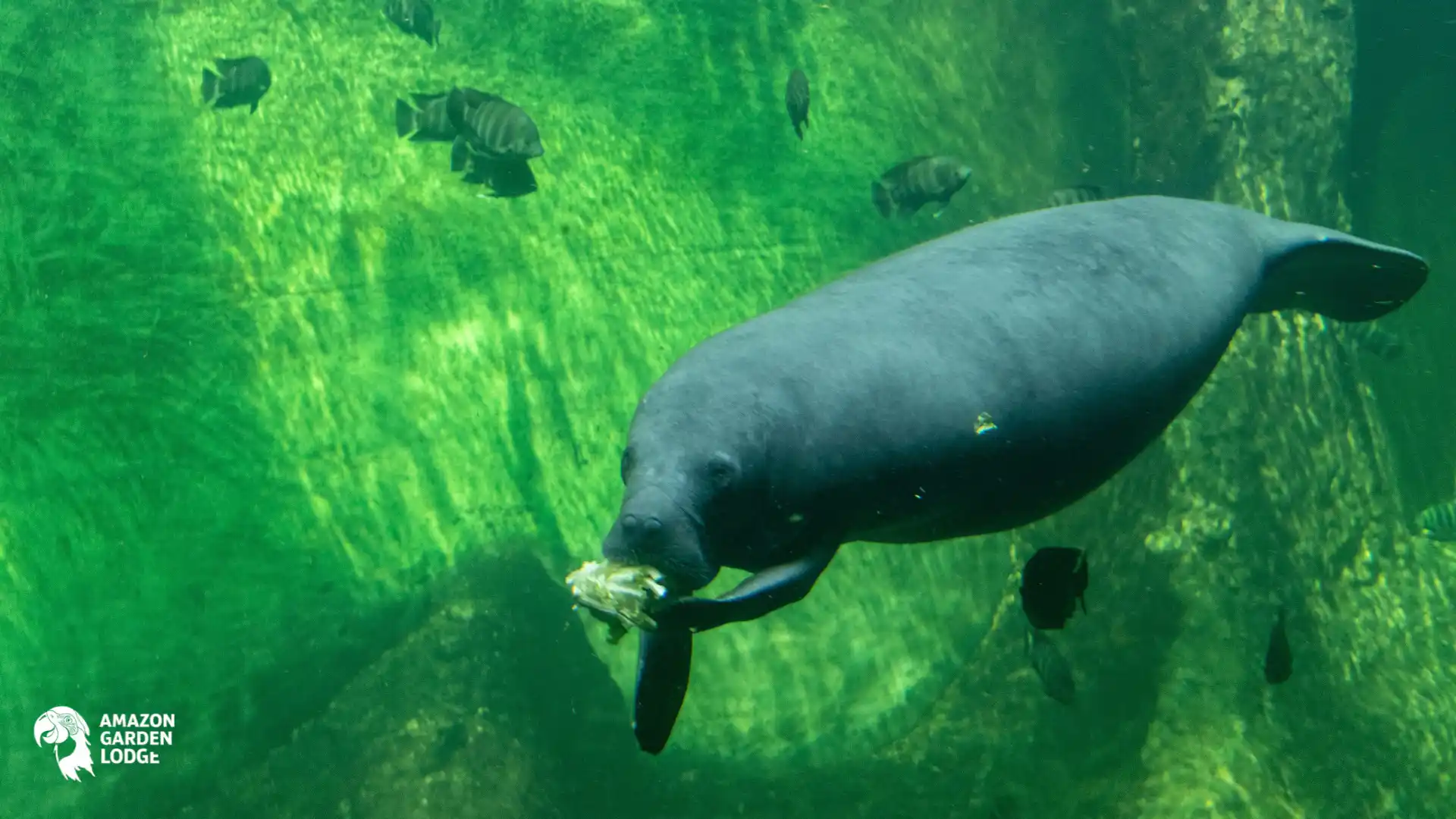
Size and physical characteristics: Adult Amazonian manatees typically reach around 2.5 to 3 meters in length and can weigh up to 450 kilograms, with a rounded body, paddle-shaped tail and thick, wrinkled grey skin.
The smallest sirenian in the world: Out of all the manatees and dugongs alive today, the Amazonian manatee is the smallest member of the order Sirenia, and it is also the only one found exclusively in freshwater rather than coastal or marine environments.
No visible nails on its flippers: Its scientific name, Trichechus inunguis, refers directly to this feature, since inunguis means without nails. Unlike the West Indian and West African manatees, which have small nails on their flippers, the Amazonian manatee’s flippers are completely smooth.
Diet and feeding habits: The Amazonian manatee is strictly herbivorous, feeding on floating and submerged aquatic plants such as water hyacinth and other river grasses. Because it consumes such large volumes of vegetation, it plays an important role in keeping river channels and lakes from becoming overgrown, while its digestion also helps recycle nutrients back into the water.
The pink patch on its belly: One of its most distinctive features is an irregular patch of pink or pale pigmentation on the skin of its belly. No two manatees share the exact same pattern, so researchers often use this patch as a way to identify individual animals during long-term studies.
How it survives months without eating: During the dry season, when water levels drop and food becomes scarce, the Amazonian manatee can lower its metabolism and go for extended periods with very little intake, a behavior researchers have documented as a form of seasonal fasting rather than true hibernation.
You might be interested: Amazonian food
Why are amazonian manatees endangered?
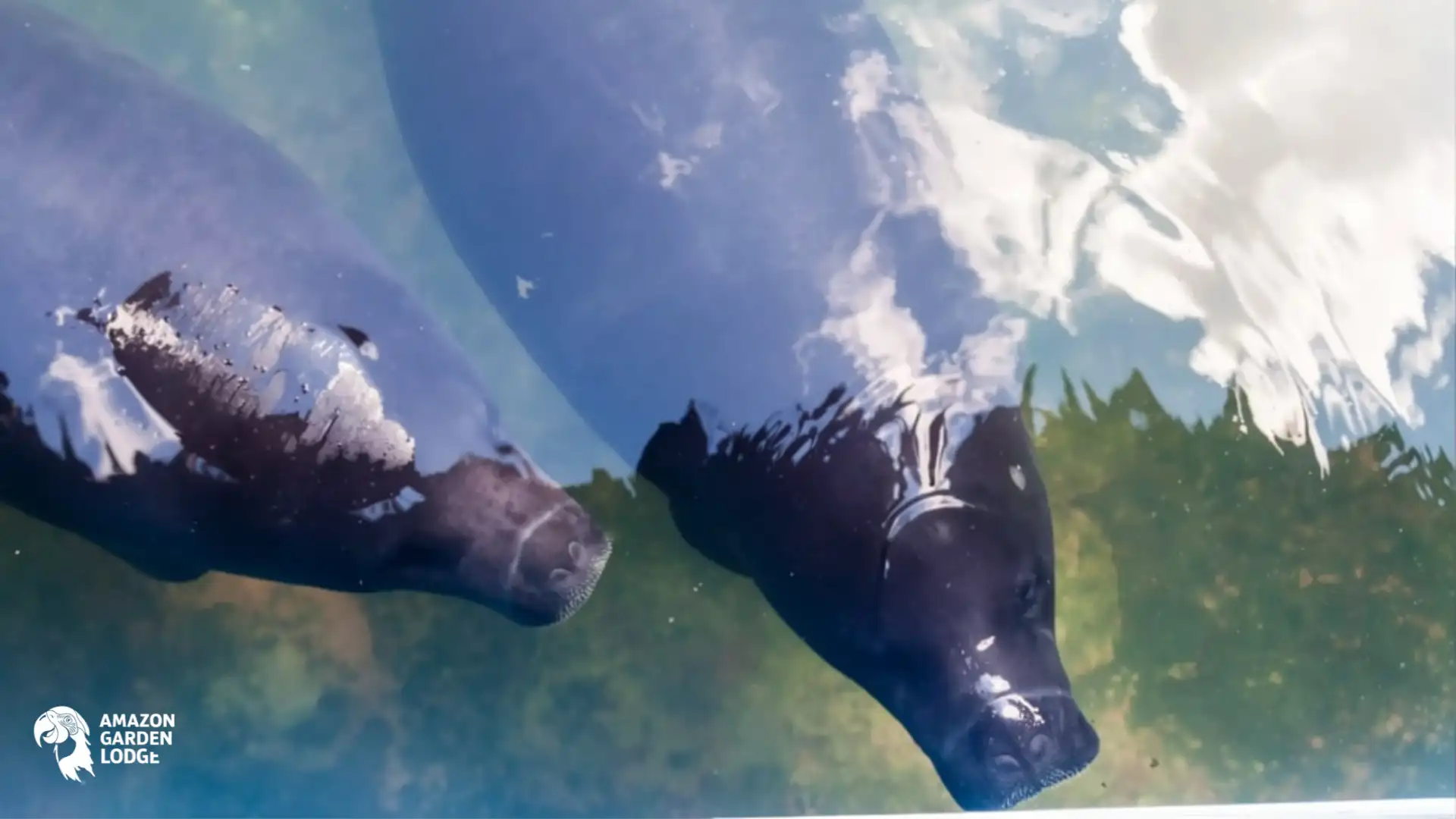
The Amazonian manatee has been legally protected in Peru for decades, yet it still faces pressures that keep its population under threat, and it is worth being honest with visitors about what those pressures are.
Illegal hunting: Between 1935 and 1954, thousands of manatees were killed every year across the Amazon basin for their meat and their thick hide, which was processed into leather for industrial belting. Large-scale commercial hunting has since ended, but isolated illegal hunting still occurs, often carried out opportunistically by fishermen targeting other species such as paiche.
Habitat loss and fragmentation: Deforestation, river infrastructure projects and activity linked to resource extraction can degrade or fragment the lakes and river channels the manatee depends on, particularly the deep, permanent water bodies it relies on during the dry season.
Limited scientific knowledge about the species: The Amazonian manatee is naturally elusive, and Peru’s rivers are typically turbid and dark, which makes direct observation extremely difficult. This lack of visibility has slowed research and, as a result, conservation planning for the species compared to better-studied Amazon wildlife.
Current legal protection in Peru: Hunting the Amazonian manatee has been prohibited in Peru since the 1970s, and the species is also protected within reserves such as Pacaya Samiria. Despite this legal framework, enforcement remains difficult across such a vast and remote river network.
Frequently asked questions about the Amazonian manatee
If you’re planning your next trip to the Amazon, it’s normal to have several questions before boarding the boat, especially since the rivers are the only way to access the areas where manatees live. That’s why we’ve compiled the most frequently asked questions here, and our guides are happy to answer them during your tour.
1. Is the Amazonian manatee a mammal
Yes. The Amazonian manatee is a mammal that breathes air through its lungs, nurses its calves and belongs to the order Sirenia, the same group that includes dugongs and other manatee species found around the world.
2. How many Amazonian manatees are left
There is no reliable population count for the Amazonian manatee in Peru or anywhere else in the Amazon basin. The species is naturally elusive and lives in dark, sediment-heavy water that makes visual surveys and censuses very difficult to carry out. What is documented is its conservation status: the International Union for Conservation of Nature classifies it as vulnerable, and several studies conducted in Peru indicate that its population trend is declining rather than stable.
3. Where can you see an Amazonian manatee in Peru
Sightings are most commonly reported in the Loreto region, particularly within protected areas such as the Pacaya Samiria national reserve and along the Ucayali, Marañón and Samiria river basins. Even in these areas, sightings remain uncommon and are never guaranteed on any given trip.
4. What does the Amazonian manatee eat
It is strictly herbivorous, feeding on floating and submerged aquatic plants such as water hyacinth and other river grasses. This makes it the only fully plant-eating member of the manatee and dugong family found living exclusively in freshwater.
5. Is dangerous?
No. It is a slow-moving, gentle herbivore with no natural aggression toward people. It generally avoids close contact with boats and swimmers rather than approaching them.
6. How can tourists help protect the Amazonian manatee
Visitors can support conservation by booking with operators that respect wildlife viewing distances within protected areas, avoiding any contact or feeding, and reporting illegal hunting or informal captivity of manatees to local authorities or reserve management when it is observed.

