
Cruz Velacuy, or the Festival of the Crosses, is a popular festival in Cusco that has been celebrated since the early 18th century. In this tradition, held during the month of May, thousands of faithful and tourists gather to participate in one of the most authentic religious and cultural celebrations in the Andean world. Devotion to the Cross is experienced in the hills, neighborhoods, plazas, and homes of Cusco families with an intensity rarely found elsewhere on the planet.
In this guide, we want to introduce you to everything about this beautiful tradition so you can plan your visit to Cusco in May 2026 and experience this unique festival with faith, respect, and emotion. From its deep history to the dishes you will enjoy during the celebration, here you will find everything you need to know before you arrive.
You might be interested: Festivals in Cusco month by month
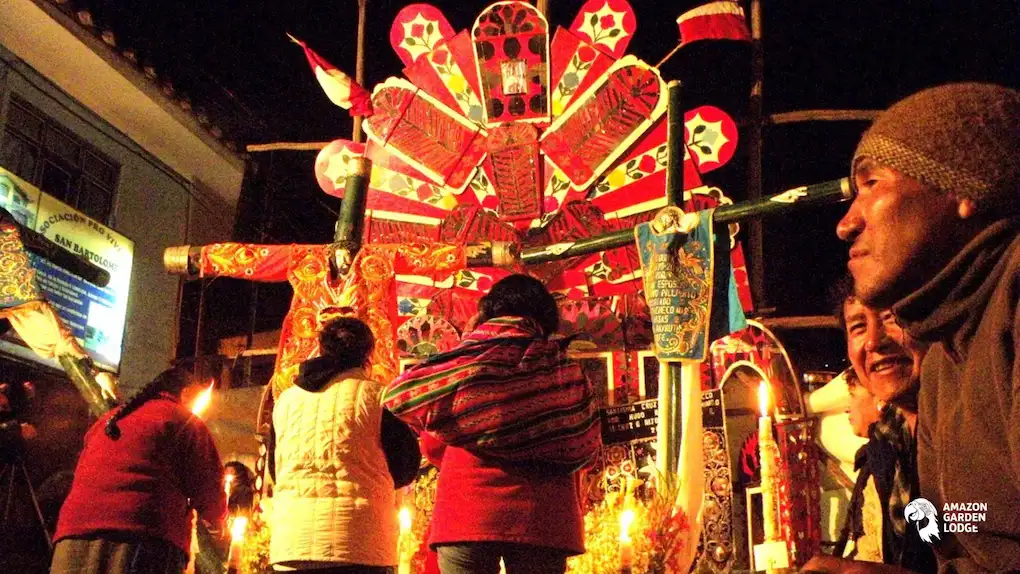
Cruz Velacuy in Cusco
Cruz Velacuy, also known as the Festival of the Crosses, is a deeply rooted religious and cultural tradition in Cusco and other regions of the Peruvian Andes. The name comes from the Quechua word velakuy, which means to keep vigil or to accompany with candles during the night. And that is exactly what happens: entire communities gather to keep vigil over the cross, pray, sing, dance, and share food until dawn. It is not just a religious festival; it is a profound act of community, gratitude, and connection with the land.
During this festival, crosses located in churches, neighborhoods, or atop hills are adorned with flowers, fabrics, and offerings. Communities organize vigils, religious celebrations, and festive activities to honor these crosses, which are considered symbols of spiritual protection.
When is Cruz Velacuy celebrated?
The main day celebration takes place during the month of May, with May 3rd being the central day of the Fiesta de las Cruces (Festival of the Crosses) according to the Catholic calendar. On this date, homage is paid to the Holy Cross, and many communities organize the main religious and festive activities.
However, in Cusco and other Andean regions, the celebrations can begin as early as the end of April and extend over several days in May. Each neighborhood or community usually has its own patron saint’s cross, so the dates may vary slightly depending on the location of the festival.
The two types of Crosses that take center stage in the festival
During the Cruz Velacuy festival, you’ll find two main types of crosses, each playing a significant role in the celebration:
• Mobile Crosses: Generally made of wood, these crosses are carried in procession from one location to another during the festival. They are the ones that descend from the hill to the mayordomo’s house on the night of May 2nd and then return to their original location.
• Fixed Crosses: Carved from stone or constructed of concrete, these crosses are located in permanent places such as church entrances, plazas, or the most important hills. By their very nature, all the ceremonies in their honor are performed directly at the site where they stand.
You might be interested: 15 Traditional food in Peru

History of Cruz Velacuy
Its documented origins date back to the early decades of the 18th century, when the inhabitants of Cusco began to gather privately in their homes to worship the crosses that the Spanish had placed on the hills and in the city’s plazas. It was a modest, family-oriented celebration, far removed from the splendor and extravagance that characterize the festival today.
Interestingly, from its inception, the festival had a profoundly Andean ideological component that unsettled the Catholic Church. In 1746, the Church of San Francisco even refused to hold Mass for the celebration because the indigenous elements of the festival clashed with Christian doctrine.
The 1950 earthquake
For more than two centuries, the Cruz Velacuy festival was considered a rural celebration, typical of peasant communities and far removed from the urban center of Cusco. Everything changed on May 21, 1950, when a devastating earthquake shook the city and left an indelible mark on the collective memory of the people of Cusco.
In the following years, the mass migration from the countryside to the city brought with it the traditions that had previously been exclusive to rural communities. The peasants who arrived in Cusco brought their devotion to the Cross with them, and thus the festival gradually gained presence and popularity in the urban neighborhoods.
You might be interested: 40 Animals in the peruvian amazon
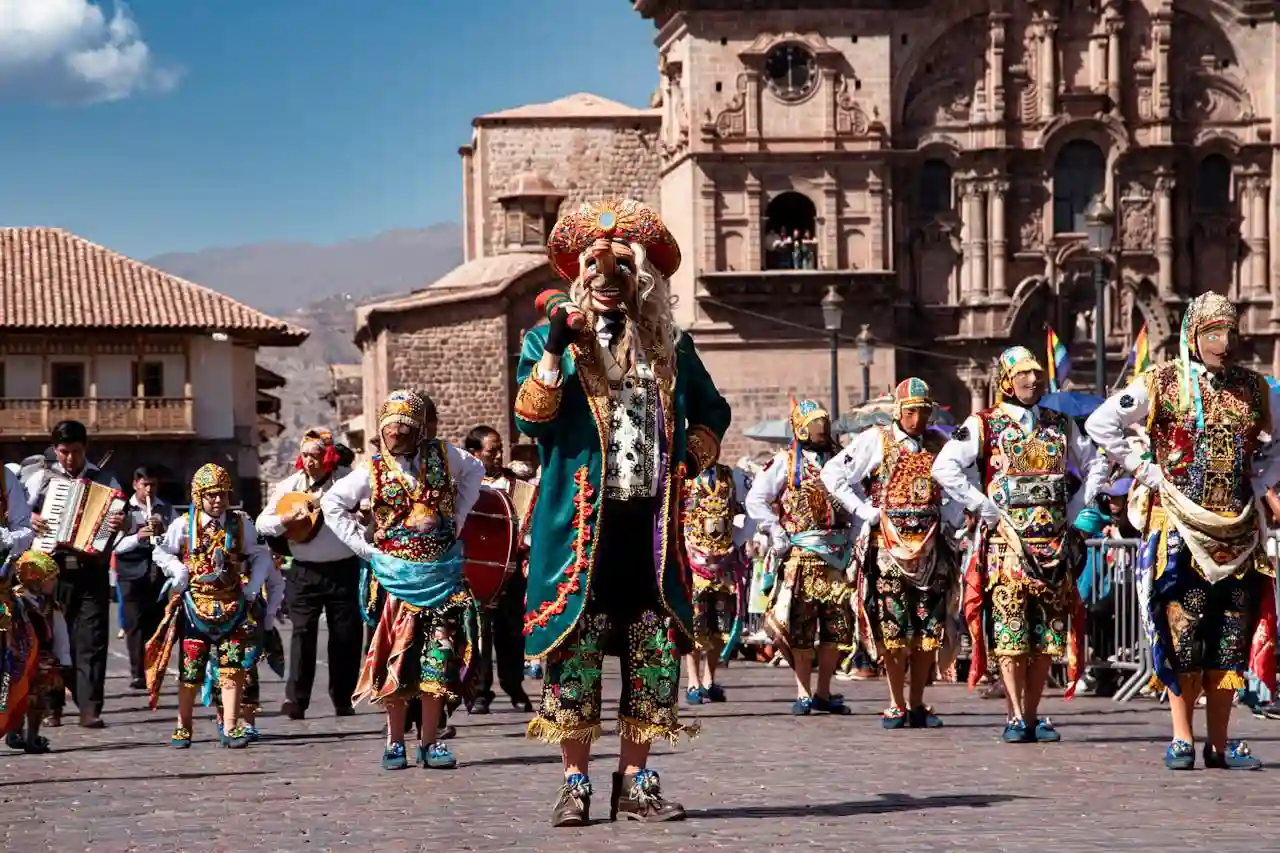
Where is the Cruz Velacuy celebrated?
It is celebrated throughout the city of Cusco and its surroundings, in the hills, in the neighborhoods, in the churches and in the homes of the families who take on the responsibility of organizing the festival. If you are planning Cuzco tours during the month of May, this is without a doubt the best time to visit.
The Waka of Teteqaqa
If there is one place in Cusco where the energy of Festival of the Crosses can be felt most strongly, it is the Waka of Teteqaqa. This site is an ancient Inca huaca, part of the ceque system of Antisuyo, located on a sacred rock formation just outside the historic center. The Cross of the Lord of Teteqaqa stands on this place filled with history and spiritual meaning, and it becomes one of the main pilgrimage points during the days of the festival.
Reaching Teteqaqa requires a short uphill walk, but the reward is unforgettable. Visitors are welcomed with panoramic views of Cusco and the opportunity to experience the celebration in one of the most authentic and least touristy settings of the entire festival.
The San Cristóbal neighborhood
In the upper part of Cusco, the San Cristóbal neighborhood is another key center of the Cruz Velacuy celebration. The cross of San Cristóbal, located in front of the colonial church that dominates the city skyline, is one of the most revered and visited during the festival. From this viewpoint you can admire the entire city while taking part in the mass, traditional dances and fireworks that accompany the celebration.
On the night of May 2, the vigil in San Cristóbal fills with candles, prayers in Quechua and the unmistakable sound of traditional bands. It is one of the most emotional experiences you can have if you visit Cusco in May.
Huayllarcocha near Poroy
Few travelers reach Huayllarcocha, a small community near Poroy, but those who do discover one of the most authentic and moving celebrations of Festival of the Crosses. There are no tour groups and no organized excursions. Instead, visitors encounter a local community that has spent days preparing the cross and gathering for the night of May 2.
During the vigil, families share warm drinks, sing songs in Quechua and light handmade fireworks around an altar decorated with flowers. The atmosphere is simple, heartfelt and deeply connected to the traditions that have kept this celebration alive for generations.
Other important places during the celebration
Several other locations in Cusco are also known for their traditions and community celebrations.
• San Francisco Church: one of the most historic crosses associated with Festival of the Crosses, where solemn celebrations combine mass and traditional processions.
• Sacsayhuamán: the impressive Inca fortress serves as the backdrop for some of the most striking celebrations of the festival.
• Osqollo: another site of strong local devotion, especially in neighborhoods on the outskirts of the city.
• Santiago neighborhood: known for lively celebrations and strong participation from the local community.
• San Blas neighborhood: with its intimate and artistic atmosphere, it is ideal for those who want to experience the festival in a more personal and cultural setting.
• Sacred Valley (Pisac, Chinchero and Ollantaytambo): communities in the Sacred Valley celebrate Cruz Velacuy with deep traditions and an intensity that complements the celebrations in Cusco.
You might be interested: New year traditions in Peru
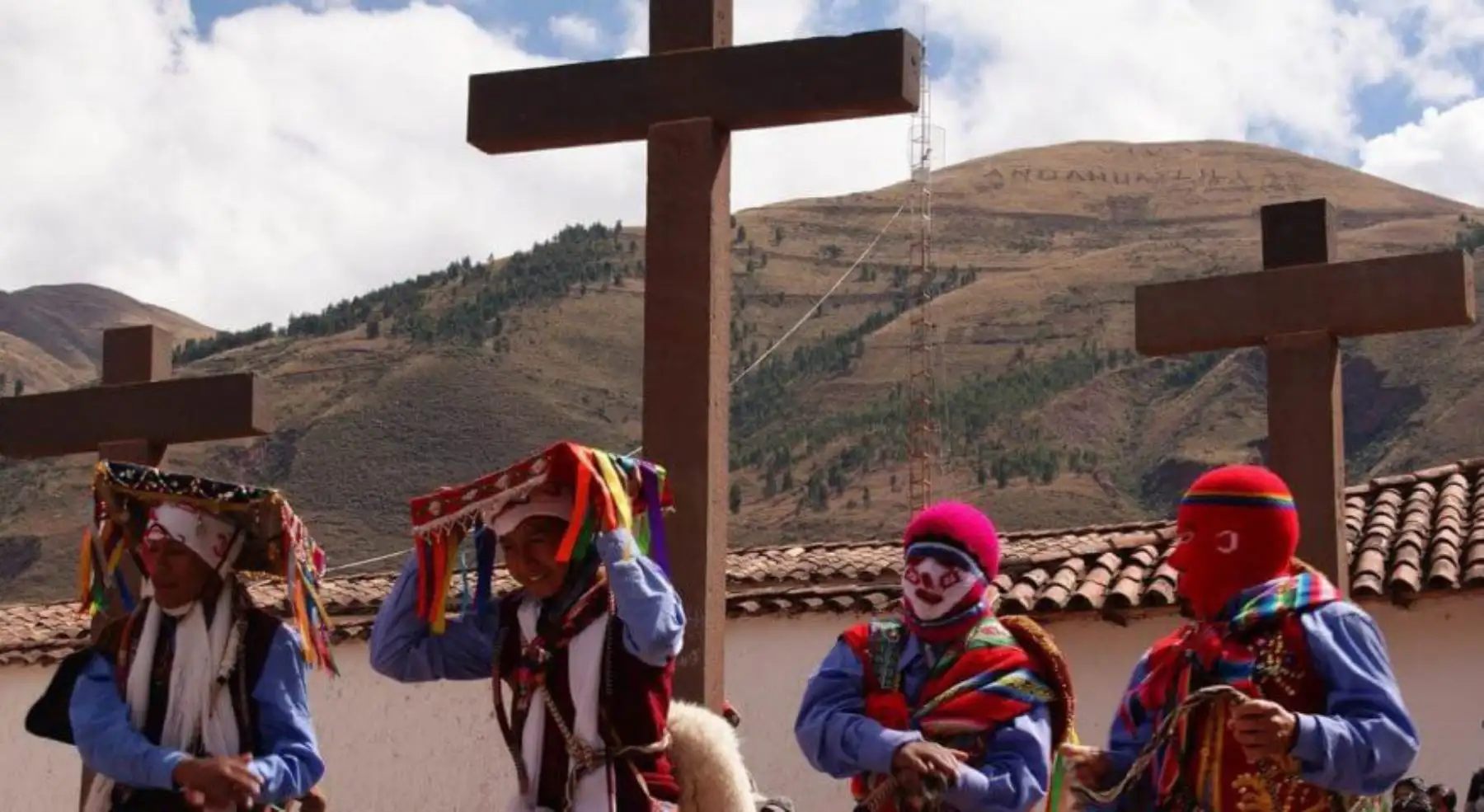
Dates of Cruz Velacuy 2026
In 2026, Cruz Velacuy will be celebrated on May 2 and May 3, although the festival actually extends throughout the first week of the month in different neighborhoods and communities across Cusco and its provinces. Each day has its own significance and rhythm, and knowing the schedule in advance will help you plan your visit more effectively.
May 2: The descent of the Cross and the Great Vigil
May 2 marks the official beginning of the celebration with one of the most symbolic moments of the entire festival: the descent of the cross. In the afternoon, members of the community climb the hills or sacred sites to bring the cross down to the house of the mayordomo, where it is received with honors and prepared for the night vigil.
As night falls, the vigil begins, which is the central moment of May 2. The house of the carguyoq fills with neighbors, relatives and mayordomos from previous years. A bonfire is lit in front of the altar where the decorated cross rests. There are folkloric dances, hot drinks mixed with aguardiente or pisco to fight the Andean cold, and at midnight a traditional soup made with chicken or lamb is served, a tradition that repeats every year. The celebration continues until dawn, and that same night the name of the mayordomo who will assume the responsibility for the following year is announced.
What to see during the night of May 2
• The ceremonial descent of the cross from the hill at sunset.
• The decoration of the cross with fresh flowers, colorful fabrics, candles and offerings.
• Traditional dances around the altar such as Qhapaq Qolla, Saqra, and other dances from the Andean repertoire.
• The central bonfire and collective prayers in Spanish and Quechua.
• The midnight soup, a moment of communal sharing that is deeply meaningful.
May 3: The main day of Cruz Velacuy
May 3 is the most intense day of the celebration and the one that gathers the largest number of faithful and visitors. Throughout the city of Cusco, the crosses are carried in procession to nearby churches for the solemn mass of the Day of the Holy Cross, recognized throughout the Catholic world. The processions are colorful, lively and emotional. Each cross is accompanied by its group of dancers, musicians and hundreds of devoted participants.
After the mass, the cross returns to the house of the mayordomo for the festive lunch, where some of the most representative dishes of Cusco’s traditional cuisine are served. In the afternoon the celebration continues with live music, fireworks, artisan fairs and folkloric dance performances in the plazas of the historic center.
Main activities on May 3
• Solemn masses in the churches of Cusco’s historic center.
• Processions with decorated crosses through the stone streets.
• Communal lunch at the house of the carguyoq with traditional dishes and chicha de jora.
• Folkloric dance performances in the Plaza Mayor and surrounding streets.
• Food and artisan fairs organized in different neighborhoods.
• Fireworks shows at nightfall.
May 4: The Kacharpari or farewell celebration
May 4 is known as Kacharpari, the farewell. The community accompanies the cross back to its original place, whether it is a hill, chapel or sanctuary where it usually rests. It is a bittersweet moment filled with emotion and gratitude, when the faithful say goodbye to the cross until the following year. Many people take advantage of this day to share the remaining food from the previous day’s feast and listen to the final songs of the band before the celebration officially comes to an end.
You might be interested: All about the Peruvian Amazon tribes

The Carguyoq of Cruz Velacuy
One of the most important figures in Cruz Velacuy is the carguyoq, also known as the mayordomo. Without this person, the celebration would simply not take place. Understanding the role of the carguyoq helps explain the social and community dimension that makes this festival so meaningful in Cusco and many Andean communities.
The word carguyoq comes from Quechua and refers to the person who “carries the responsibility” for organizing the celebration of the cross during that year. This responsibility is not only symbolic. The carguyoq and their family take charge of preparing much of the festival, including organizing the vigil, welcoming guests, coordinating music and dances, and providing food and drinks for the community during the celebration.
In many cases, becoming a carguyoq is considered an honor and a sign of devotion. Families may spend months preparing for the event, saving money and gathering help from relatives and neighbors. The role is often accepted as a form of gratitude or promise made to the cross or to a religious figure.
Festival of the Crosses cuisine
Chiriuchu: the emblematic dish of the celebration
Chiriuchu is possibly the most iconic dish in Cusco’s festive calendar and a must during the celebration. It is a cold dish made from a combination of ingredients that typically include guinea pig meat, dried beef, chicken, pork, fresh farm cheese, corn tortillas, toasted corn and raw rocoto pepper.
Each ingredient has its own history and symbolic meaning within the tradition, and together they create a unique dish that you will rarely find in regular restaurants.
Roast pork with corn tamal
Roast pork served with corn tamal is another specialty commonly found during the festival. The juicy and crispy pork, combined with the soft texture of the traditional Andean tamal, creates a culinary experience that perfectly reflects the fusion of European ingredients and pre Hispanic cooking techniques.
Midnight soup and traditional punch drinks
During the vigil on the night of May 2, people keep warm from the Andean cold with hot punch drinks prepared with aguardiente or pisco. At midnight, tradition says that a soup made with chicken or lamb should be served. This moment of sharing food becomes both a ritual and a communal experience.

Dances and music of the Crosses festival
Music and dance are inseparable parts of Cruz Velacuy. From the moment the cross is brought down from the hill until the kacharpari, the farewell celebration on the final day, the streets of Cusco fill with the sounds of traditional Andean instruments such as quenas, charangos, and zampoñas, along with the powerful rhythm of brass bands that accompany the processions.
Qhapaq Qolla
One of the most striking dances in the Andean repertoire. The dancers represent traders from the highlands who historically traveled long distances to exchange goods with other communities. They wear colorful masks, embroidered costumes and perform energetic movements that symbolize strength, prosperity and cultural exchange.
Saqra
The Saqra dancers wear exaggerated and often grotesque masks that represent mischievous spirits or demons from the Andean underworld. Their acrobatic movements and playful behavior add humor and theatrical energy to the celebration, often interacting with the crowd and climbing rooftops or balconies during processions.
Huayno
Huayno is the most iconic musical genre of the Peruvian Andes and is commonly danced in pairs. During Cruz Velacuy, huayno rhythms appear in the most festive moments of the night, when communities gather to celebrate with joyful steps and lively melodies played by local bands.
Sacra
Sacra refers to a more solemn musical style used during the devotional moments of the celebration. This music accompanies prayers, blessings and moments of reflection in front of the altar where the cross is placed, reinforcing the spiritual dimension of the festival.
Practical tips for experiencing Cruz Velacuy 2026
If you are planning to visit Cusco during Cruz Velacuy 2026, a little preparation will help you enjoy the celebration more comfortably. The festival itself does not require any special arrangements, but knowing a few practical details about travel, altitude and local customs will make your experience smoother and more meaningful.
- Book your accommodation early. May is a busy season in Cusco, especially around festival dates, and hotels in the historic center often fill up quickly.
- Allow time to acclimatize to the altitude. Cusco sits at about 3,399 meters (11,152 feet) above sea level. If you arrive from Lima or another coastal city, try to spend at least a day resting before walking long distances through the neighborhoods and hills where many celebrations take place.
- Stay hydrated and try coca tea. Drinking coca tea is a traditional way to help your body adjust to the altitude and is commonly offered in hotels and restaurants throughout Cusco.
- Check local schedules. Each neighborhood may celebrate the festival on slightly different days, so asking locals or your hotel about nearby events can help you find the most interesting celebrations.
- Dress warmly and wear comfortable shoes. Nights in Cusco during May can drop to around 3°C (37°F), especially in higher neighborhoods such as San Cristóbal or Sacsayhuamán.
- Carry some cash. Many small food stands and artisan vendors in local neighborhoods do not accept credit cards.
- Ask before taking photographs. While many people are happy to share their traditions, it is always respectful to ask permission before photographing ceremonies or participants.
- If you are invited to a vigil, bring a small offering. Candles, flowers or a warm drink are traditional gestures of appreciation and help you participate respectfully in the gathering.

Frequently asked questions about Cruz Velacuy 2026
1. Do you need to pay to attend the celebrations?
No. Most Cruz Velacuy activities such as vigils, processions and neighborhood gatherings are free and open to the public. Visitors can walk through the different neighborhoods and observe the traditions without paying an entrance fee.
2. How long does the celebration last?
The main celebration usually takes place between May 2 and May 4. However, different neighborhoods in Cusco celebrate their own crosses, so festivities can continue throughout the first week of May.
3. Do you need to speak Quechua?
No. Spanish is widely spoken in Cusco and most visitors can communicate easily. Still, knowing a few Quechua words like allillanchu (hello) or sulpayki (thank you) is always appreciated.
4. Is it safe to go out at night during the vigil?
Yes. The celebrations are community and family oriented. As a precaution, it is recommended to use official taxis when traveling between neighborhoods at night.
5. What should you wear during the festival?
May nights in Cusco can be cold, sometimes dropping to 3°C (37°F). It is best to wear warm layers and comfortable shoes since many celebrations take place on hills or steep streets.
6. Where can you see the celebration in Cusco?
Some of the most popular places include San Cristóbal, San Blas, Santa Ana, Sacsayhuamán and Teteqaqa, where important crosses are honored during the festival.
7. Can tourists participate in the celebration?
Yes. Visitors are welcome to attend the vigils and processions. If you are invited to a gathering, bringing a small offering like candles or flowers is a respectful gesture.

