
April sits at one of the most rewarding moments in Peru’s travel calendar, right at the crossroads between the rainy season and the dry season that draws peak crowds from June onwards.
The heavy rains of January and February have faded. The skies over Cusco are beginning to clear. The Inca Trail is reopening after its annual March closure for maintenance. And the tour groups, booking queues, and inflated hotel prices of high season haven’t arrived yet. That’s the April advantage.
Across the Andes, the landscape is at its most vivid: lush, emerald green from months of rainfall, with orchids bursting from cloud forest crevices and rivers running full. On the coast, Lima and the northern beach towns enjoy comfortable autumn temperatures with minimal rain. In the Amazon, the forest is teeming with wildlife and the rivers are high, making boat-based exploration easier than in the dry season.
Peru in april
April is one of the very best months to visit Peru for travelers seeking a balance of good weather, manageable crowds, lower prices, and vibrant natural scenery, April consistently ranks among Peru’s top months. The only caveats: book well in advance if your trip overlaps with Semana Santa (Holy Week), and pack a light rain jacket for early-April showers in the highlands.
You might be interested: Festivals in Cusco month by month
Benefits of visiting Peru in April
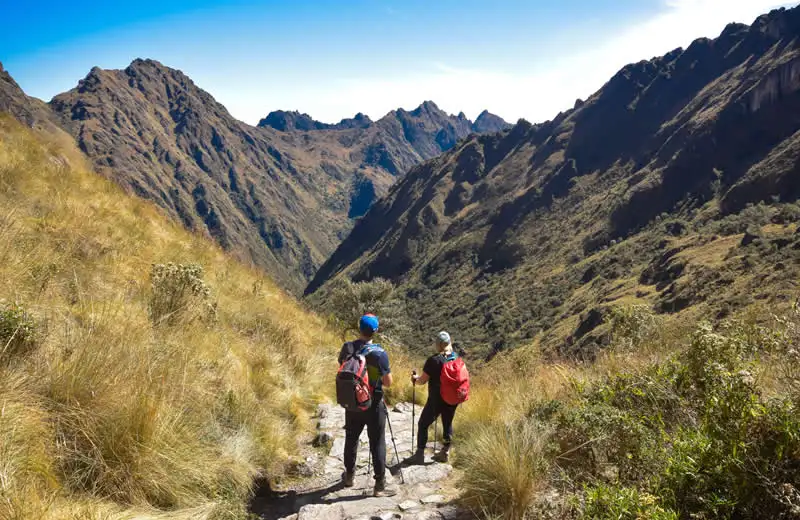
Months of rainfall have transformed the Andes and Sacred Valley into a vivid emerald backdrop. The scenery is at its most photogenic before the dry season parches the hillsides.
Machu Picchu, Cusco’s plazas, and the Sacred Valley are noticeably quieter than in June to August peak season. Shorter queues, better photos, and a more relaxed pace throughout.
The Inca Trail reopens in April after its March closure. Rainfall decreases significantly, trails are in excellent condition, and daytime temperatures are comfortable for trekking.
Peru hosts over 3,000 orchid species, and April is when they bloom most abundantly across the cloud forests. Birdwatchers will also find April one of the best months in the Andes.
Semana Santa (Holy Week) brings some of Peru’s most powerful religious processions to cities like Ayacucho and Cusco: a deeply moving cultural experience unlike anything in peak season.
You might be interested: 15 Traditional food in Peru
Climate in Peru in April
Peru’s geography spans three distinct climate zones: coast, highlands, and Amazon. Each behaves differently in April, so understanding this will help you pack and plan much more effectively.
The Coast
If you’re heading to Lima, Paracas, or Pisco in April, you’re in luck. Temperatures sit comfortably between 18°C and 26°C, the rain is basically nonexistent, and the heavy gray fog that smothers the coast in winter hasn’t fully arrived yet. Think of it as the last hurrah of summer on the Peruvian coast. The beaches are still enjoyable, the skies are relatively clear, and the city feels alive. By May that changes fast, so April is genuinely one of the better months to be there.
The Highlands
April is honestly a great time to visit Cusco, the Sacred Valley, or Machu Picchu. The brutal rainy season that runs from January through March is winding down, which means the trails are drying out and the skies are starting to clear up during the day. Daytime temps in Cusco hover around 20°C, which feels perfect for exploring, though nights can get cold, we’re talking down to 7°C . The crowds haven’t hit their peak yet either, so you’ll have a much more relaxed experience at Inca sites than you would in June or July. The Inca Trail is in solid condition and absolutely worth booking in advance.
The Amazon
The jungle doesn’t really do “dry” in April. It’s still deep in its wet season, with places like Iquitos getting drenched with rain regularly. Temperatures swing between 18°C and 36°C depending on the time of day, and the humidity makes everything feel even warmer. That said, high river levels actually work in your favor if you’re doing boat tours, since you can access deeper parts of the jungle that are harder to reach in drier months. Wildlife is also easier to spot along the riverbanks. Just come prepared with good insect repellent and long sleeves, mosquitoes are very much part of the deal.
You might be interested: 40 Animals in the peruvian amazon

Things to do in Peru in April
April is genuinely one of the best-kept secrets in travel, and Peru in this month is proof of tha, something any experienced Peru tour operator would quickly confirm. The highlands are still wearing their best green from the rainy season, the big tourist crowds are somewhere else, and your money goes further than it would in peak summer.
Witness Semana Santa in Ayacucho or Cusco
If you happen to be in Peru during Holy Week, don’t spend it in Lima. Ayacucho has been celebrating this tradition for over 400 years, the festivities run for 18 days, and the streets fill with more than 15,000 candles during the nighttime processions. Cusco has its own version with the Señor de los Temblores procession, which carries a deeply personal weight for locals who live with the very real threat of earthquakes. Both cities are worth it, but if you can only pick one, Ayacucho wins.
Hike the Inca Trail to Machu Picchu
April is genuinely one of the best months to do this. The rains have backed off, the trail is in great shape, and the mountains are still beautifully green. The classic four-day route covers 43 kilometers and passes through more than 30 archaeological sites. Peru caps daily trekkers at 500, so book three to four months ahead. Can’t get a spot? The Salkantay Trek reaches 4,600 meters and is arguably more dramatic anyway.
Catch the Peruvian Paso Horse Festival
This one flies completely under the tourist radar. Held over five days in mid-April at Mamacona, the festival showcases the Peruvian Paso, a breed with a naturally synchronized four-beat gait unlike any other horse in the world. There are only around 25,000 registered worldwide, and the Peruvian government recognizes the breed as part of the country’s cultural heritage. Every evening ends with live Marinera dancing in full traditional costume.
Explore Lima’s Food Scene
Lima had four restaurants in the World’s 50 Best list in 2023, which tells you everything you need to know. Miraflores and Barranco cover everything from street ceviche to serious tasting menus, and the city has over 650 cevicherias. Before eating, the Larco Museum in Pueblo Libre holds over 45,000 pre-Columbian artifacts and has one of the best restaurant patios in the city.
Go into the Amazon
April is wet season, but river levels are at their peak, which means boats can reach remote parts of the jungle that are completely inaccessible in drier months. The Peruvian Amazon covers 60 percent of the country’s territory and is home to more than 2,000 fish species, 1,800 bird species, and 500 mammals. Iquitos is the gateway in, and it has no road connection to the rest of Peru whatsoever. You fly or you take the river, and that alone makes it feel like a real adventure.
Visit Lake Titicaca
The Candelaria crowds are gone by April, which makes it one of the quieter and more enjoyable times to visit. The lake sits at 3,810 meters above sea level, covers more than 8,300 square kilometers, and is the highest navigable lake in the world. The 90 floating Uros islands are built entirely from totora reeds and have been inhabited for centuries. Spending a night with a local family on Amantani or Taquile Island is one of those experiences that stays with you. Just take your first day slow at that altitude.
Is April a good time to visit Machu Picchu?
Yes, April is a great time to visit Machu Picchu, arguably one of the best months of the year. The rainy season is wrapping up, temperatures sit around 22°C during the day, and the site is still lush and green from the rains. Crowds are noticeably lighter than the peak June through August window, and prices reflect that too. Wild orchids bloom in the surrounding valleys, and arriving early in the morning or after 3 PM gives you the quietest experience on site.
You might be interested: New year traditions in Peru

What to pack for Peru in April
Clothing
Layers are everything. Daytime temperatures in Cusco can feel perfectly comfortable in a t-shirt, but nights drop fast and you’ll want a warm mid-layer and a down jacket. Lightweight, quick-dry pants work better than jeans because they dry in about an hour after a wash and don’t feel heavy when damp. Three to four pairs of underwear and socks are enough since laundry in cities like Cusco is cheap and easy, usually around $10 for a full bag done overnight. A light rain jacket or poncho is non-negotiable in April. Showers are unpredictable, especially in the highlands, and you don’t want to be caught without one on the Inca Trail or walking through Aguas Calientes.
Footwear
Well broken-in hiking boots are essential, especially if you’re visiting Machu Picchu or doing any trekking. The cobblestone streets of Cusco and the uneven terrain around archaeological sites will punish your feet if you show up in casual sneakers. Note that large daypacks are not allowed inside Machu Picchu, so bring a smaller bag of 20 liters or less for the actual site visit.
Health and altitude
This is where people get caught off guard. Cusco sits at 3,400 meters above sea level and altitude sickness is real, even for fit and healthy people. Talk to your doctor before the trip about Diamox or other altitude medications. Pack a basic first aid kit with pain relievers, antidiarrheals, and antihistamines. Sunscreen is also critical because the UV intensity at high altitude is significantly stronger than at sea level, even on cloudy days.
If you’re going to the Amazon
Add lightweight long-sleeve shirts and long pants for mosquito protection, a solid insect repellent with DEET, and waterproof bags for your electronics. Everything in the jungle gets wet eventually, so protect your gear accordingly.
Documents and practical items
Your passport should have at least six months of validity beyond your return date. Carry physical copies stored separately from the originals. Peru uses Type A, B, and C electrical outlets, so bring a universal adapter. A power bank is worth its weight in gold on long trekking days when you’re nowhere near a plug. A reusable water bottle with a filter like a LifeStraw is a smart move to cut down on plastic and save money throughout the trip.
You might be interested: All about the Peruvian Amazon tribes

What to wear in Peru in April
The foundation is layers. A lightweight t-shirt, a fleece or mid-layer, and a water-resistant outer shell will carry you through most situations you’ll encounter, whether you’re walking through Cusco in the afternoon sun or sitting at a restaurant terrace when the temperature drops after dark. Nights in the highlands get genuinely cold, so don’t underestimate them.
For bottoms, lightweight quick-dry pants are the smart choice over jeans. They handle rain, dry overnight, and feel comfortable across all three regions. Jeans get heavy and uncomfortable when damp and take forever to dry, which becomes annoying fast.
A rain jacket or packable poncho is non-negotiable in April. Showers in the highlands come without much warning, and getting soaked on the Inca Trail or walking between ruins is the kind of thing that ruins an afternoon if you’re not prepared.
On your feet, wear broken-in hiking boots or sturdy trail shoes if you’re visiting any archaeological sites or doing any trekking. The terrain around Machu Picchu, the Sacred Valley, and most Inca ruins is uneven and slippery after rain. Save the casual sneakers for Lima.
If the Amazon is on your itinerary, swap the fleece for lightweight long-sleeve shirts and long pants. The goal there is coverage rather than warmth, since mosquitoes are very active in April and exposed skin is an open invitation.

Planning and tips for Peru in April
Peru in April is approachable, affordable, and well worth a little planning upfront. Altitude, booking windows, and knowing where your money goes are the three things that make or break the trip. Get those right and everything else is easy.
Is Peru expensive in April
April is shoulder season, which means 20 to 30 percent cheaper than peak months. Budget travelers get by on $50 to $80 a day, mid-range sits around $150 to $200. The biggest single expense is Machu Picchu, where entry, train, and a guide can easily add up to $150 to $200 for just one day. Everything else, local lunches for $3 to $6, cheap Ubers, affordable hotels, keeps the overall cost very manageable.
Do you need travel insurance for Peru
You don’t need it to enter, but skipping it is a bad idea. Private hospitals require upfront payment, your home insurance won’t cover you abroad, and if something goes wrong at high altitude or in the jungle, emergency evacuation is extremely expensive. Get a plan with at least $100,000 in medical coverage and make sure adventure activities like trekking are specifically included.
Health tips before traveling to Peru
Altitude sickness hits around 40 to 50 percent of travelers arriving in Cusco, regardless of fitness level. Take your first day easy, drink 3 to 4 liters of water, skip alcohol, and try coca tea. Talk to your doctor about Diamox before you go. For the Amazon, the CDC recommends Hepatitis A, Hepatitis B, and Yellow Fever vaccinations. Everywhere in Peru, stick to bottled or filtered water.
Best day trips from Cusco in April
The Sacred Valley is the best first day trip since it sits lower than Cusco at 2,800 meters and is easier on your body while acclimatizing. It covers Pisac, Ollantaytambo, Moray, and the Maras salt mines in a single day. Rainbow Mountain at 5,200 meters is spectacular but save it for after two full days of acclimatizing. Humantay Lake is the quieter, more accessible alternative and honestly just as beautiful.

